Tooth Sensitivity After Crown: Crown Tooth Sensitivity Causes & Guide
Talk to our team
In this article 23 sections
Tooth sensitivity after a dental crown — sometimes called crown tooth sensitivity — is one of the most common post-treatment concerns in dentistry — and one of the most misunderstood. Most sensitivity after crown placement is entirely normal and resolves on its own within days to weeks. Some sensitivity, however, signals a problem that needs attention. This guide tells you the difference, explains every cause, and answers the most common questions — including why a crown might still hurt months later.

| Is it normal to have tooth sensitivity after a crown? | Yes — for the first 2–4 weeks |
| How long does sensitivity last? | Days to 4 weeks typically. Up to 2 months in some cases. |
| Crowned tooth sensitive to cold — normal? | Yes if fading. No if worsening after 4 weeks. |
| Crown sensitive to pressure/bite | Often a high bite — easily adjusted by dentist |
| Tooth sensitivity after temporary vs permanent crown | Both common — temporary crown more exposed |
| Tooth pain under crown that comes and goes | See dentist — possible decay or nerve issue |
| Crown hurts 6 months later | See dentist promptly — this is not normal |
Is tooth sensitivity after a crown normal?
Yes — within limits. Post-crown sensitivity is actually quite common and typically resolves on its own as your tooth and surrounding tissues adjust to the new restoration. The preparation process involves drilling and reshaping the natural tooth, which temporarily irritates the nerve and surrounding tissues. This produces sensitivity — particularly to cold and heat — that gradually fades.
Normal sensitivity: starts within 24 hours of crown placement, is triggered by temperature or pressure, is mild to moderate in intensity, and gradually improves over days to weeks.
Not normal: sensitivity that worsens over time, throbbing or spontaneous pain without a trigger, pain that wakes you at night, swelling or visible change at the gum line, or any pain persisting beyond 6–8 weeks without improvement.
- Brief zing to cold or hot
- Mild soreness when biting
- Gum tenderness around crown
- Gradually fading sensitivity
- Awareness of the crown
- Throbbing or spontaneous pain
- Pain waking you at night
- Worsening — not improving
- Swelling or discharge at gum
- Sensitivity persisting 6+ weeks
How long does sensitivity last after a crown?
This is the most commonly searched question — and the answer varies by cause.
| Type of sensitivity | Typical duration | What it means |
|---|---|---|
| Normal post-procedure irritation | 3–14 days | Tissue adjusting — no action needed |
| Cement sensitivity | 1–3 weeks | Cement settles — resolves on its own |
| High bite (crown too high) | Until adjusted | Quick dentist adjustment resolves it |
| Pulpitis (nerve inflammation) | Weeks — may need treatment | Reversible or irreversible — dentist evaluates |
| Gum irritation / recession | 2–6 weeks | Gum healing — monitor |
| Ill-fitting crown | Until replaced | Crown may need adjustment or remake |
| Infection / abscess | Until treated — urgent | Root canal or extraction required |
Between weeks two and four, most patients notice significant improvement. The inflammation in the surrounding tissues begins to subside, and the tooth adapts to its new restoration. Sensitivity to temperature and pressure should gradually decrease. If it does not, the cause needs professional investigation.
Causes of tooth sensitivity after crown — explained
1. Normal post-procedure nerve irritation
During crown preparation, the tooth is reduced in size using rotary instruments. This process can irritate the nerve inside the tooth, leading to temporary sensitivity. This is especially common when a crown is placed on a tooth that is severely decayed or fractured. The nerve calms down as the inflammation resolves — typically within 1–2 weeks. No treatment is required.
2. High bite (crown interfering with your bite)
If you experience pain or sensitivity upon biting down on the tooth that received the crown, this may suggest a "high point" — a raised section that interferes with your bite. This problem can be fixed by your dentist, who will make minor adjustments to the crown in your mouth to reduce the high contact point. This is the most common cause of pressure-related crown sensitivity and is one of the easiest to fix — a brief adjustment appointment.
3. Dental cement sensitivity
A dental crown is bonded to the tooth with dental cement. After the procedure, some cement continues to leach out from underneath the crown. This can also lead to temporary sensitivity immediately after a crown procedure. This settles on its own within 1–3 weeks as the cement fully cures and excess is naturally cleared.
4. Gum irritation and recession
The gums surrounding the tooth can become irritated during the crown procedure, particularly if the crown extends below the gum line. This irritation can cause discomfort, especially when chewing or drinking hot or cold beverages. Mild gum sensitivity is normal and fades as the gum heals. If gum recession has exposed the root surface at the crown margin, sensitivity to cold may persist longer.
5. Pulpitis — nerve inflammation
Pulpitis is inflammation of the dental pulp (the nerve and blood vessel tissue inside the tooth). It can be reversible — the nerve calms down with time — or irreversible, where the nerve cannot recover and root canal treatment becomes necessary. Signs of irreversible pulpitis: lingering sensitivity to cold lasting more than 30 seconds, spontaneous throbbing pain, pain at night. A dentist distinguishes between reversible and irreversible pulpitis using specific clinical tests.
6. Ill-fitting crown
A crown that does not fit precisely at the margin leaves a microscopic gap where bacteria can accumulate. This leads to progressive irritation of the underlying tooth structure and secondary decay over time. An ill-fitting crown may cause persistent sensitivity that worsens rather than improves. Assessment by the placing dentist (or another dentist if the crown was placed abroad) is necessary.
7. Allergic reaction (rare)
Some patients have sensitivity to metals used in crown fabrication — particularly nickel in porcelain-fused-to-metal (PFM) crowns — or to certain dental cements. True allergic reactions are uncommon but possible. Symptoms include persistent diffuse sensitivity, gum irritation, or skin changes around the face. Zirconia and E-Max crowns are metal-free and avoid this issue. For crown material detail: Types of Dental Crowns & Cost 2026 →
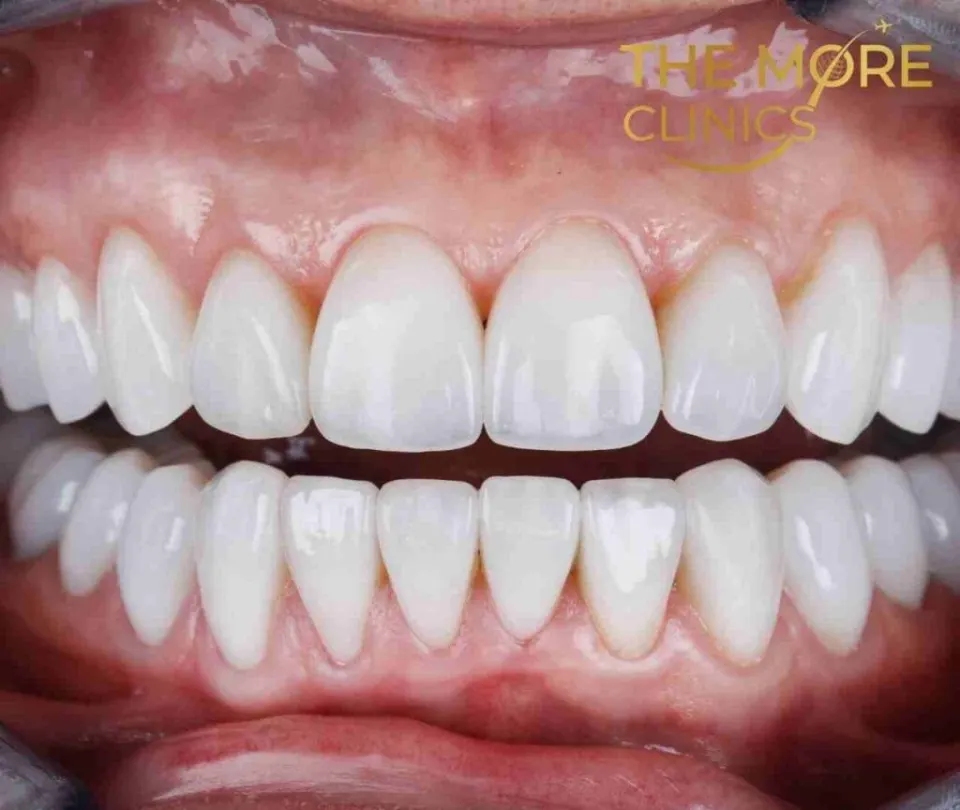
Tooth sensitivity to cold after crown — crowned tooth sensitive to cold
Cold sensitivity after getting a crown can arise from several factors. When gum recession occurs around the crowned tooth, dentin may become exposed, resulting in heightened sensitivity to hot and cold temperatures.
If cold sensitivity appeared right after crown placement and is gradually fading: normal — nerve adjustment. Wait 2–4 weeks and manage with desensitizing toothpaste.
If cold sensitivity lingers more than 30 seconds after the stimulus is removed: possible irreversible pulpitis — see your dentist. The lingering response indicates the nerve may not be self-correcting.
If cold sensitivity appeared weeks after an initially comfortable crown: possible secondary decay at the crown margin or gum recession exposing root dentine. Dental assessment required.
Crown sensitive to pressure and biting — what it means
Pressure sensitivity when biting on a crowned tooth is almost always caused by one of three things:
High bite — the crown sits too proud and receives excessive force first when you close. Fix: dentist adjusts the crown's occlusal surface in a brief appointment. Resolution: usually immediate.
Cracked tooth syndrome — the underlying tooth had an incomplete fracture before or during preparation. The crown does not stabilise the crack and biting creates splitting pain. Fix: evaluation, possibly extraction and implant if the fracture is below the gum line.
Infection / abscess — infection at the root apex creates pressure sensitivity even without temperature triggers. Accompanied by swelling, persistent ache, or swollen lymph nodes. Fix: root canal treatment or extraction.
Tooth pain under crown that comes and goes
Intermittent pain under a crown — especially pain that disappears and returns — is not normal beyond the first 2–3 weeks. The most likely causes:
- Micro-leakage at the crown margin — bacteria entering a gap between crown and tooth, causing recurrent decay and nerve irritation
- Cracked tooth — an incomplete fracture that opens and closes with biting, producing intermittent pain
- Bite interference — only certain movements create the high contact, producing intermittent pressure sensitivity
- Periodontal (gum) involvement — inflammation of the gum and bone around the crowned tooth, fluctuating with your immune response. More detail: Gum Disease Guide →
Intermittent pain that has persisted for more than 4 weeks warrants a dental appointment. X-rays and periodontal probing identify the cause reliably.
My crown hurts 6 months later — why?
Pain or sensitivity that appears or persists 6 months after crown placement is not normal and is not an adjustment phase. It indicates an underlying problem that needs professional evaluation. Common causes:
| Cause | Typical symptoms | Action needed |
|---|---|---|
| Infection / abscess | Throbbing, swelling, fever | Urgent — root canal or extraction |
| Secondary decay under crown | Dull ache, comes and goes | Crown removal, decay treatment, re-crown |
| Cracked root | Sharp pain on specific bite angles | Extraction usually required |
| Irreversible pulpitis | Lingering cold sensitivity, spontaneous ache | Root canal through the crown |
| Periodontal disease | Gum recession, ache with pressure | Periodontal assessment + treatment |
Tooth sensitivity after temporary crown — and after permanent crown
Tooth sensitivity after a temporary crown is extremely common — often more pronounced than after a permanent crown. Temporary crowns cause more sensitivity because:
- The fit is less precise — small gaps allow thermal and bacterial exposure to the prepared tooth
- Temporary cement is deliberately weak (to allow easy removal) — this allows microleakage around the margin
- The prepared tooth beneath has no enamel protection — any thermal, chemical or bacterial stimulus reaches the dentine directly
- Acrylic material provides less insulation from temperature changes than porcelain or zirconia
Mild to moderate sensitivity after a temporary crown is expected and does not necessarily predict sensitivity after the permanent crown. Severe or throbbing pain under a temporary crown is not normal — it may indicate that the underlying tooth needs root canal treatment before the permanent crown is placed.
Tooth sensitivity after permanent crown
Tooth sensitivity after a permanent crown is typically less intense than under a temporary crown — the permanent crown seals better, the cement cures more fully, and the material insulates more effectively. However, the nerve preparation stress is the same regardless of crown type.
Expect mild cold and bite sensitivity for 1–2 weeks after permanent crown placement. This is normal and resolves as the nerve calms. Sensitivity exceeding 4 weeks after a permanent crown, or sensitivity that worsens rather than improves, requires professional evaluation. Report significant pain to your dentist — don't wait for your next routine appointment.
How to manage sensitivity after crown
Home management
- Desensitizing toothpaste — brands containing potassium nitrate or stannous fluoride block dentinal tubules and reduce cold sensitivity. Use twice daily and leave on the teeth for 1–2 minutes before rinsing.
- Avoid temperature extremes — steer clear of very hot or very cold food and drinks while sensitivity is resolving
- Saltwater rinse — ½ teaspoon of salt in warm water, rinse 30 seconds three times daily. Reduces gum inflammation around the new crown.
- Ibuprofen — anti-inflammatory, addresses both pain and the underlying inflammation driving the sensitivity. More appropriate than paracetamol for crown sensitivity.
- Soft bristled toothbrush — brush gently around the crown margin. Aggressive brushing irritates already-inflamed gum tissue.
- Avoid acidic foods and drinks — coffee, citrus, carbonated drinks increase sensitivity by further demineralising exposed dentine
Professional treatments
- Bite adjustment — the single most common and most easily resolved cause of crown sensitivity. Brief appointment, immediate improvement in most cases.
- Fluoride varnish — applied professionally to exposed root surfaces or crown margins to reduce sensitivity and strengthen the area.
- Resin adhesive / dentine bonding — seals exposed dentinal tubules at vulnerable areas. Applied in a brief appointment.
- Root canal treatment — if pulpitis is irreversible. Performed through the crown in most cases — the crown does not need to be removed.
- Crown replacement — if the crown is poorly fitted or the bite cannot be adequately adjusted without remaking the crown.
When to see your dentist urgently
| Symptom | Urgency | Likely cause |
|---|---|---|
| Mild sensitivity to cold, gradually improving | No urgency | Normal post-procedure |
| Pain when biting, no other symptoms | Within 1 week | High bite — quick fix |
| Sensitivity persisting beyond 4–6 weeks | Within 2 weeks | Pulpitis, poor fit, secondary decay |
| Throbbing or spontaneous pain | This week | Irreversible pulpitis or infection |
| Pain waking you at night | This week | Advanced nerve involvement |
| Swelling, discharge, or fever | Same day / A&E | Dental abscess — potentially serious |
How to prevent sensitivity after crown placement
- Choose an experienced crown dentist — precise preparation and accurate crown margins are the most important factors in preventing post-crown sensitivity. For crown treatment in Antalya: Dental Crowns Antalya Guide →
- Communicate your bite accurately — tell your dentist exactly where and how the bite feels after crown placement. Small high points the dentist cannot feel on the instrument are often caught by the patient's report.
- Follow post-care instructions — see our full Dental Crown Aftercare Guide →
- Mention any metal allergies — if you have known reactions to metals, discuss zirconia or E-Max crowns before treatment begins
- Maintain good oral hygiene around crown margins — plaque at the crown-gum junction drives both gum irritation and secondary decay under the crown
- Attend follow-up appointments — a follow-up 1–2 weeks after crown placement catches bite issues and early problems before they become serious
Frequently asked questions — sensitivity after crown
Is tooth sensitivity after a crown normal?
Yes — mild sensitivity to temperature, pressure and biting in the first 2–4 weeks is a normal response to the crown preparation process. Sensitivity may result from nerve irritation, bite adjustment issues, or the bonding process. With appropriate at-home care and professional guidance, most patients experience relief within a short period. Sensitivity that worsens, persists beyond 6 weeks, or is accompanied by swelling or spontaneous throbbing is not normal and requires professional evaluation.
How long does sensitivity last after a crown?
Mild to moderate discomfort in the days immediately after the procedure is expected. Between weeks two and four, most patients notice significant improvement. The full adjustment period is typically 2–4 weeks. In cases where the underlying tooth had significant prior decay, large fillings, or a history of dental work, sensitivity may extend to 6–8 weeks. Beyond 8 weeks without improvement — see your dentist.
Why is my crown sensitive to cold?
Cold sensitivity immediately after crown placement is caused by the nerve's response to tooth preparation — it settles as inflammation resolves. If cold sensitivity lingers more than 30 seconds after removing the cold stimulus, this suggests the nerve may not be recovering (irreversible pulpitis) — dentist assessment is needed. New cold sensitivity appearing weeks after a comfortable crown indicates a change: possible secondary decay, gum recession exposing root dentine, or cement leakage.
Why does my crown hurt when I bite?
The most common cause is a high bite — the crown sits slightly too tall and receives excessive biting force. This is resolved with a brief adjustment by your dentist. Other causes include a cracked underlying tooth, infection at the root tip, or a loose crown allowing micro-movement under biting force.
If you experience pain upon biting down, this may suggest a high point on the crown. This problem can be fixed by your dentist, who will make minor adjustments. Do not wait — a high bite causes progressive sensitivity the longer it continues.
Why does my tooth hurt under the crown and the pain comes and goes?
Intermittent pain under a crown beyond the first 2–3 weeks indicates an active problem. The most likely causes are micro-leakage at the crown margin causing recurrent irritation, an incomplete tooth fracture (cracked tooth syndrome) that opens and closes with biting, bite interference affecting specific movements, or periodontal involvement around the crowned tooth. A dental assessment including X-rays and probing identifies the cause. Do not ignore intermittent pain — it does not resolve without addressing the underlying cause.
Why does my crown hurt 6 months later?
Pain appearing or continuing 6 months after crown placement is not part of normal adjustment. It indicates something is wrong under or around the crown. Most common causes: infection or abscess developing at the root, secondary decay progressing at the crown margin, a cracked root under the crown, or irreversible pulpitis that was not identified at the time of placement.
A same-week dental appointment is appropriate. X-rays and clinical examination determine whether the tooth needs root canal treatment, a new crown, or in severe cases extraction and replacement. For missing tooth options: Missing Teeth Replacement Guide →
Can I use desensitizing toothpaste for crown sensitivity?
Yes — desensitizing toothpaste containing potassium nitrate or stannous fluoride is appropriate and effective for mild crown sensitivity. Apply twice daily and leave on the teeth for 1–2 minutes before rinsing for maximum effect. It does not address the underlying cause of sensitivity beyond normal post-procedure inflammation — if sensitivity persists beyond 4 weeks despite consistent desensitizing toothpaste use, see your dentist.
What is the difference between reversible and irreversible pulpitis?
Reversible pulpitis: the dental nerve is inflamed but capable of recovering. Cold causes a brief, sharp response that stops quickly when the stimulus is removed. Manages with time and analgesics. Irreversible pulpitis: the nerve is too severely damaged to recover. Cold causes a lingering response lasting more than 30 seconds, or spontaneous throbbing pain without any trigger. Requires root canal treatment. A dentist distinguishes between the two using cold testing and clinical examination — you cannot reliably distinguish them yourself based on symptoms alone.
Is it normal to have tooth sensitivity after a crown?
Yes — tooth sensitivity after a crown is very common and usually temporary. The preparation process involves removing tooth structure and sometimes working close to the nerve, which causes temporary inflammation and sensitivity. Sensitivity may result from nerve irritation, bite adjustment issues, or the bonding process.
With appropriate at-home care and professional guidance, most patients experience relief within a short period. Sensitivity confined to temperature triggers, gradually fading over 2–4 weeks, is normal. Worsening pain, spontaneous throbbing, or sensitivity persisting beyond 6–8 weeks is not normal and needs professional assessment.
Why is my crowned tooth sensitive to cold?
A crowned tooth sensitive to cold is one of the most frequently reported post-crown symptoms. Immediately after crown placement, cold sensitivity is caused by the nerve's inflammatory response to tooth preparation — it typically settles within 1–2 weeks. If the crowned tooth is still sensitive to cold after 4 weeks and the response lingers more than 30 seconds after removing the stimulus, this suggests irreversible pulpitis — the nerve is not recovering and root canal treatment may be needed.
Cold sensitivity that develops weeks or months after an initially comfortable crown points to a new problem: possible secondary decay at the crown margin, gum recession exposing root dentine, or cement failure. Any new onset of cold sensitivity in a previously comfortable crown warrants a dental appointment.
Does getting a crown always cause sensitivity?
Not always — but some degree of post-preparation sensitivity is very common, particularly if the tooth had large prior fillings or significant decay that brought the preparation close to the pulp. Women experienced more sensitivity both before and after crown procedure according to clinical studies. Teeth with existing root canal treatment are unlikely to experience significant sensitivity, as the nerve has already been removed. Teeth with vital nerves and recent large preparations are most likely to experience transient post-crown sensitivity.
The Last Word from The More Clinics
Most tooth sensitivity after a crown is temporary and self-resolving — the nerve calms, the gum heals, and the tooth adapts to its new restoration within days to a few weeks. The key is knowing the difference between what is expected and what is not.
Mild, fading sensitivity: manage at home and monitor. Worsening sensitivity, throbbing, pain at night, swelling, or pain appearing months later: see your dentist promptly — these signals do not improve without treatment, and the underlying problems get more complex with time.
If your crown was placed at The More Clinics in Antalya, our 12-month remote aftercare is part of every treatment — your personal coordinator is available by WhatsApp for any post-treatment concerns, and can arrange video assessment with your treating dentist. For crown detail and what to expect: Dental Crown Before & After Guide → | Dental Crowns Antalya: Cost & Guide →
Book a Free Consultation → WhatsApp Us →
Medical disclaimer: This guide is for informational and educational purposes only. Tooth sensitivity after crown placement varies by individual. Consult your treating dentist for evaluation specific to your situation — do not delay seeking care for severe or worsening symptoms.
Medical disclaimer: This guide is for informational purposes only. Veneer suitability depends on individual clinical assessment. Consult a qualified dentist before booking treatment.
This Article is medically reviewed by Cosmetic Dentist Yusuf Algabri, August 13, 2026
This article provides general information and does not replace an individual medical assessment, diagnosis or treatment advice. Discuss decisions about your health and treatment with your treating clinician.