Gum Disease: Symptoms, Stages, Treatment & 2026 Guide
Talk to our team
In this article 25 sections
Gum disease — medically known as periodontal disease — is one of the most common health conditions in the world. Nearly 47% of adults in the United States have some form of gum disease. In most cases it begins silently, without pain, and progresses unnoticed until significant damage has occurred. This guide covers the warning signs, stages, treatment options, and the honest answer to the most frequently asked question: is gum disease curable?

| Is gum disease curable? | Gingivitis: yes. Periodontitis: managed, not cured. |
| Can you fix gum disease at home? | Gingivitis only — not periodontitis |
| First warning sign | Bleeding gums when brushing or flossing |
| Stages | Gingivitis → Early → Moderate → Advanced periodontitis |
| Most common cause | Plaque and tartar buildup from poor oral hygiene |
| Linked health risks | Heart disease, diabetes, stroke, premature birth |
What is gum disease (periodontal disease)?
Gum disease is a bacterial infection of the tissues surrounding and supporting the teeth — the gums, periodontal ligaments, and jawbone. It begins when bacterial plaque accumulates on the teeth and is not adequately removed. The bacteria release toxins that trigger an inflammatory response in the gums. Left untreated, this inflammation progressively destroys the soft tissue and bone that hold teeth in place, eventually leading to tooth loss.
There are two primary forms: gingivitis (inflammation confined to the gums — reversible) and periodontitis (infection that has spread to bone and ligaments — manageable but not reversible). For detail on each: Gingivitis Guide → | Periodontitis Guide →
Warning signs of gum disease — what to look for
Gum disease is often called a "silent disease" because it progresses without pain in the early stages. These are the warning signs that should prompt an immediate dental appointment:
- Bleeding gums when brushing or flossing
- Red, swollen or tender gums
- Gums that look puffy or shiny
- Persistent bad breath (halitosis)
- Bad taste in the mouth
- Gums pulling away from teeth (recession)
- Teeth appearing longer than before
- Deep pockets between teeth and gums
- Loose or shifting teeth
- Changes in bite or tooth alignment
- Pus between teeth and gums
Stages of gum disease
Gum disease progresses through four stages. The stage determines which treatments are effective and whether the damage is reversible.
| Stage | What is happening | Key symptoms | Reversible? |
|---|---|---|---|
| Stage 1: Gingivitis | Inflammation confined to gums only. No bone or ligament damage yet. | Bleeding, redness, swelling. No pain. | Yes ✓ |
| Stage 2: Early Periodontitis | Infection spreads to bone and ligaments. Mild bone loss begins. | Gum recession, pockets 4–5mm, bad breath. | No — managed |
| Stage 3: Moderate Periodontitis | Significant bone and tissue damage. Teeth begin to loosen. | Loose teeth, deep pockets 6–7mm, tooth sensitivity. | No — managed |
| Stage 4: Advanced Periodontitis | Severe bone loss. Teeth may be unsalvageable. | Very loose teeth, pockets 8mm+, tooth loss, bite changes. | No — aggressive treatment |
Is gum disease curable?
The honest answer: it depends on the stage.
Gingivitis is fully reversible. At this stage, no permanent damage has occurred to the bone or ligaments. With professional cleaning and improved home hygiene — brushing properly twice daily, flossing daily — the gums return to full health within weeks. This is the only stage where "cure" is the right word.
Periodontitis (all stages beyond gingivitis) is not curable — but it is manageable. Once bone and ligament destruction has occurred, that structure does not regenerate on its own. Treatment stops the progression and stabilises the condition, but the lost bone and tissue do not fully return. With consistent treatment and maintenance (typically professional cleaning every 3–4 months), most patients with periodontitis can keep their teeth for life.
Advanced periodontitis may reach a point where individual teeth cannot be saved. At that stage, extraction and replacement — with implants, bridges or dentures — becomes part of the treatment plan. For missing teeth options after advanced gum disease: Missing Teeth Replacement Options 2026 →
Can you fix gum disease at home?
Gingivitis: yes, in most cases. If you have bleeding gums and no deep pockets or bone loss, consistent home care combined with a professional cleaning can fully reverse the condition:
- Brush twice daily — with a soft-bristled toothbrush, angled at 45° to the gum line. Spend at least 2 minutes. An electric toothbrush is significantly more effective than manual.
- Floss daily — this is non-negotiable. Most gum disease starts between the teeth where brushing cannot reach.
- Use an antibacterial mouthwash — chlorhexidine or essential-oil based rinses reduce bacteria load. Use after brushing, not instead of it.
- Quit smoking — smoking is one of the strongest risk factors for gum disease progression and one of the biggest barriers to healing. Healing cannot fully occur in active smokers.
- See a dentist for a professional clean — tartar (calcified plaque) cannot be removed at home. Professional cleaning removes the deposits that are driving the inflammation.
Periodontitis: no — professional treatment is essential. At periodontitis stage, bacteria have colonised pockets below the gum line that are inaccessible to a toothbrush or floss. Home care maintains but cannot treat established periodontitis. Scaling and root planing, and in more advanced cases surgical intervention, are required.
Types of gum disease
Gingivitis
The earliest and mildest form — inflammation confined to the gums. No bone involvement. Fully reversible with treatment and improved hygiene. The most common dental condition worldwide. For a full guide: Gingivitis Guide →
Chronic periodontitis
The most common form of periodontitis — slow, progressive bone and tissue destruction that develops over years. Associated with plaque and tartar accumulation. More common in adults over 35. Managed with scaling, root planing and regular maintenance.
Aggressive periodontitis
A less common but rapidly progressing form that can affect otherwise healthy individuals — including teenagers and young adults. Characterised by rapid bone loss that outpaces the clinical signs, a familial pattern suggesting genetic susceptibility, and a limited response to conventional treatment without early, intensive intervention.
Necrotising periodontal disease
A severe form characterised by necrosis (tissue death) of the gingival tissue, periodontal ligament and bone. Presents with painful, bleeding gums, punched-out ulcers between teeth, a characteristic grey pseudomembrane over the gums, and fetid breath. Associated with severe malnutrition, immunosuppression (including HIV), and extreme psychological stress. Requires urgent professional treatment.
Periodontitis as a manifestation of systemic disease
Some systemic diseases directly cause or accelerate periodontitis — including diabetes, leukaemia, Down syndrome, and Crohn's disease. In these cases, periodontal management must be coordinated with the patient's medical team.
Gum disease symptoms — by stage
| Symptom | Gingivitis | Early periodontitis | Advanced periodontitis |
|---|---|---|---|
| Bleeding when brushing | ✓ | ✓ | ✓ |
| Red / swollen gums | ✓ | ✓ | ✓ |
| Bad breath | Sometimes | ✓ | ✓ |
| Gum recession | — | ✓ | ✓ |
| Deep pockets (>4mm) | — | ✓ | ✓ |
| Bone loss (X-ray) | — | Mild | Severe |
| Loose teeth | — | — | ✓ |
| Tooth loss | — | — | ✓ |
Causes and risk factors
The primary cause is plaque — the sticky film of bacteria that forms on teeth. When plaque is not removed by brushing and flossing, it hardens into tartar (calculus), which can only be removed by a dental professional. The bacteria in plaque and tartar produce toxins that trigger the body's inflammatory response, destroying gum tissue and bone.
Risk factors that accelerate gum disease:
| Risk factor | How it contributes |
|---|---|
| Smoking / tobacco | Strongest modifiable risk factor. Masks bleeding (false reassurance), reduces blood flow to gums, impairs healing. |
| Diabetes | Bidirectional relationship — poorly controlled diabetes worsens gum disease, and gum disease worsens glycaemic control. Diabetes Guide → |
| Medications | Hundreds of medications reduce saliva flow (dry mouth), which accelerates plaque buildup. Some (calcium channel blockers, anticonvulsants) cause gum overgrowth. |
| Hormonal changes | Pregnancy, puberty and menopause increase gum sensitivity and the inflammatory response to plaque. |
| Genetics | Some individuals are genetically more susceptible to aggressive periodontitis — up to 30% of the population. |
| Stress | Elevates cortisol, which impairs the immune response and increases susceptibility to bacterial infection. |
Periodontal disease treatment options
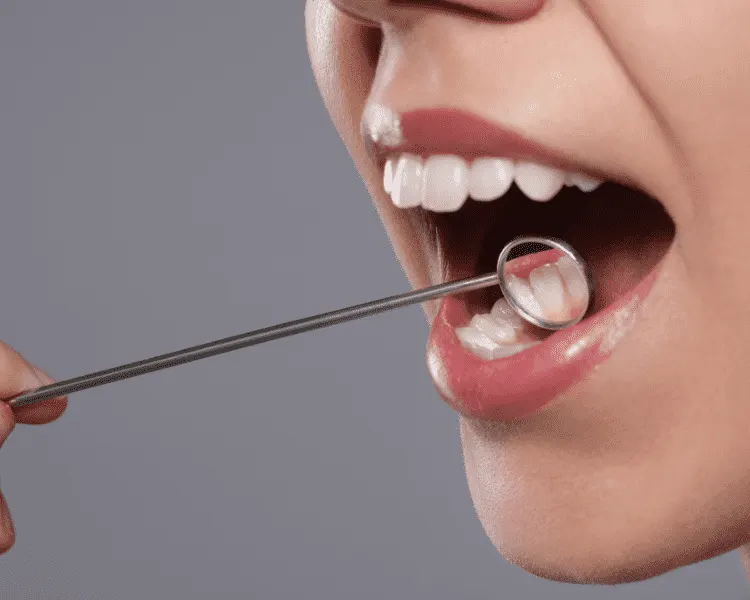
Professional dental cleaning
For gingivitis and early periodontitis — plaque and tartar are removed from above and below the gum line. Combined with improved home care, this is sufficient to reverse gingivitis fully.
Scaling and root planing (deep cleaning)
The primary non-surgical treatment for periodontitis. Scaling removes tartar from above and below the gum line; root planing smooths the root surfaces to remove bacteria and provide a clean surface for the gum to reattach. Usually performed under local anaesthesia, in quadrants over multiple appointments.
Pocket reduction surgery (flap surgery)
When pockets are too deep for effective cleaning with scaling alone, the gum is folded back (like a flap) to allow direct access to the roots and bone. The area is cleaned thoroughly, and the gum is repositioned and sutured — reducing pocket depth and making long-term maintenance more effective.
LANAP (laser gum surgery)
A minimally invasive alternative to flap surgery — a calibrated laser selectively targets and removes diseased tissue while leaving healthy tissue intact. No cutting, fewer sutures, faster recovery. Comparable outcomes to traditional surgery for appropriate cases.
Gum grafting
When gum recession has exposed root surfaces, a gum graft covers the exposed area using tissue from the palate or a donor source. Reduces sensitivity, improves appearance, and protects the root from further recession and decay.
Bone grafting
When bone loss has occurred, a bone graft can regenerate lost bone volume — either to restore function, to prepare for implant placement, or as part of guided tissue regeneration.
Guided tissue regeneration
A membrane is placed between the bone and gum tissue to prevent the faster-growing soft tissue from filling the space, allowing bone and ligament cells to regenerate in areas of bone loss.
Gum disease and overall health — the systemic link
Periodontal disease is not isolated to the mouth. The bacteria and inflammatory markers from gum disease enter the bloodstream and affect the whole body. The evidence is substantial:
- Cardiovascular disease: Periodontal bacteria have been found in arterial plaques. People with gum disease have a significantly higher risk of heart attack and stroke.
- Diabetes: Bidirectional — gum disease worsens blood sugar control, and poorly controlled diabetes worsens gum disease. Treating periodontitis improves HbA1c in diabetic patients.
- Pregnancy: Periodontal disease is associated with premature birth and low birth weight. Pregnant women with gum disease have higher rates of preeclampsia.
- Respiratory disease: Bacteria aspirated from the mouth can cause or worsen pneumonia and COPD.
- Alzheimer's disease: Growing evidence links the key periodontal bacterium Porphyromonas gingivalis to the development of Alzheimer's — found in the brains of Alzheimer's patients in multiple studies.
Gum disease and dental implants — can you still have implants?
Yes — but gum disease must be fully treated and stable before implant placement. Active gum disease is a contraindication for implants: the same bacterial environment that destroys natural tooth support will attack the implant (peri-implantitis) and cause implant failure.
The treatment sequence for patients with gum disease who need implants: treat periodontal disease → achieve stable, healthy gum and bone condition → place implants → restore with crowns. For patients where bone loss has already occurred, bone grafting may be needed before implants are possible.
For full detail: Dental Implants with Bone Loss → | Dental Implants Turkey Cost & Guide 2026 →
Frequently asked questions — gum disease
Is gum disease curable?
Gingivitis — the earliest stage — is fully reversible with professional cleaning and improved home care. No permanent damage has occurred at this stage, and the gums return to full health. Periodontitis (once bone and ligament destruction has begun) is not curable in the same sense — the damage cannot be fully undone — but it is highly manageable. With appropriate treatment and consistent 3–4 month maintenance cleaning, most patients with periodontitis keep their teeth for life. The earlier treatment begins, the better the outcome.
What are the warning signs of gum disease?
The earliest and most important warning sign is bleeding gums when brushing or flossing — healthy gums do not bleed. Other early signs include red, swollen or tender gums and persistent bad breath. As the disease progresses: gums pulling away from teeth (making them appear longer), deep pockets between teeth and gums, loose or shifting teeth, changes in bite, and pus. Gum disease is often painless until advanced stages — do not wait for pain before seeing a dentist.
How to repair gum disease?
Gingivitis can be repaired with professional cleaning and improved brushing and flossing — within weeks. Periodontitis requires professional treatment: scaling and root planing (deep cleaning) for early to moderate cases, and periodontal surgery (pocket reduction, bone or gum grafting) for advanced cases. There is no home remedy that removes tartar or eliminates deep pockets — professional intervention is essential for periodontitis at any stage.
How to fix gum disease at home?
At the gingivitis stage only: brush thoroughly twice daily with a soft-bristled or electric toothbrush, angled at 45° to the gum line; floss every day between all teeth; use a chlorhexidine or antibacterial mouthwash; stop smoking if applicable; see a dentist for a professional cleaning to remove tartar that home care cannot touch. At periodontitis stage, home care alone cannot fix the disease — it maintains between professional treatments but cannot substitute for them.
How long can you keep your teeth with periodontal disease?
With appropriate treatment and consistent maintenance, most patients with even advanced periodontitis can keep the majority of their teeth for their lifetime. The key factors are: how early treatment begins, how consistently maintenance appointments (every 3–4 months) are attended, whether smoking is stopped, and whether any systemic conditions (especially diabetes) are well controlled. Teeth that are too mobile or that have insufficient bone support may need to be extracted and replaced — for those cases, implants placed after periodontal stabilisation are highly predictable.
What are the four signs of periodontal disease?
The four most clinically significant signs are: (1) bleeding on probing — gums bleed when a dental instrument touches the gum margin; (2) increased probing depth — pockets deeper than 3mm indicate bone loss; (3) clinical attachment loss — the gum has detached from the tooth below the enamel-cement junction; (4) radiographic bone loss — visible on X-rays as reduction in the height of bone around the roots. These four signs are used by dentists and periodontists to diagnose and stage periodontal disease.
Can gum disease cause tooth loss?
Yes — advanced periodontitis is the leading cause of tooth loss in adults worldwide, surpassing tooth decay. As bone and ligament destruction progresses, teeth lose their structural support and become increasingly mobile. When support is insufficient to maintain function, extraction is necessary. The teeth lost to gum disease can be replaced with dental implants (after the gum disease is treated and stabilised), bridges or dentures. For options: Missing Teeth Replacement Guide →
Is gum disease contagious?
Not in the traditional sense — gum disease is not transmissible like a cold. However, the bacteria that cause gum disease (particularly Porphyromonas gingivalis and Treponema denticola) can be transmitted through saliva — via kissing, sharing utensils, or sharing toothbrushes. Whether transmission leads to disease depends on the recipient's immune response, oral hygiene habits, and susceptibility.
How does gum disease affect overall health?
Periodontal bacteria enter the bloodstream through inflamed gum tissue and contribute to systemic inflammation. Established links include: increased cardiovascular disease and stroke risk, worsened diabetic control, higher rates of premature birth and low birth weight in pregnant women, increased respiratory infection risk, and emerging evidence linking key periodontal bacteria to Alzheimer's disease pathology. Treating gum disease is a whole-body health intervention, not just a dental one.
The Last Word from The More Clinics
Gum disease is the most common serious health condition most people have never been properly told about. It begins silently, progresses without pain, and by the time it causes obvious symptoms — loose teeth, visible recession, tooth loss — significant and irreversible damage has often already occurred.
The good news: caught at the gingivitis stage, it is completely reversible. Caught at periodontitis stage, it is highly manageable with the right treatment and consistent maintenance. And for patients who have already lost teeth to gum disease, modern implant dentistry — once the periodontal disease is stable — offers predictable, permanent replacement.
At The More Clinics in Antalya, our periodontal team — led by Dr. Mehmet Can Kılınçaslan, specialist in Periodontology and Implantology — provides the full spectrum of periodontal treatment: from deep cleaning to advanced surgical procedures. A free consultation assesses your current condition and provides a clear, honest treatment plan.
Book a Free Consultation → WhatsApp Us →
Medical disclaimer: This guide is for informational and educational purposes only and does not constitute professional dental advice. If you suspect gum disease, consult a qualified dentist or periodontist promptly. Early diagnosis significantly improves outcomes.
This article provides general information and does not replace an individual medical assessment, diagnosis or treatment advice. Discuss decisions about your health and treatment with your treating clinician.