Can Braces or Invisalign Fix an Overbite, Underbite or Bite Problem?
Talk to our team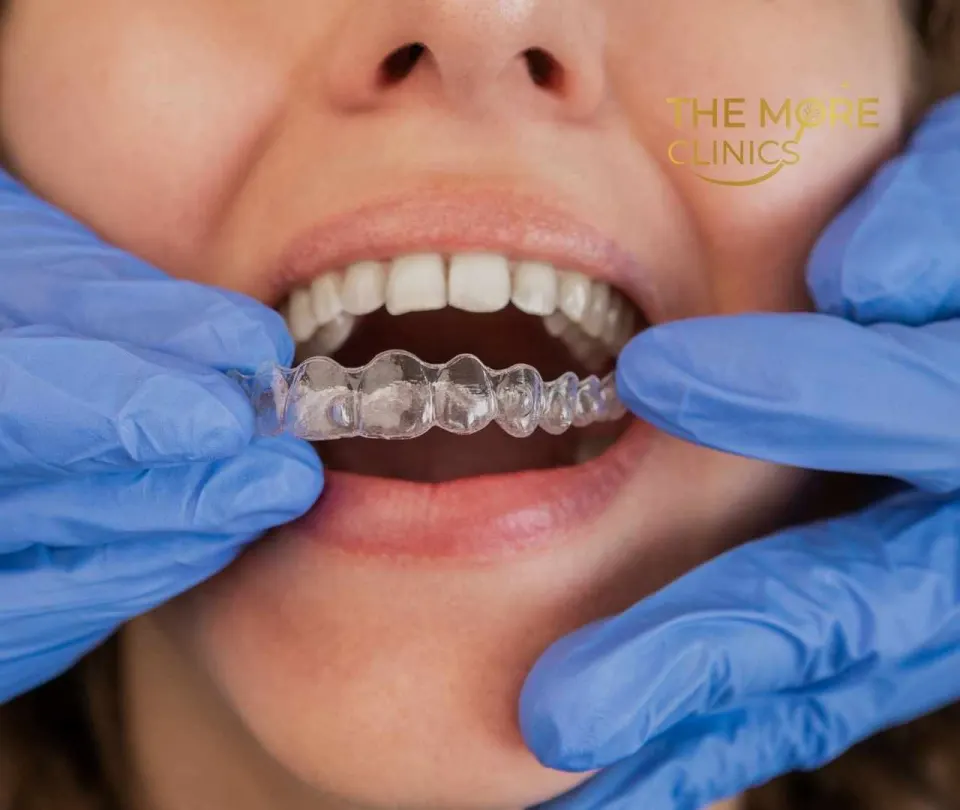
In this article 13 sections
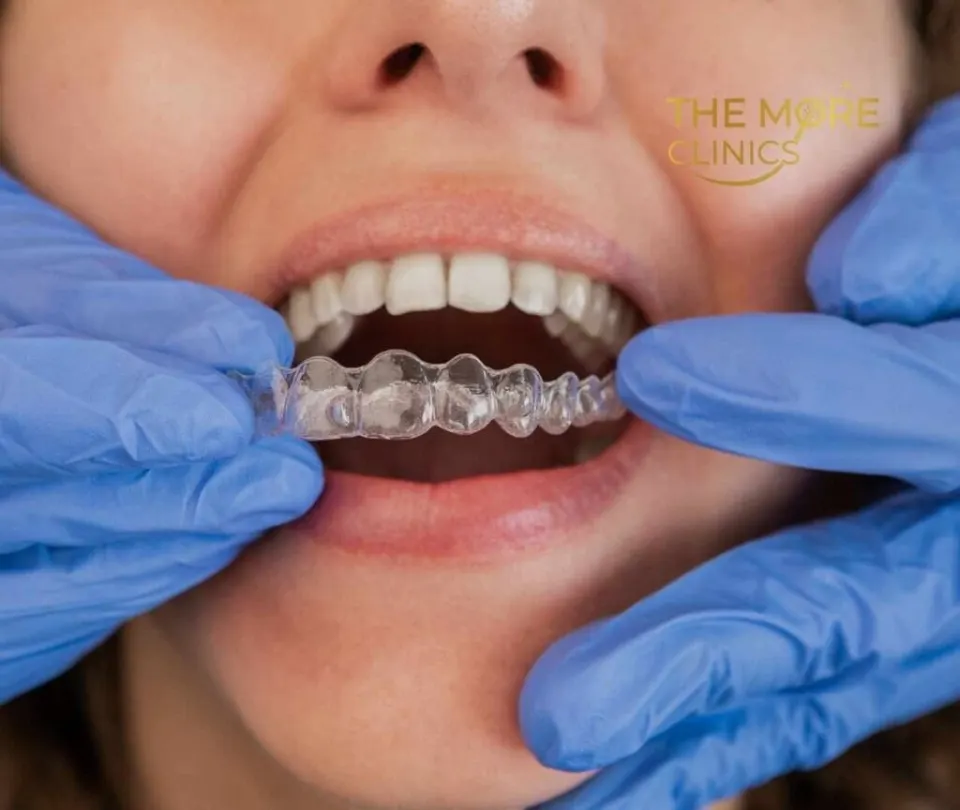
Yes — braces and Invisalign can fix many overbites, underbites, crossbites and open bites. Clear aligners like Invisalign work best when the bite problem is dental (caused by tooth position). When the problem is skeletal (caused by the jaw position), aligners or braces alone may not be enough, and braces with appliances — or, in severe adult cases, jaw surgery — may be needed. The right treatment depends on a proper orthodontic diagnosis.
What is a malocclusion (a "bad bite")?
Your "bite" describes how your upper and lower teeth meet when your mouth is closed. In a healthy bite, the upper teeth sit slightly outside the lower teeth, and chewing forces are spread comfortably. When the teeth or jaws don't fit together as they should, orthodontists call this a malocclusion. Left untreated, malocclusions can cause uneven tooth wear, jaw pain, gum problems, difficulty chewing or speaking, and self-consciousness about your smile. The encouraging news: most can be corrected with braces or clear aligners.
The four main bite problems
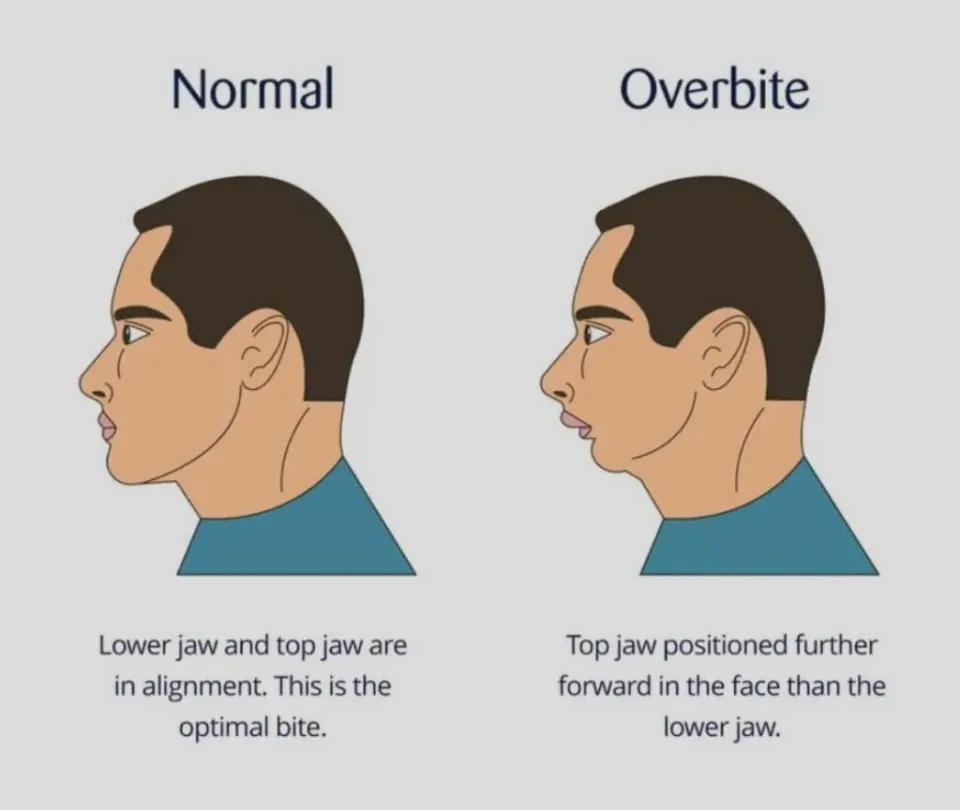
- Overbite: the upper front teeth overlap the lower front teeth too much. Deep overbites can cause tooth wear, gum irritation and jaw discomfort, and can make the chin look smaller.
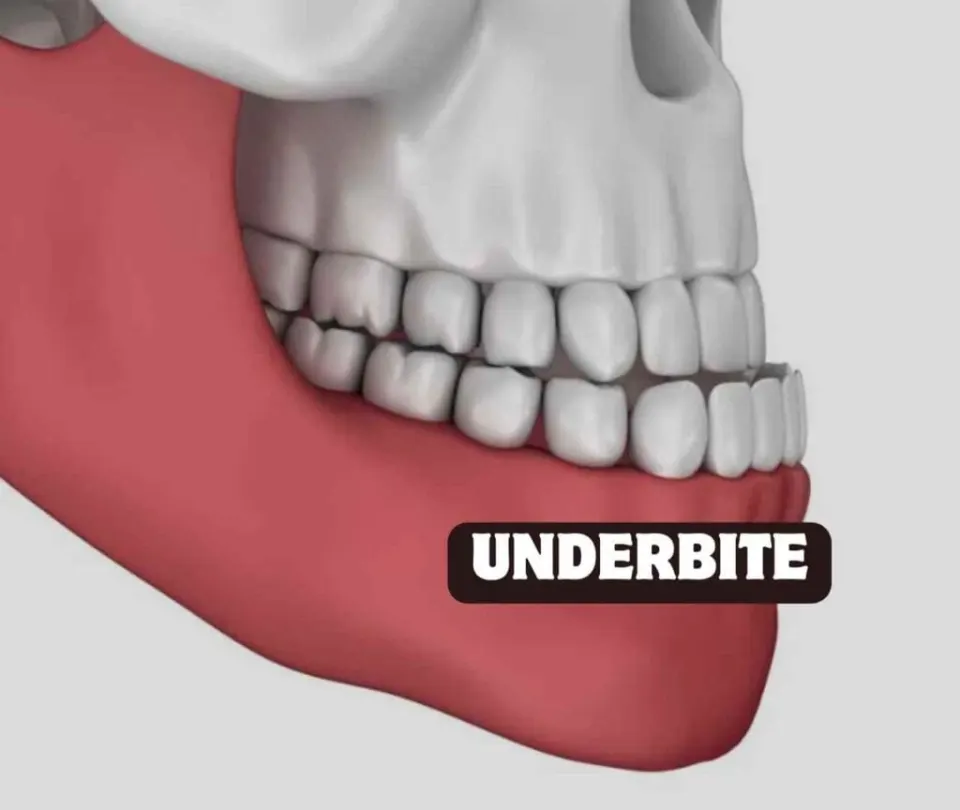
- Underbite: the opposite — the lower front teeth sit ahead of the upper front teeth. This can affect chewing, speech and facial balance.
- Crossbite: some upper teeth close inside the lower teeth rather than outside. Can cause uneven wear and jaw imbalance.
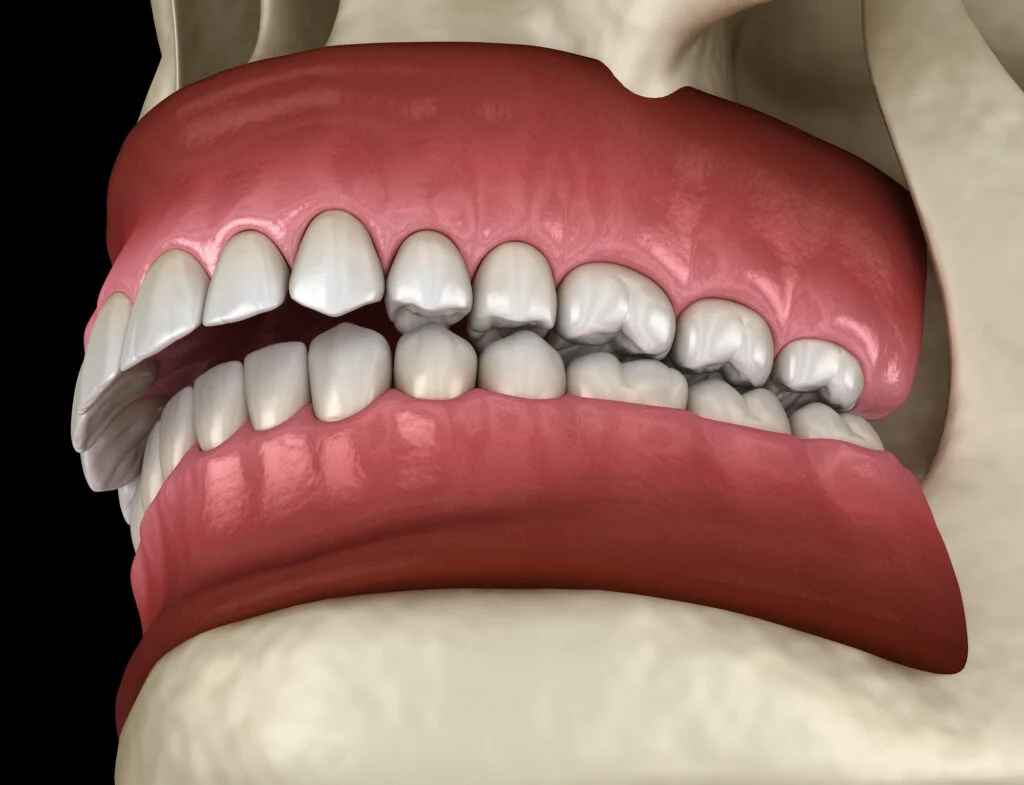
- Open bite: the upper and lower front teeth don't meet at all when the back teeth are closed. Can affect biting and speech.
Dental vs skeletal: the key distinction
This is the single most important factor in whether braces or Invisalign can fix your bite:
- Dental malocclusion: the problem is the position of the teeth — the jaws are fine, but the teeth are tilted or misaligned. These respond well to braces and Invisalign, which move the teeth into a better position.
- Skeletal malocclusion: the problem is the position or size of the jaws themselves (for example, a lower jaw that sits too far forward in an underbite). Moving the teeth alone can't fully correct this. Mild skeletal issues can sometimes be improved or camouflaged with orthodontics; more severe ones may need braces with appliances, growth guidance (in children), or jaw surgery (in adults).
Fixing an overbite
Overbites are one of the most treatable bite problems. Mild and moderate overbites respond well to both braces and Invisalign — the aligners or brackets reduce the overlap by tipping and aligning the front teeth and improving back-tooth support, which protects against chipping and spreads biting forces more evenly. Severe overbites, especially those involving a significant jaw discrepancy, may need braces with additional appliances or, occasionally, surgery. Invisalign treatment for overbite typically takes around 9–18 months.
Fixing an underbite
Underbites can be corrected, but they're more likely to involve the jaw than overbites, so the dental-vs-skeletal distinction matters most here. If the underbite is caused mainly by tooth angles (dental), Invisalign or braces can ease the forward position of the lower teeth and improve function.
If the lower jaw itself sits too far forward (skeletal), tooth movement alone can't fully correct it — braces with appliances, growth guidance during childhood, or orthognathic (jaw) surgery in adults may be recommended. Invisalign treatment for a dental underbite typically takes around 12–24 months.
Fixing a crossbite
Many crossbites respond well to Invisalign and braces. Treatment works by slightly expanding the arches and moving or rotating specific teeth outward into a correct relationship, and improving midline alignment when the bite is asymmetric. Mild to moderate crossbites (especially localised ones) often correct well; a very narrow upper jaw or broad skeletal discrepancy may need a palatal expander (usually with braces) first. Crossbite treatment can take anywhere from about 6–18 months depending on complexity.
Fixing an open bite
Open bites — where the front teeth don't meet — can be among the more challenging bites to treat, but modern aligners and braces can correct many cases by moving the teeth into proper contact. As with the others, the outcome depends on whether the cause is dental or skeletal; skeletal open bites in adults may need combined orthodontic and surgical treatment. An experienced orthodontist will advise on the most predictable approach.
Treatment & timelines by bite type
| Bite problem | Invisalign? | Braces? | Typical time | Surgery if... |
|---|---|---|---|---|
| Overbite | Yes (mild–moderate) | Yes | 9–18 months | Severe jaw discrepancy |
| Underbite | Yes (if dental) | Yes | 12–24 months | Jaw sits far forward (skeletal) |
| Crossbite | Yes (many cases) | Yes | 6–18 months | Very narrow jaw / wide skeletal gap |
| Open bite | Yes (many cases) | Yes | 12–24 months | Skeletal open bite in adults |
Times are general guides; your actual timeline depends on severity, whether the cause is dental or skeletal, and how consistently aligners are worn. Only an orthodontic assessment can give you a firm plan.
Braces vs Invisalign — which is better for bite problems?
Both braces and Invisalign can correct bites; they differ in comfort, convenience and appearance:
- Invisalign (clear aligners): nearly invisible, removable, comfortable, easier to clean around. Excellent for mild to moderate bite problems. Requires discipline — worn 20–22 hours a day, changed every 7–10 days.
- Braces: fixed brackets and wires, more visible, but offer greater control for complex movements — severe skeletal discrepancies, large root movements, impacted or rotated teeth. Often the better choice for the most complex cases, sometimes combined with surgery.
For many patients, Invisalign provides meaningful bite correction without the look and feel of braces. For severe or skeletal cases, braces (with appliances or surgery) may be more predictable. The right choice depends on your diagnosis, goals and lifestyle.
When is jaw surgery needed?
When a bite problem is significantly skeletal — the jaws themselves are misaligned rather than just the teeth — orthodontics alone can't fully correct it in an adult. In these cases, orthognathic (corrective jaw) surgery, combined with braces, may be recommended to reposition the jaw.
This is more common with severe underbites and some open bites. It sounds daunting, but for the right patient it delivers a functional, lasting correction that tooth movement alone cannot. If your case may be skeletal, our team can advise — see our orthognathic surgery guide.
Want to fix your bite?
Get a free assessment of your bite and find out whether Invisalign, braces or another option is right for you.Explore Invisalign → Free Consultation →
What treatment looks like
Whichever appliance you choose, the process is similar: it begins with a consultation and diagnosis (including scans or X-rays to assess whether your bite is dental or skeletal), followed by a custom treatment plan.
With Invisalign, you wear a series of custom aligners 20–22 hours a day, changing to the next set every 7–10 days, with check-ins every 6–8 weeks. With braces, wires are adjusted at regular appointments. Once your bite is corrected, a retainer maintains the result — this step is essential, as teeth can drift back without it.
Bite Correction — Frequently Asked Questions
Can Invisalign fix an overbite?
Yes — Invisalign corrects many mild to moderate overbites, typically in 9–18 months, by tipping and aligning the front teeth. Severe overbites with a significant jaw discrepancy may need braces with appliances or, occasionally, surgery.
Can Invisalign fix an underbite?
Yes, if the underbite is dental (caused by tooth position) — usually in 12–24 months. If the lower jaw itself sits too far forward (skeletal), tooth movement alone can't fully correct it, and braces with appliances or jaw surgery may be recommended.
Can braces fix a bite better than Invisalign?
For severe or skeletal cases, braces (sometimes with surgery) offer more control and can be more predictable. For mild to moderate bites, Invisalign works very well and is more discreet. Your orthodontist advises based on your diagnosis.
Can Invisalign fix a crossbite?
Many crossbites respond well to Invisalign, which expands the arches slightly and moves specific teeth into a correct position, often in 6–18 months. Very narrow jaws or wide skeletal discrepancies may need a palatal expander with braces first.
How do I know if my bite problem is dental or skeletal?
Only an orthodontic assessment (with scans or X-rays) can tell for sure. Dental problems are about tooth position and respond to aligners/braces; skeletal problems involve the jaws and may need appliances or surgery. This diagnosis determines your whole treatment plan.
How long does bite correction take?
It varies by bite type and severity: overbites often 9–18 months, underbites 12–24 months, crossbites 6–18 months. Consistent aligner wear (20–22 hours a day) keeps treatment on track.
Will I need a retainer afterwards?
Yes — a retainer is essential after any bite correction to hold the teeth in their new position, as they can drift back without one.
Can adults fix bite problems, or only children?
Adults can absolutely correct bite problems. Children have the advantage that their jaws are still growing (so growth guidance can help skeletal issues), but adults successfully treat dental bites with aligners or braces, and skeletal cases with braces plus surgery where needed.
The Last Word from The More Clinics
Most bite problems — overbites, underbites, crossbites and open bites — can be corrected, and for many people Invisalign or braces are all that's needed. The key is a proper diagnosis first: understanding whether your bite is dental or skeletal determines whether clear aligners, braces, or (in severe cases) surgery is the right path. If you'd like to know exactly what would work for your bite, our dental and orthodontic team offers a free, no-pressure assessment.
Explore Invisalign → WhatsApp Us →
Related: Invisalign treatment · Orthognathic (jaw) surgery · Dental clinic Antalya · Smile makeover
Medical disclaimer: This article is for general information only and does not replace an orthodontic consultation. Whether braces, Invisalign or surgery is right for you — and treatment timelines — can only be determined after individual assessment by a qualified orthodontist or dentist.
SOURCES:
National Library of Medicine, PubMed: "Clear Aligner Therapy: Up to date review article"
American Association of Orthodontists: "How well does Invisalign work? A prospective clinical study evaluating the efficacy of tooth movement with Invisalign"
Cleveland Clinic, Malocclusion
HOW THE MORE CLINICS KEEP THE CONTENT UP TO DATE:
Our dedicated medical and editorial teams work tirelessly to stay informed about the ever-evolving world of health news. By rigorously tracking the latest research, clinical guidelines, and significant developments across various medical fields, they ensure that our content remains accurate, relevant, and up-to-date.
This includes reviewing peer-reviewed studies, consulting with healthcare professionals, and monitoring advancements in medical technology. Their meticulous efforts and attention to detail allow us to provide you with trustworthy, reliable information that you can depend on to make informed decisions about your health and well-being.
However, we still insist on getting a healthcare professional's opinion before you make any decision about your health. Consulting with a qualified expert ensures that the choices you make are informed, safe, and tailored to your individual needs.
Published and Last Updated: [27 August 2026]
Written by The More Editorial Team and Medically Reviewed by Dr. Onur Ademhan, specialist in Oral and Maxillofacial Surgery. See our Editorial Process.
This article provides general information and does not replace an individual medical assessment, diagnosis or treatment advice. Discuss decisions about your health and treatment with your treating clinician.