Gingivitis: The Early Stage of Periodontal Disease
Talk to our team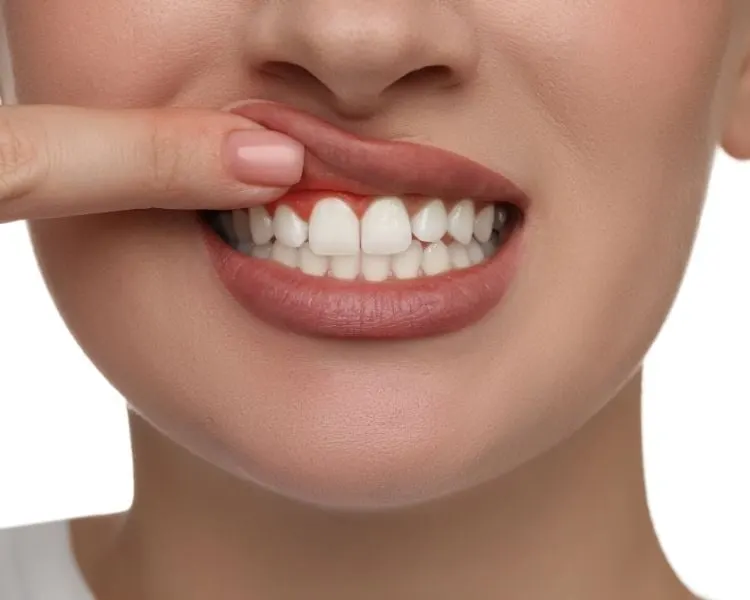
In this article 12 sections
Gingivitis is inflammation of the gums caused by bacterial plaque — and it is the most common form of gum disease worldwide. The critical fact about gingivitis: it is completely reversible with the right treatment. Unlike its more advanced counterpart periodontitis, gingivitis causes no permanent damage to bone or ligaments. Treat it in time and the gums return to full health.
This is part of our complete periodontal disease series. For the full overview of all gum disease stages: Gum Disease: Symptoms, Stages & Complete Guide →
| Is gingivitis reversible? | Yes — fully, with professional cleaning + home care |
| Can you treat gingivitis at home? | Yes — but professional cleaning is also needed |
| First symptom | Bleeding gums when brushing or flossing |
| Time to reverse | 2–4 weeks with proper treatment |
| Difference from periodontitis | Gingivitis = gums only, no bone loss, reversible |
| Main cause | Plaque and tartar buildup at the gum line |
What is gingivitis?
Gingivitis is inflammation of the gingiva — the gum tissue surrounding the base of the teeth. It is caused by the accumulation of bacterial plaque on the teeth that is not adequately removed by brushing and flossing. The bacteria in plaque release toxins that trigger an inflammatory response in the gum tissue — causing redness, swelling and a tendency to bleed. At this stage, no permanent damage has occurred to the bone or periodontal ligament.
Gingivitis is the gateway to periodontitis. Not all gingivitis progresses to periodontitis — but all periodontitis is preceded by gingivitis. Treating gingivitis promptly closes that gateway permanently.
Gingivitis symptoms
- Bleeding gums when brushing, flossing or eating — the earliest and most reliable sign. Healthy gums do not bleed. Why gums bleed and how to stop it →
- Red or reddish-purple gums — healthy gums are coral pink. Darker red or purple indicates inflammation.
- Swollen or puffy gums — inflamed gums appear enlarged and may feel tender to the touch.
- Bad breath (halitosis) — bacterial toxins produce volatile sulphur compounds that cause persistent bad breath not resolved by mouthwash.
- Gums that look shiny — the normal stippled (orange-peel) texture disappears when gums become oedematous.
- Mouth sores — occasionally present in more inflamed cases.
Gingivitis causes
Primary cause: plaque — the sticky biofilm of bacteria that forms on teeth within hours of cleaning. When plaque is not removed by thorough daily brushing and flossing, it accumulates at the gum line and hardens into tartar (calculus) within 24–72 hours. Tartar cannot be removed by home care — it requires professional dental instruments. The bacteria in accumulated plaque and tartar trigger the inflammatory response that causes gingivitis.
Factors that increase gingivitis risk
| Factor | How it contributes |
|---|---|
| Poor oral hygiene | Insufficient brushing and no flossing allows plaque to accumulate undisturbed at the gum line |
| Smoking / tobacco | Reduces gum blood flow, masks bleeding (false reassurance), impairs immune response, accelerates plaque-induced inflammation |
| Hormonal changes | Pregnancy, puberty and menopause increase gum sensitivity — "pregnancy gingivitis" affects up to 70% of pregnant women |
| Diabetes | Impairs immune response and healing; poorly controlled blood sugar dramatically worsens gum inflammation |
| Dry mouth (xerostomia) | Hundreds of medications cause dry mouth — saliva is the mouth's natural defence against plaque |
| Poorly fitting dental work | Crowns, bridges or dentures with rough margins trap plaque and are impossible to clean effectively |
| Vitamin C deficiency | Scurvy presents as severe gingivitis — rare in developed countries but seen in highly restricted diets |
Is gingivitis reversible?
Yes — gingivitis completely reversible. This is the most important fact about gingivitis. At this stage, inflammation is confined to the gum tissue. No bone has been lost, no ligament has been destroyed. With professional cleaning to remove tartar and improved home care to keep plaque under control, the gums return to full health — typically within 2–4 weeks.
The key requirement: professional cleaning is essential. Home care alone cannot remove tartar. No amount of improved brushing removes hardened calculus that has already formed. A professional cleaning removes the tartar driving the inflammation; improved home care prevents it from returning.
Gingivitis treatment — how to reverse it
Professional treatment
Scale and polish — the dentist or hygienist removes plaque and tartar from all tooth surfaces above and at the gum line using ultrasonic and hand instruments. This eliminates the primary cause of the inflammation. Most cases of gingivitis resolve completely following one or two professional cleaning appointments.
If pockets are slightly deeper than normal (up to 4mm), a more thorough scaling and root planing may be needed — cleaning below the gum line where a standard polish cannot reach.
How to treat gingivitis at home
After professional cleaning, consistent home care prevents recurrence:
- Brush twice daily for 2 minutes — use a soft-bristled or electric toothbrush. Angle the bristles at 45° toward the gum line and use small circular motions. Electric toothbrushes (oscillating-rotating type) remove significantly more plaque than manual brushing.
- Floss daily — this is the single most impactful change most patients can make. Most gingivitis starts between teeth where brushing cannot reach. Floss once a day, every day, without exception.
- Use an antibacterial mouthwash — chlorhexidine 0.12–0.2% prescribed by your dentist for 2–4 weeks post-cleaning. Not for permanent daily use — causes staining and taste alteration. Essential oil mouthwashes (Listerine) are appropriate for ongoing daily use.
- Replace your toothbrush every 3 months — worn bristles are significantly less effective at plaque removal.
- Quit smoking — smoking impairs healing and masks bleeding, giving false reassurance that gingivitis has resolved when it has not.
- Attend regular check-ups — every 6 months for most patients with controlled gingivitis. Your dentist removes tartar before it causes inflammation and monitors for progression.
How long does it take to reverse gingivitis?
With professional cleaning and consistent home care, most cases of gingivitis show significant improvement within 1–2 weeks. Gum bleeding typically stops within 2 weeks of starting proper flossing — even before the inflammation has fully resolved. Complete resolution usually occurs within 4 weeks. If bleeding persists beyond 4 weeks of consistent, thorough home care following professional cleaning, the condition may have progressed to early periodontitis and requires reassessment.
Gingivitis vs periodontitis
| Factor | Gingivitis | Periodontitis |
|---|---|---|
| Tissues affected | Gums only | Gums + bone + ligaments |
| Bone loss | None | Yes |
| Reversible? | Yes ✓ | No |
| Pocket depth | ≤3mm | 4mm+ |
| Pain | None | Usually none until advanced |
| Treatment | Scale + polish + home care | Scaling, surgery, lifelong maintenance |
| Time to treat | 2–4 weeks | Months + ongoing |
For full detail on periodontitis: Periodontitis: Stages, Symptoms & Treatment →
Frequently asked questions — gingivitis
Is gingivitis reversible?
Yes — gingivitist completely reversible. Gingivitis is the only stage of gum disease that is fully reversible because it has not yet caused bone or ligament damage. Professional cleaning to remove tartar plus consistent daily brushing and flossing returns the gums to full health, typically within 2–4 weeks. Once gingivitis progresses to periodontitis, the bone damage is permanent and the condition can be managed but not cured.
How do I know if I have gingivitis or periodontitis?
Gingivitis causes bleeding, redness and swelling but no bone loss and no deep pockets (above 3mm). Periodontitis involves bone loss visible on X-rays, pocket depths of 4mm+, gum recession, and potentially loose teeth. You cannot reliably distinguish between them without a dental examination including periodontal probing. If your gums bleed regularly, see a dentist — early diagnosis determines which condition you have and what treatment is needed.
How to get rid of gingivitis?
Two steps: professional cleaning to remove tartar (which home care cannot remove) and consistent daily home care to prevent plaque from re-accumulating. Professional cleaning one or two appointments. Home care: brush twice daily for 2 minutes with a soft-bristled or electric toothbrush, floss every day. Improvement typically visible within 1–2 weeks; full resolution in 4 weeks.
How to treat gingivitis at home?
Home care treats gingivitis only if combined with professional cleaning — home care alone cannot remove tartar. At home: brush twice daily angling bristles at 45° to the gum line; floss daily; use a chlorhexidine or antibacterial mouthwash short-term (2–4 weeks); quit smoking; manage blood sugar if diabetic. For the specific step-by-step: see the treatment section above.
Can gingivitis go away on its own?
No — not without removing the tartar that is driving the inflammation. Improved brushing alone reduces new plaque but cannot remove hardened calculus already present. Without professional cleaning to remove tartar, gingivitis persists and risks progressing to periodontitis. Book a professional cleaning even if symptoms improve — the tartar needs removing regardless of how the gums feel.
Is gingivitis contagious?
Not in the traditional sense — gingivitis itself is not passed person to person. However, the bacteria that cause it (particularly Porphyromonas gingivalis) can be transmitted through saliva via kissing or shared utensils. Whether transmission leads to disease depends on the recipient's immune response and oral hygiene. Do not share toothbrushes.
Can gingivitis cause tooth loss?
Gingivitis itself does not cause tooth loss — no bone damage occurs at this stage. However, if untreated, gingivitis progresses to periodontitis, which does destroy the bone and ligament supporting teeth and is the leading cause of adult tooth loss. Treating gingivitis promptly prevents this progression entirely.
Does gingivitis cause bad breath?
Yes — bacterial toxins in inflamed gum tissue produce volatile sulphur compounds that cause persistent bad breath. Unlike food-related bad breath, gingivitis-caused halitosis does not resolve with mouthwash because the source is the bacteria in the gum tissue, not residual food particles. Treating the gingivitis resolves the bad breath. For related guidance: How to Stop Bleeding Gums →
The Last Word from The More Clinics
Gingivitis is the easiest stage of gum disease to treat and the most important to catch. It requires two appointments — a professional cleaning to remove the tartar, and your commitment to consistent daily flossing — to resolve completely. The patients who ignore bleeding gums for months or years are the ones who eventually need surgical periodontitis treatment. Act at the gingivitis stage and surgery never becomes part of your dental story.
At The More Clinics, our periodontal team provides professional cleaning, periodontal assessment and personalised home care guidance. A free consultation tells you exactly what stage you are at and what treatment your gums need.
Book a Free Consultation → WhatsApp Us →
This article medically reviewed by Dr. Mehmet Can Kılınçaslan, specialist in Periodontology and Implantology, with extensive experience managing all stages of periodontitis — from initial scaling and root planing to advanced surgical and regenerative procedures.
Medical disclaimer: This guide is for informational and educational purposes only. Consult a qualified periodontist for evaluation and treatment specific to your condition.
This article provides general information and does not replace an individual medical assessment, diagnosis or treatment advice. Discuss decisions about your health and treatment with your treating clinician.