Rhinoplasty Recovery Guide: All You Need to Know
Talk to our team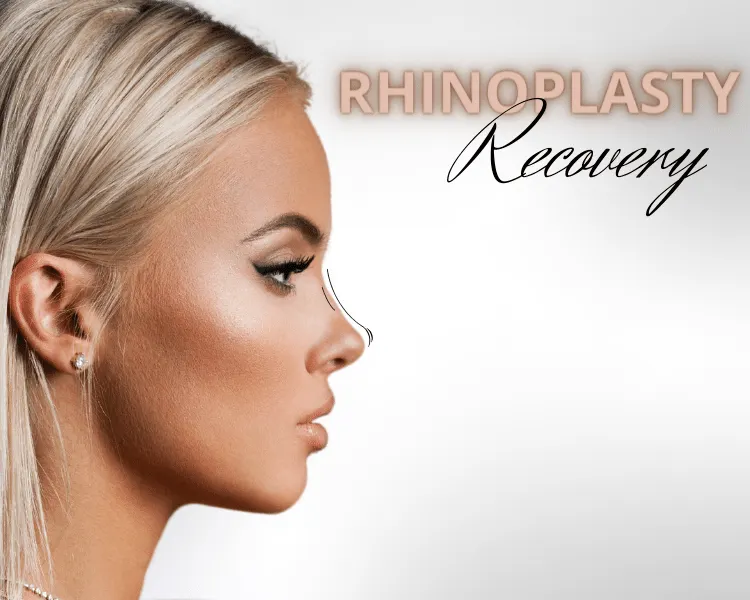
In this article 5 sections
Rhinoplasty (a nose job) is one of the most rewarding cosmetic procedures — but its recovery is also one of the most misunderstood. The single most important thing to know is this: what you see when the splint comes off is not your final nose. Healing unfolds slowly over months, and knowing the timeline in advance turns what could be an anxious wait into a reassuring, predictable process. Here's your complete week-by-week guide to what happens, when, and how to help your nose heal beautifully.
The big picture: the splint comes off around day 7, most bruising fades by 2 weeks, you're socially presentable by weeks 2–3, cleared for full exercise by weeks 6–8, and 80–90% of swelling is gone by month 3. Your final, refined result — especially the tip — takes up to 12 months (sometimes 12–18). Swelling, not pain, drives the timeline. Patience is everything.
Your recovery timeline, stage by stage
Healing follows a predictable arc. Here's what to expect at each stage — remember that individual recovery varies, and closed rhinoplasty tends to heal 20–30% faster than open, while revision surgery can take 25–50% longer.
1–7
7
2–3
6–8
3
12
Open vs closed rhinoplasty: does recovery differ?
Yes, a little. Closed rhinoplasty (all incisions inside the nose) tends to heal around 20–30% faster and with less external bruising, because there's no incision across the columella (the strip between the nostrils). Open rhinoplasty gives the surgeon more visibility for complex work but has a slightly longer visible-swelling phase. Revision rhinoplasty usually takes 25–50% longer to fully settle, because scar tissue from previous surgery makes swelling less predictable. Your surgeon chooses the technique based on what your nose needs, not just recovery speed.
Aftercare: the do's and don'ts
- Sleep with your head elevated 30–45° for 2–3 weeks
- Use cold compresses on the cheeks (first 48 hours)
- Eat soft, cool foods; stay hydrated
- Take gentle walks to aid circulation
- Take weekly photos in the same lighting to track progress
- Follow your surgeon's instructions closely
- Blow your nose (sneeze with your mouth open instead)
- Put cold compresses directly on the nose or splint
- Rest glasses on the bridge until cleared
- Do strenuous exercise before weeks 6–8
- Expose the nose to strong sun, or smoke
- Judge the result at splint removal — it's not final
Rhinoplasty Recovery — Frequently Asked Questions
How long does rhinoplasty recovery take?
The splint comes off around day 7, bruising fades by 2 weeks, you're socially presentable by weeks 2–3, and cleared for exercise by weeks 6–8. Final refined results take up to 12 months (12–18 for some, longer for revision), as swelling — especially at the tip — slowly resolves.
When does the swelling go down?
Most visible swelling drops in the first month, and 80–90% is gone by month 3. Subtle swelling at the nasal tip can take 9–12 months to fully resolve. Sleeping elevated for the first 2–3 weeks helps significantly.
When can I go back to work?
Most people return to non-strenuous, desk-based work within 10–14 days, once the splint is off and bruising has faded. Physically demanding jobs need longer.
Why can't I blow my nose?
Even a gentle blow can disrupt healing cartilage in the first week. Sneeze with your mouth open, and wait until your surgeon says it's safe to blow gently.
Is the nose I see at splint removal my final result?
No — this is one of the most important things to know. At day 7 the nose is puffy and the tip upturned; it's an early checkpoint. Your true result develops over the following months as swelling resolves.
Does open or closed rhinoplasty heal faster?
Closed rhinoplasty heals around 20–30% faster with less external bruising. Revision rhinoplasty takes 25–50% longer to settle. Your surgeon selects the technique based on your nose's needs.
The Last Word from The More Clinics
Rhinoplasty recovery is a marathon, not a sprint — the splint week is over quickly, but your beautiful final result reveals itself gradually over the following year. The secret to an easy recovery is understanding the timeline, following your aftercare, and being patient with the tip, which is always last to settle. If you're planning a rhinoplasty or you're mid-recovery and wondering whether what you're seeing is normal, our team is happy to reassure and guide you — honestly and without pressure.
Rhinoplasty in Turkey → WhatsApp Us →
Related: Rhinoplasty Turkey · Facelift · Caffeine & surgery recovery
Medical disclaimer: This guide is for general information only and does not replace your surgeon's specific aftercare instructions. Recovery varies by individual, technique (open/closed/revision) and procedure. Always follow the advice of your own surgical team and contact them with any concerns during recovery.
SOURCES:
Rhinoplasty (Nose Job), Cleveland Clinic
Rhinoplasty, Oral and Maxillofacial Surgery for the Clinician
HOW THE MORE CLINICS KEEP THE CONTENT UP TO DATE:
Our dedicated medical and editorial teams work tirelessly to stay informed about the ever-evolving world of health news. By rigorously tracking the latest research, clinical guidelines, and significant developments across various medical fields, they ensure that our content remains accurate, relevant, and up-to-date.
This includes reviewing peer-reviewed studies, consulting with healthcare professionals, and monitoring advancements in medical technology. Their meticulous efforts and attention to detail allow us to provide you with trustworthy, reliable information that you can depend on to make informed decisions about your health and well-being.
However, we still insist on getting a healthcare professional's opinion before you make any decision about your health. Consulting with a qualified expert ensures that the choices you make are informed, safe, and tailored to your individual needs.
Last Updated: [2 September 2026]
Written by The More Editorial Team and Medically Reviewed by Op. Dr. İsmail Gökhan Bacak, specialist in Plastic, Reconstructive and Aesthetic Surgery. See our Editorial Process.
This article provides general information and does not replace an individual medical assessment, diagnosis or treatment advice. Discuss decisions about your health and treatment with your treating clinician.