Hair Transplant Side Effects: Normal Healing vs Warning Signs
Talk to our team
In this article 7 sections
Let's be honest about hair transplant side effects — because both panicking over normal healing and ignoring a real problem can hurt you. The truth is that most of what you'll experience after a hair transplant is completely normal and expected: swelling, scabbing, itching and shedding are your body healing, not signs that something went wrong.
But genuine complications, though uncommon, do happen — and knowing which is which means you stay calm when you should, and act fast when you must. This guide separates the two clearly: the expected, manageable side effects, and the red-flag warning signs that need urgent medical attention.
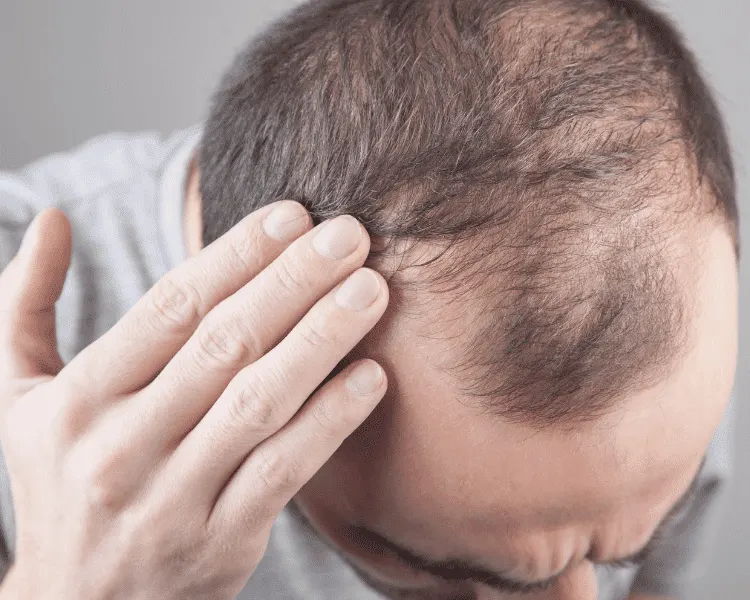
The reassuring reality: hair transplantation is one of the safer elective procedures, with overall complication rates of roughly 1–5% and graft survival of 90–98% in qualified settings. Most side effects settle on their own within 1–2 weeks. The rare serious complications are usually linked to poor technique or unqualified clinics — which is why who performs your transplant is the single biggest safety factor.
Side effect vs complication: the crucial difference
Medically, there's an important distinction that most people blur together. A side effect is an expected, temporary healing response — swelling, scabbing, itching, shedding — that forms a normal part of recovery and resolves on its own without treatment.
A complication is a medically significant event that deviates from normal healing and needs clinical attention — such as infection or, very rarely, necrosis. Confusing the two cuts both ways: it causes needless panic over normal healing, and it can create false reassurance that makes someone ignore a genuine problem. So let's be clear about both.
✅ Expected & manageable side effects (normal — don't panic)
These are all normal parts of healing. They resolve on their own, usually within days to a couple of weeks, and don't require intervention:
| Side effect | What to expect |
|---|---|
| Swelling (edema) | Affects around 42% of patients; forehead and around the eyes, peaking days 2–5, then settling. Sleeping with your head elevated helps. |
| Shock loss (shedding) | The transplanted hairs fall out around weeks 2–8 (~45% of patients notice it). Completely normal — the follicles rest before growing permanent hair. |
| Scabbing / crusting | Small scabs form around grafts and shed naturally with gentle washing by days 10–14. Don't pick them. |
| Itching | Common as the scalp heals; a sign of healing. Don't scratch — follow your clinic's washing routine. |
| Mild pain / tenderness | Usually mild (2–3 out of 10), managed with prescribed pain relief in the first 1–2 days. |
| Numbness | Temporary numbness in the donor area, resolving over weeks to a few months. |
| Temporary redness | Pink or red scalp, more visible on lighter or thinner skin, fading over days to a few weeks. |
| Mild folliculitis | Small pimple-like bumps around grafts (weeks 2–6), affecting a minority of patients. Usually settles on its own or with simple treatment within 7–10 days. |
Remember: it looks worst before it looks better. A hair transplant does not look "done" in a week. Swelling settles, scabs shed, the transplanted hairs fall out, and the early months can feel visually underwhelming — this "ugly duckling" phase is completely normal and does not mean the procedure failed. For the full healing timeline, see our hair transplant recovery & aftercare guide.
🚩 Red flags: side effects you do NOT want (seek help urgently)
These are different. They're uncommon — but if you notice any of them, they signal a possible complication that needs prompt medical attention. Do not wait to "see if it settles":
| Red-flag sign | Why it matters |
|---|---|
| Fever (over ~38°C / 101°F) | Especially after day 5 — a possible sign of infection. |
| Pus or discharge | From any graft or the donor site — a sign of infection. |
| Spreading redness & warmth | Especially with red streaks — can indicate spreading infection (cellulitis). |
| Worsening or throbbing pain | Pain that increases after the first 48 hours rather than easing. |
| Bad smell | An unpleasant odour from the surgical area suggests infection. |
| Dark or blackened scalp tissue | Possible necrosis (tissue death) — needs immediate evaluation. Very rare. |
| Swelling that grows after day 7 | Swelling should be reducing, not increasing, by then. |
| Persistent bleeding or wound separation | Bleeding that won't stop, or incision edges opening up. |
⚠️ What to do if you notice a red flag
Contact your clinic and surgeon immediately — a good clinic provides support even after you've travelled home.
If you can't reach them quickly, or the sign is severe (high fever, spreading redness, blackened tissue, uncontrolled bleeding), go to your nearest doctor or emergency department without delay. The reassuring news is that when caught early, most infections and complications resolve fully with treatment and don't affect your final result — but delay is what causes harm. When in doubt, get it checked. It's always better to be reassured than to wait too long.
How to reduce your risk in the first place
Here's the most important safety fact: the most serious complications are rarely inherent to the procedure — they reflect who performs it, and how you care for your scalp afterwards. The rare cases of necrosis, for example, tend to occur with overly dense or deep incisions, or in patients whose healing is compromised by smoking or poorly controlled diabetes. You can meaningfully lower your risk by:
- Choosing a qualified, experienced surgical team in an accredited, sterile clinic — not a cheap "black-market" operation. This is the single biggest factor.
- Following your aftercare instructions strictly, especially hygiene in the first two weeks.
- Not smoking, and controlling conditions like diabetes before surgery.
- Speaking up early — contacting your clinic at the first sign of anything that worries you.
Hair Transplant Side Effects — Frequently Asked Questions
What are the normal side effects of a hair transplant?
Swelling, temporary shedding (shock loss), scabbing, itching, mild pain, temporary numbness and redness — all normal parts of healing that settle on their own within 1–2 weeks. Mild folliculitis (small bumps) can also occur and usually resolves quickly.
Is shock loss a side effect to worry about?
No — it's expected. Around weeks 2–8 the transplanted hairs shed while the follicles rest before growing permanent hair. It affects most patients and is a normal sign the process is working.
When should I contact my doctor or go to hospital?
Urgently, if you have fever (especially after day 5), pus or discharge, spreading redness or red streaks, worsening pain after 48 hours, a bad smell, dark/blackened tissue, swelling increasing after day 7, or uncontrolled bleeding. Contact your clinic immediately, or go to your nearest doctor or emergency department if you can't reach them or the sign is severe.
How common are serious complications?
Uncommon — overall complication rates are around 1–5%, with infection under 1% and necrosis very rare, in qualified settings. Graft survival is typically 90–98%. Most complications, caught early, resolve without affecting the result.
How can I lower my risk?
Choose an experienced surgeon in an accredited, sterile clinic (the biggest factor), follow aftercare strictly, don't smoke, control diabetes, and contact your clinic early if anything worries you.
Is it normal for my transplant to look bad at first?
Yes — it looks worst before it looks better. Swelling, scabs and shedding make the early weeks visually underwhelming ("ugly duckling phase"). This is normal and doesn't mean it failed. The real result develops over 9–12 months.
The Last Word from The More Clinics
The honest picture is this: hair transplantation is a safe, well-studied procedure, and almost everything you'll feel in the first weeks is normal healing that settles by itself. Genuine complications are uncommon — but real — so the smart approach is to know the red flags, act quickly if you see one, and above all choose a qualified clinic that supports you throughout recovery, not just on surgery day.
If you have any concern during your own recovery, don't hesitate: contact your clinic, and seek urgent care if you can't reach them. We're always happy to give honest guidance, before and after.
Hair Transplant → WhatsApp Us →
Related: Hair transplant recovery & aftercare · Hair transplant · Caffeine & surgery
Medical disclaimer & urgent note: This article is for general information only and does not replace your surgeon's advice. If you notice any red-flag sign — fever, pus, spreading redness, worsening pain, bad smell, dark tissue, or uncontrolled bleeding — contact your clinic immediately, or seek urgent care at your nearest doctor or emergency department without delay. When in doubt, get it checked.
SOURCES:
Complications of Hair Transplant Procedures—Causes and Management, Pubmed
The Real Risks of Hair Transplant Surgery: What Patients Need to Know, American Hair Loss Association
Hair Transplant, NHS
HOW THE MORE CLINICS KEEP THE CONTENT UP TO DATE:
Our dedicated medical and editorial teams work tirelessly to stay informed about the ever-evolving world of health news. By rigorously tracking the latest research, clinical guidelines, and significant developments across various medical fields, they ensure that our content remains accurate, relevant, and up-to-date.
This includes reviewing peer-reviewed studies, consulting with healthcare professionals, and monitoring advancements in medical technology. Their meticulous efforts and attention to detail allow us to provide you with trustworthy, reliable information that you can depend on to make informed decisions about your health and well-being.
However, we still insist on getting a healthcare professional's opinion before you make any decision about your health. Consulting with a qualified expert ensures that the choices you make are informed, safe, and tailored to your individual needs.
Last Updated: [2 September 2026]
Written by The More Editorial Team and Medically Reviewed by Dr. Seda Erdoğan, specialist in Dermatology and Hair Transplantation. See our Editorial Process.
This article provides general information and does not replace an individual medical assessment, diagnosis or treatment advice. Discuss decisions about your health and treatment with your treating clinician.