Nerve Repositioning (Lateralization)
Talk to our team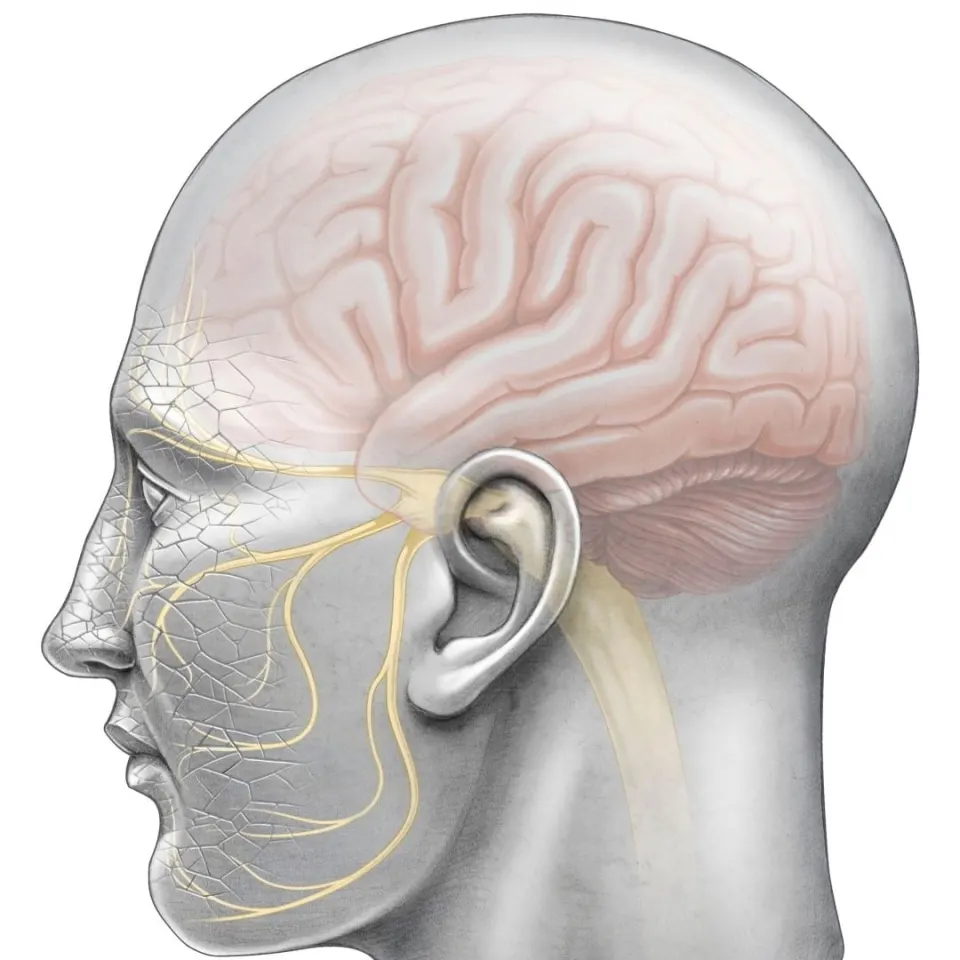
In this article 6 sections
If you've been told you can't have dental implants in your lower back jaw because "the bone is too low" or "the nerve is in the way," this page is for you.
Inferior alveolar nerve (IAN) repositioning — lateralization or transposition — is an advanced technique that safely moves the nerve aside so long, stable implants can be placed in a severely resorbed lower jaw, often without major bone grafting. This guide covers honestly how it works, how it compares to the alternatives (short implants, bone grafts, All-on-4), the real success rates, the numbness risk, and the cost.
| What it's for | → Implants in a severely resorbed lower back jaw |
| Main advantage | → Avoids major vertical bone grafting |
| Implant success rate | → 95–98% in multi-year studies |
| Numbness (temporary) | → Common early; ~3% at 6 months; permanent rare |
| Key requirement | → An experienced maxillofacial surgeon |
What is nerve repositioning — lateralization vs transposition
In the lower back jaw, the inferior alveolar nerve runs through a canal in the bone. When that jaw loses height (from long-term tooth loss and bone resorption), there isn't enough bone above the nerve to place a standard implant without risking nerve injury. Nerve repositioning solves this by carefully moving the nerve aside so a long implant can be placed and anchored in the solid bone below — then the nerve is gently laid back. There are two techniques:
- Lateralization: the nerve is shifted sideways (buccally) toward the implant site, keeping the mental foramen and mental nerve intact — the less invasive of the two.
- Transposition: involves a bone cut (corticotomy) around the mental foramen and moving the mental nerve too — used for more complex cases, with a slightly higher numbness risk.
Modern refinements — piezoelectric (ultrasonic) surgery and PRF (platelet-rich fibrin) — have been shown to reduce nerve disturbance and speed recovery.
How it compares to the alternatives
Nerve repositioning is one of several ways to handle a low lower jaw — the right choice depends on how much bone is left and your overall plan. An honest comparison:
| Option | Best when | Trade-off |
|---|---|---|
| Short implants | Mild-moderate bone loss | Simplest, but not enough when resorption is severe |
| Bone graft / GBR | Rebuilding lost height | Extra surgery, months of healing |
| Nerve lateralization | Severe loss, want to avoid grafting | Technically demanding, temporary numbness risk |
| All-on-4 | Full-arch, graftless | Uses front bone; fewer teeth per arch |
| Zygomatic implants | Severe upper jaw loss | For the upper jaw — the cheekbone equivalent of this technique |
Think of nerve lateralization as the lower-jaw counterpart to zygomatic implants in the upper jaw: both let an experienced surgeon place fixed implants where conventional implantology said it couldn't be done, without lengthy grafting.
Success rate & the honest numbness risk
When done by an experienced surgeon, implants placed with nerve repositioning have strong long-term results — studies report survival rates above 90%, a multicentre study found 95.8% over 1–10 years, and a 2026 four-year evaluation reported 98% survival. The long implant gains solid bicortical anchorage, which gives excellent primary stability and even allows immediate loading in selected cases.
Who is a candidate — and cost
You may be a candidate if you have severe bone loss in the lower back jaw (often less than ~6 mm of bone above the nerve), want fixed implants, and would prefer to avoid a lengthy vertical bone graft. Suitability is decided from a CT/CBCT scan — never a photo — which shows the exact position of the nerve canal and how much bone remains.
As an advanced surgical procedure it costs more than a standard implant, but in Turkey it remains a fraction of UK/US prices, and because it often replaces a separate grafting surgery, it can reduce the total number of operations, overall cost and treatment time.
Nerve Repositioning — Frequently Asked Questions
What is nerve lateralization for dental implants?
It's an advanced technique that moves the inferior alveolar nerve aside so long, stable implants can be placed in a severely resorbed lower back jaw — without the major bone grafting that would otherwise be needed. It lets patients previously told "implants aren't possible" get fixed teeth.
Will I have numbness afterwards?
Some numbness or tingling in the lower lip and chin is normal in the first weeks because the nerve is moved. It typically recovers — down to about 3% of patients at six months, with most making a full recovery. Permanent change is a rare risk, which is why surgeon experience matters so much.
What's the difference between lateralization and transposition?
Lateralization shifts the nerve sideways while keeping the mental nerve intact — less invasive. Transposition also moves the mental nerve and involves a bone cut, used for more complex cases with a slightly higher numbness risk. Your surgeon chooses based on your anatomy.
Is it better than a bone graft?
Not "better" — different. It avoids the extra surgery and months of healing that vertical grafting needs, in a single procedure, but it's technically demanding with a numbness risk. Short implants, grafts, All-on-4 and zygomatic implants are all alternatives depending on your case.
How successful is it?
Implant survival is high — above 90% across studies, 95.8% in a multicentre study over 1–10 years, and 98% in a recent four-year evaluation — when performed by an experienced surgeon with proper CT planning.
How is it planned?
From a CT/CBCT scan, which shows the exact position of the nerve canal and remaining bone. A photo is never enough. If you have a recent panoramic X-ray or CT, that's the best thing to send for a first opinion.
The Last Word from The More Clinics
Nerve lateralization is a genuine solution for patients with a severely resorbed lower jaw who've been told fixed implants aren't possible — the lower-jaw counterpart to zygomatic implants above. Its success depends on two things: an accurate CT-based plan, and an experienced oral and maxillofacial surgeon, because the technique is demanding and carries a real (usually temporary) numbness risk. We'll always give you an honest assessment of whether this, a graft, All-on-4 or another route fits your case best.
Send us your recent panoramic X-ray or CT for a free, honest evaluation — a WhatsApp consultation is confidential and costs nothing.
Get a Free Consultation → WhatsApp Us →
Related: Bone loss & implants · Zygomatic implants · All-on-4 · Bone graft · Full-mouth implants · Dental implants guide
 Written by The More Editorial Team and Medically Reviewed by Dr. Onur Ademhan, specialist in Oral and Maxillofacial Surgery and Implantology. See Editorial Process. Last Updated: [21 August 2026]
Medical disclaimer: This guide is for informational purposes only and does not replace a personal surgical consultation. Nerve repositioning is an advanced, technically demanding procedure; candidacy, technique, success and the risk of temporary or (rarely) permanent sensory change depend on individual CT-based assessment by a qualified oral and maxillofacial surgeon. Success rates are drawn from published studies and vary by case. Consult a specialist before any treatment decision.
This article provides general information and does not replace an individual medical assessment, diagnosis or treatment advice. Discuss decisions about your health and treatment with your treating clinician.