Profhilo Gone Wrong: Side Effects, Lumps, Risks & What to Do
Talk to our team
In this article 18 sections
Profhilo Gone Wrong: Side Effects, Risks, Lumps & What to Do in 2026
Profhilo is one of the safest injectable treatments available. Its non-cross-linked, ultrapure hyaluronic acid formulation has an exceptionally low adverse event profile — lower than most dermal fillers, lower than Botox in the categories that matter most. Clinical data consistently supports this. And yet — people search "profhilo gone wrong" 1,600 times a month.
People search "profhilo bumps not going down." People search "profhilo after 1 week" with anxiety in their fingertips. People search "profhilo gone wrong face" because they are sitting in front of a mirror feeling uncertain about what they are seeing.
This guide is for all of them. It tells you what is normal and expected in the days and weeks after Profhilo. It tells you what is not normal and requires attention. It explains every complication type — what causes it, how long it lasts, and what to do.
It covers the periorbital area specifically, because Profhilo near the eyes has its own risk profile. And it gives you a full aftercare protocol so you know exactly what to do to give your treatment the best possible outcome.
The Most Important Thing to Understand First
The vast majority of "profhilo gone wrong" searches are made by people whose treatment has not gone wrong — they are experiencing normal post-treatment responses that were not adequately explained to them beforehand.
Lumps at 24 hours? Normal. Mild bruising? Normal. Swelling on day 2? Normal. Skin looking no different at 1 week? Normal — and expected. Not seeing results at 2 weeks? Still within the normal window.
The problem is not usually the treatment. The problem is the information gap between injection and recovery. When practitioners do not explain what to expect clearly, patients interpret normal healing as complications. This guide closes that gap.
That said — some complications do occur, and recognising them matters. We cover both.
What Is Normal After Profhilo: The Day-by-Day Timeline
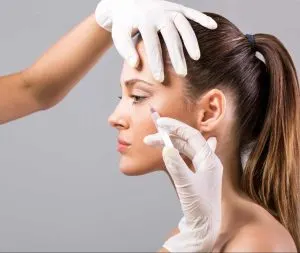
Immediately after treatment (0–2 hours): Small raised bumps at each of the 10 injection points (5 per side of the face) are expected and normal. This is the Profhilo product sitting just beneath the skin surface before it begins to diffuse. The bumps may feel firm to the touch. Some patients also experience mild redness and warmth at injection sites. This is a normal inflammatory response — not an allergic reaction, not a complication.
Day 1: Bumps typically begin to flatten as the product starts diffusing beneath the skin. Some bruising may appear at injection points — this is normal and unrelated to technique quality in many patients, particularly those taking supplements like fish oil, vitamin E, or aspirin that affect platelet function. Mild tenderness at injection sites is normal.
Days 1–3: Most lumps resolve. Some patients experience a brief period of mild swelling, particularly under the chin or along the jawline where the BAP technique places injections. Skin may feel slightly tight or different — this is the hyaluronic acid attracting water and beginning to hydrate the tissue.
Days 3–7 ("profhilo after 1 week"): At one week, most visible post-treatment effects have resolved. The injection sites are no longer visible. There may be residual bruising in sensitive patients. The skin does not yet look dramatically different — this is entirely normal. Profhilo works by stimulating collagen production, which takes time. Do not evaluate results at one week.
Weeks 2–4: Initial improvements in skin hydration and radiance become noticeable. Skin appears more luminous, plumped from within. Structural tightening — the mechanism that takes longest — is beginning but not yet complete.
4–8 weeks after second session: This is when most patients see the result they were looking for. Jawline appears slightly more defined. Neck skin tighter. Skin quality — texture, hydration, "bounce" — noticeably improved. This is the correct timepoint to evaluate whether your treatment has worked.
The most common source of "profhilo gone wrong" reports: Patients evaluating results at 1–2 weeks and concluding the treatment has failed. It has not failed. The collagen stimulation process has barely begun.
Profhilo Side Effects: The Complete List
Common Side Effects (Expected, Temporary)
Lumps at injection sites
The most frequently reported concern. Profhilo is a fluid product that disperses from its injection points — but this diffusion does not happen instantly. In the 24–48 hours after injection, small raised bumps at the BAP points are completely normal. They should flatten as the product spreads. Most resolve within 24–48 hours; virtually all resolve within 72 hours.
Bruising
Affects a minority of patients — typically those with thinner skin, those on blood-thinning supplements or medications, or simply those who bruise easily. Bruising at injection sites is normal and not a sign that anything went wrong. It resolves within 3–10 days. Arnica gel applied gently from the day after treatment can help speed resolution.
Swelling
Mild swelling at injection points is expected. Hyaluronic acid is hydrophilic — it attracts water — so some local swelling as the product begins integrating is normal. More pronounced swelling, particularly around the eyes or cheeks, may occur in patients whose skin is more reactive. This typically resolves within 3–5 days.
Redness and tenderness
Normal inflammatory response. Usually resolves within 24–48 hours.
Skin feeling "different"
Some patients describe a strange sensation of tightness, unusual texture, or awareness of the treatment areas for several days. This is normal as the product distributes and the tissue responds to the injection.
Less Common Side Effects (Require Monitoring)
Profhilo bumps not going down after 72 hours
If lumps persist beyond 72 hours, the cause is most likely injection at too-shallow a depth, causing the product to sit in the superficial dermis rather than the mid-to-deep dermis where it should diffuse. These lumps typically resolve on their own within 1–2 weeks as the product gradually disperses. Gentle massage as directed by your practitioner can help. If they persist beyond 2 weeks, contact your practitioner — hyaluronidase can dissolve HA product if necessary.
Swelling that peaks on day 3–5 and does not improve
Swelling that worsens progressively rather than improving, or that is accompanied by increasing redness, warmth, and tenderness, may indicate infection. This requires medical attention — early-stage infection responds well to antibiotics; delayed treatment allows it to progress. Contact your practitioner immediately if swelling is worsening rather than resolving.
Asymmetry
If one side of the face appears different from the other after the first session, this is typically caused by slightly uneven product distribution and usually self-corrects as both sides distribute equally over the following weeks. If significant asymmetry persists after 4–6 weeks, discuss with your practitioner — the second session can be adjusted to compensate.
Prolonged bruising (beyond 10 days)
While unusual, bruising that persists beyond 10 days warrants a call to your practitioner. In very rare cases, prolonged bruising can indicate a vascular issue rather than simple surface bruising.
Rare but Serious Complications
Vascular occlusion
The most serious potential complication of any injectable treatment, including Profhilo. Occurs when product is inadvertently injected into or compresses a blood vessel, cutting off blood supply to the surrounding tissue. Signs: sudden blanching (skin turning white) at or near the injection site, followed by mottled or dusky discolouration, significant pain, and potentially tissue necrosis (skin death) if not treated immediately.
This is a medical emergency. If you experience sudden skin colour change, severe pain, or mottled skin during or immediately after your Profhilo treatment, tell your practitioner immediately. Hyaluronidase injection can dissolve the HA product and restore blood flow — but timing is critical.
The risk of vascular occlusion with Profhilo is lower than with traditional fillers because Profhilo's fluid, non-cross-linked formulation is less likely to occlude a vessel completely. However, the risk is not zero, and the treatment must be performed by a practitioner who has hyaluronidase on-hand and who knows how to recognise and respond to this complication.
Allergic reaction
True allergic reactions to Profhilo are rare because its formulation contains no chemical cross-linking agents that are more common causes of allergy in traditional fillers. However, hypersensitivity reactions are possible. Signs: itching, rash or hives, excessive swelling beyond normal post-treatment response, in severe cases difficulty breathing. Seek immediate medical attention if any of these symptoms occur.
Infection
Risk is low when sterile technique is used. Signs of infection: increasing (not decreasing) redness and warmth 24–72 hours after treatment, swelling that worsens, pus, fever, or flu-like symptoms. Contact your practitioner immediately — early antibiotic treatment resolves most infections completely.
Granuloma (delayed inflammatory nodule)
A granuloma is a chronic inflammatory reaction — the immune system encapsulating a perceived foreign body. With Profhilo's non-cross-linked, ultrapure HA formulation, this is exceptionally rare compared to cross-linked fillers. If a nodule appears weeks after treatment, is firm, does not resolve, and is not tender, it may be a granuloma. Discuss with a practitioner — treatment options include intralesional steroids or hyaluronidase.
Related Post: Profhilo vs Fillers vs Botox
Profhilo Gone Wrong: Face-Specific Concerns
Profhilo Near the Eyes: What You Need to Know
"Profhilo before and after eyes" is one of the most searched related terms — and the periorbital area deserves its own discussion because it has a different risk profile from the rest of the face.
The skin around the eyes is the thinnest on the face. It has less subcutaneous fat, sits over complex vascular anatomy, and responds to injectable treatments differently. Profhilo's diffuse spreading behaviour — beneficial on the cheeks and jawline — means that product placed near the eyes can migrate unpredictably.
What goes well: Profhilo can produce a genuine improvement in periorbital skin quality — reducing the crepey, paper-thin texture that many patients dislike under and around the eyes. When performed correctly by an experienced practitioner using conservative amounts, the result is skin that appears more hydrated and less crepey without looking overfilled.
What goes wrong: Swelling under the eyes after Profhilo is more common than in other facial areas — the loose, thin tissue under the eye retains fluid easily, and the hyaluronic acid's water-attracting properties can produce noticeable swelling that takes longer to resolve than in thicker-skinned areas. This is often temporary and resolves within 1–2 weeks, but it can be alarming if not expected.
Patients with pre-existing eye bags or under-eye fluid retention are at higher risk of pronounced temporary swelling after periorbital Profhilo. An experienced practitioner will assess this during consultation and may advise against periorbital treatment in these patients or use a significantly reduced amount.
The periorbital Profhilo rule: Less is more. A conservative amount from an experienced injector produces a safe, natural result. An aggressive amount from an inexperienced injector produces swelling, irregularity, and the kind of outcome that generates "profhilo gone wrong face" searches.
Jawline and Lower Face
The most common treatment area. Complications here are typically minor — localised lumps at the BAP points, temporary asymmetry, bruising along the jaw. All are expected to resolve. The lower face has good skin thickness and favourable vascular anatomy for Profhilo treatment.
Profhilo Gone Wrong - Neck
The neck is thinner-skinned than the face. Bruising after neck Profhilo is more common. Swelling can be more visible. Both resolve normally within the standard 3–7 day window.
Profhilo Aftercare: The Complete Protocol
Good aftercare dramatically reduces the likelihood of complications and maximises your results. Follow these guidelines exactly.
Immediately after treatment:
- Do not touch, rub, or massage the injection sites
- Apply arnica gel gently to bruised areas only — not directly over lumps
- Keep the treated area clean and do not apply makeup for at least 12 hours (24 hours is better)
- Avoid alcohol for 24 hours — it dilates blood vessels and worsens bruising
- Avoid strenuous exercise for 24 hours
- Sleep on your back if possible — avoid putting pressure on the treated areas overnight
Days 1–3:
- Avoid extreme heat: hot showers, saunas, steam rooms, hot yoga for 48 hours
- Avoid sun exposure and tanning beds for at least 2 weeks
- No facial massages, facials, or treatments in the treated area for 2 weeks
- Drink plenty of water — hyaluronic acid works by attracting water; hydration supports the process
- Use a gentle, fragrance-free moisturiser — your skin is healing
Days 3–7:
- Gentle cleansing and moisturising is fine
- SPF 50 sunscreen is essential — every day, regardless of weather
- Avoid retinoids, AHAs, and exfoliants for 1 week post-treatment
- Avoid other injectable treatments for at least 2 weeks
Ongoing:
- SPF 50 daily is the single most important thing you can do to maintain Profhilo results
- Avoid dramatic weight fluctuations — they affect HA distribution
- Return for second session at 4 weeks as planned
What not to do: Do not massage lumps unless specifically instructed by your practitioner. Do not apply heat to lumps. Do not squeeze, poke, or attempt to drain any swelling.
Profhilo Benefits: Why It Is Still Worth Considering
For a guide that covers what can go wrong, it would be incomplete without honest coverage of why Profhilo remains one of the most well-regarded treatments in aesthetic medicine.
Clinically validated skin tightening: A published clinical study documented that Profhilo stimulates four collagen types (I, III, IV, and VII) simultaneously — an achievement no other single injectable replicates.
Exceptional safety profile: Its non-cross-linked formulation means no chemical additives that commonly cause allergic or inflammatory reactions. Complication rates in clinical literature are among the lowest of any injectable aesthetic treatment.
Natural results: Profhilo does not alter facial structure, add volume, or freeze movement. The result is skin that looks healthier and younger — not treated.
Suitable for all skin tones: Unlike certain laser and energy-based treatments, Profhilo carries no meaningful risk of post-inflammatory hyperpigmentation in darker skin types.
Versatility: Face, neck, décolletage, hands, and body — Profhilo addresses skin quality across all these areas with the same mechanism.
Low maintenance: Two sessions per year is sufficient for most patients to maintain results — compared to Botox's three to four sessions annually.
Is Profhilo Safe? The Direct Answer
Yes — at the hands of a qualified, medically trained practitioner using authentic CE-marked product.
The complications described in this guide are real but the serious ones are rare, and the minor ones are temporary. The risk profile of Profhilo compares favourably to almost every other injectable aesthetic treatment.
The safety equation has two variables: the product and the person using it. The product is exceptionally safe. The person using it — their training, their knowledge of facial anatomy, their ability to recognise and respond to complications, their availability for follow-up — is the primary determinant of your safety and your result.
Choosing an unqualified practitioner, a non-medically trained beautician, or a clinic that cannot verify product authenticity is where "is profhilo safe" changes from yes to uncertain. It is not the product that generates the "gone wrong" cases. It is the absence of appropriate clinical oversight.
If Something Has Gone Wrong: What to Do
Step 1 — Contact your practitioner first. Most post-treatment concerns — lumps, bruising, swelling, mild asymmetry — are normal and will resolve. Your practitioner is best placed to tell you whether what you are experiencing is expected or requires intervention. Do not wait to contact them if you are concerned.
Step 2 — Seek urgent medical attention if you experience: sudden skin colour change (blanching or mottling), severe pain, difficulty breathing, fever, rapidly worsening swelling, or pus. These are not normal and require immediate medical response.
Step 3 — If your practitioner is not responsive and you have a concerning symptom, go to an urgent care facility or emergency department and explain that you have had a hyaluronic acid injectable treatment. Hyaluronidase — the enzyme that dissolves HA — should be available at well-equipped clinics and emergency facilities.
Step 4 — For persistent lumps or asymmetry that have not resolved after 4 weeks, a follow-up appointment with a qualified practitioner can assess whether hyaluronidase is appropriate or whether the issue will resolve naturally with more time.
Profhilo in Turkey: Safe When Done Right
The same safety considerations that apply in the UK or USA apply in Turkey. What matters is the practitioner's qualifications, the product's authenticity, and the clinical environment.
Turkey has a well-developed medical aesthetics sector with qualified practitioners performing Profhilo at a fraction of UK or US prices — using the same CE-marked IBSA product. The risks are not higher by virtue of the country. They are reduced by the same factors that reduce risk anywhere: verified practitioner credentials, authentic product, and a clinical environment with appropriate emergency protocols.
At The More Clinics, every patient requesting Profhilo in Turkey is matched with a personal treatment assistant who independently verifies injector qualifications and confirms authentic IBSA product is being used before any recommendation is made. Post-treatment follow-up is structured into every patient plan — so if you develop a concern after returning home, you have a named person to contact, not an unanswered inbox.
The Last Words from The More Clinics
Most "profhilo gone wrong" stories are not about Profhilo going wrong. They are about expectations not being managed, aftercare not being explained, and results being evaluated too early. The treatment itself — when performed by a qualified practitioner using authentic product — has one of the strongest safety records in injectable aesthetics.
What makes a Profhilo treatment safe and effective is not luck. It is choosing the right practitioner, receiving honest pre-treatment information, following aftercare instructions, and having a clear line of communication for any post-treatment concerns.
That is exactly what a personal treatment assistant at The More Clinics provides — from the first question you ask to the last follow-up after your second session. Free consultation, no commitment required.
Book Your Free Consultation → Ask on WhatsApp
Medical Disclaimer
The information in this article is for educational purposes only and does not constitute medical advice. It is not a substitute for professional consultation, diagnosis, or treatment by a qualified healthcare provider. If you are experiencing symptoms following a cosmetic injectable treatment, contact your treating practitioner or seek appropriate medical care. Individual responses to treatment vary. The More Clinics does not guarantee specific outcomes.
Medically reviewed by: [Dr. Seda Erdoğan, Dermatology Specialist]
FAQ
Q: What does Profhilo gone wrong look like? A: The most common "profhilo gone wrong" presentation is persistent lumps at injection sites that have not resolved after 72 hours — typically caused by product injected at too-shallow a depth.
Other presentations include prolonged swelling (beyond 5–7 days), asymmetry, bruising lasting more than 10 days, or — in rare cases — signs of vascular occlusion (skin blanching or mottling) or infection (increasing redness, warmth, pus, fever). Most concerning presentations after Profhilo turn out to be normal post-treatment responses rather than true complications.
Q: How long do Profhilo lumps last? A: Normal Profhilo bumps at injection points resolve within 24–48 hours as the product diffuses beneath the skin. Lumps caused by injection at too-shallow a depth may persist for 1–2 weeks before resolving naturally. Lumps that remain palpable or visible beyond 2–3 weeks should be assessed by a practitioner — hyaluronidase can dissolve the product if necessary. Hard nodules that do not resolve over weeks may indicate a granuloma and require specific treatment.
Q: Is Profhilo safe? A: Yes, at the hands of a qualified, medically trained practitioner using authentic CE-marked IBSA Profhilo. Its non-cross-linked, ultrapure hyaluronic acid formulation gives it one of the lowest adverse event profiles of any injectable aesthetic treatment. Serious complications are rare. The primary safety variable is practitioner qualification and the clinical environment — not the product itself.
Q: What should I avoid after Profhilo? A: For the first 24 hours: no touching or rubbing injection sites, no makeup, no alcohol, no strenuous exercise, no extreme heat (saunas, hot baths). For 1–2 weeks: no direct sun exposure, no facials or facial massage, no retinoids or exfoliants. Ongoing: SPF 50 sunscreen daily is the most important long-term aftercare step to protect and maintain results.
Q: Why do I see no results from Profhilo after 1 week? A: This is completely normal and expected. Profhilo works by stimulating collagen and elastin production — a biological process that takes time. Most patients see initial improvements in hydration and radiance at 2–4 weeks.
Structural tightening and the full result become visible 4–8 weeks after the second session. Evaluating Profhilo results at 1 week is like evaluating a fitness programme after one workout — the process has started but the outcome is not yet visible.
This article provides general information and does not replace an individual medical assessment, diagnosis or treatment advice. Discuss decisions about your health and treatment with your treating clinician.