Morpheus8: What It Is, How It Works, Turkey Option 2026
Talk to our team
In this article 14 sections
Morpheus8 has become one of the most searched aesthetic treatments in the world. It appears on celebrity skincare lists, fills aesthetic clinic waiting rooms, and generates more before-and-after content on social media than almost any other non-surgical procedure. It is also, depending on who you ask, either a transformative treatment that genuinely reverses early skin ageing — or an overhyped procedure that delivers modest results at a premium price.
Both narratives contain truth. Morpheus8 is a clinically validated, FDA-cleared device that produces real skin tightening results. It is also a procedure where outcomes vary significantly based on patient selection, provider skill, and realistic expectations. The gap between an excellent Morpheus8 result and a disappointing one almost always comes down to those three factors — not the technology itself.
This guide tells you everything you actually need to know before considering Morpheus8: what it does, how it works mechanically, what it can and cannot treat, who the right candidate is, what the real risks are (including the ones most clinics don't mention), and what results are realistic for someone with your skin concerns.
What Is Morpheus8?
Morpheus8 is a radiofrequency microneedling device manufactured by InMode, an Israeli medical technology company also behind FaceTite and BodyTite. It received FDA clearance in 2019 and expanded FDA clearance in July 2024 specifically for soft tissue contraction — a regulatory milestone that formally recognises its role in skin tightening beyond surface treatment.
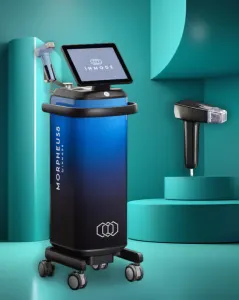
The device combines two established technologies into a single treatment:
Microneedling creates thousands of microscopic channels in the skin surface using an array of ultra-fine, gold-coated needles. This controlled micro-injury triggers the body's wound healing response — stimulating the production of new collagen and elastin.
Radiofrequency (RF) energy is delivered simultaneously through the tips of those same needles into the deeper dermal and subdermal layers, heating tissue to a therapeutic temperature of 65–75°C. This heat causes immediate collagen fibre contraction and triggers a sustained wave of new collagen production over the following months.
What separates Morpheus8 from standard microneedling devices is programmable penetration depth — from 0.5mm for delicate surface work to 8mm for deep body tissue remodelling. This means the same device can treat fine lines on the upper lip at shallow settings and address structural skin laxity on the jawline or abdomen at deeper settings. No commonly available RF microneedling device reaches the same depth range.
The treatment is fractional — meaning it treats a grid of micro-zones rather than the entire skin surface simultaneously, allowing the untreated zones between needling points to accelerate healing. This is what gives Morpheus8 its relatively short recovery time compared to ablative laser treatments.
How Does Morpheus8 Work: The Three-Layer Mechanism
Understanding what happens at each depth level helps you understand both why Morpheus8 works and why it requires an experienced provider to set correctly.
Surface layer (0.5–2mm depth): At shallow settings, Morpheus8 behaves similarly to standard radiofrequency microneedling — creating micro-injuries that stimulate surface collagen production and cellular renewal. This addresses skin texture, tone, fine lines, and superficial scarring. The periorbital area (around the eyes), upper lip, and forehead are typically treated at these shallower depths.
Dermal layer (2–4mm depth): The standard treatment depth for facial skin tightening. At this level, RF energy reaches the mid-to-deep dermis where the structural collagen responsible for skin firmness sits. Heat at this depth causes immediate contraction of existing collagen fibres — producing the instant tightening patients notice in the days after treatment — followed by sustained new collagen synthesis over 3–6 months. This is the primary mechanism for jowl reduction, jawline definition, and neck tightening.
Subdermal layer (4–8mm depth): At deeper settings, RF energy reaches the subdermal fat layer, causing thermal disruption and remodelling of fat architecture. This produces contouring effects — particularly on body areas like the abdomen, arms, and thighs. This depth requires significant operator experience.
At these settings, RF energy can cause permanent fat atrophy (volume loss) if applied incorrectly on the face — a real complication that is underreported by clinics and responsible for the majority of negative outcomes associated with the procedure. We return to this in the risks section.
What Does Morpheus8 Treat?
Morpheus8 is one of the most versatile devices in aesthetic medicine. The combination of adjustable depth and RF energy means it addresses a wider range of concerns than most single-technology treatments.
Face:
- Early jowling and loss of jawline definition
- Skin laxity in the lower face and cheeks
- Fine lines and wrinkles — forehead, perioral area, under-eye crepe
- Acne scarring — Morpheus8 is one of the most effective non-ablative treatments for atrophic acne scars
- Enlarged pores and uneven skin texture
- Hyperpigmentation and sun damage (at surface settings)
- Submental (under-chin) fat and skin laxity
Neck and décolletage:
- Neck skin laxity and horizontal neck lines
- Crepey décolletage skin
- Early platysma banding (early "turkey neck")
Body:
- Abdominal skin laxity — particularly post-pregnancy or post-weight-loss
- Upper arm skin laxity
- Inner thigh laxity
- Stretch marks — improvement reported in clinical literature, particularly when treated with deeper settings
- Knee skin laxity
- Post-liposuction skin irregularities
What Morpheus8 does not treat well:
- Significant structural sagging — patients with pronounced jowls, deep facial volume loss, or advanced neck laxity need surgical options
- Dynamic wrinkles caused by muscle movement — these are better addressed with neuromodulators (Botox)
- Volume loss — Morpheus8 stimulates collagen but does not replace lost volume; fillers or fat transfer are appropriate for this
- Severe acne scarring (ice pick scars, deep boxcar scars) — ablative treatments typically produce superior results for severe scarring
Related Post: Profhilo Skin Booster Injections
Related Post: Profhilo vs Fillers vs Botox
Who Is the Right Candidate for Morpheus8?
The procedure is most consistently successful in a specific patient profile. Understanding this candidacy picture honestly is more useful than a list of who "can" have the treatment.
Best candidates: Patients in their 30s, 40s, and early 50s with mild to moderate skin laxity, early jowling, loss of jawline definition, skin texture concerns, or acne scarring. Patients in this group are in the window where non-surgical RF technology can produce meaningful structural change. For many, starting Morpheus8 in their mid-30s functions as a genuine preventative investment — stimulating collagen production before significant structural loss occurs.
Good candidates with realistic expectations: Patients in their 50s and 60s with moderate laxity who understand the difference between a Morpheus8 result and a surgical facelift. The procedure can produce a noticeable improvement — but not a surgical correction. Combination approaches (Morpheus8 with FaceTite, for instance) extend the range of what non-surgical treatment can achieve in this group.
Poor candidates: Patients with significant structural sagging — pronounced jowls, substantial volume loss, deep facial hollowing, or significant platysma banding — are unlikely to be satisfied with Morpheus8 alone. A skilled practitioner will tell you this clearly in a consultation. One who recommends Morpheus8 for every enquiry regardless of anatomy is prioritising revenue over outcomes.
Morpheus8 works on all skin tones. Unlike ablative laser treatments that carry higher risks of post-inflammatory hyperpigmentation in darker skin types (Fitzpatrick IV–VI), Morpheus8's non-ablative mechanism makes it one of the safer RF options across skin tone diversity. This is a genuine advantage and one reason it has grown particularly popular among patients of South Asian, Middle Eastern, East Asian, and Black skin backgrounds.
The Treatment Experience: What Actually Happens
Before your appointment: A topical anaesthetic cream is applied 45–60 minutes before treatment to numb the skin surface. Some providers also offer nitrous oxide or oral sedation for patients with low pain tolerance, particularly for deeper body treatments. Avoid retinoids (tretinoin, retinol), AHAs, and BHAs for 5–7 days before treatment. Avoid sun exposure for at least one week before.
During the procedure: The Morpheus8 handpiece is applied systematically across the treatment area in a stamping motion. Each stamp delivers the full array of needles to a pre-set depth and a controlled RF pulse. Patients typically describe mild pressure and warmth — the topical anaesthetic manages most discomfort effectively, though deeper body treatments are more uncomfortable than facial treatments. Treatment duration: 20–45 minutes for a single facial area; 60–90 minutes for full face and neck; longer for body areas.
Immediately after: The skin appears red, similar to moderate sunburn, with small pinpoint marks at each needle entry point. Mild swelling develops over the following hours. This is normal and expected. The "golden 48 hours" post-treatment are the most critical for results — during this window, the inflammatory healing response is active and the collagen stimulation process is initiated.
Recovery timeline:
| Timeframe | What to expect |
| Hours 0–24 | Redness, warmth, mild swelling, pin-point marks visible |
| Day 1–3 | Swelling peaks then subsides; skin feels tight and dry |
| Day 3–5 | Redness fading; bronzing or mild peeling in some patients |
| Day 5–7 | Skin largely presentable; makeup can usually be applied |
| Week 2–4 | Initial collagen contraction visible; skin appears firmer |
| Month 1–3 | Progressive improvement as collagen remodelling continues |
| Month 3–6 | Optimal result from a single session visible |
How many sessions are needed: Most providers recommend 3 sessions spaced 4–6 weeks apart for optimal results. A single session produces visible improvement — particularly for texture and early laxity — but the cumulative effect of 3 sessions produces significantly better structural tightening. Annual maintenance sessions are typically recommended to sustain results.
Morpheus8 Results: What the Evidence Shows
Clinical evidence: A 2022 review published in the Journal of Cosmetic Dermatology (PubMed indexed, PMID: 35916259) confirmed Morpheus8 RF microneedling is effective for facial rejuvenation, acne scarring, and skin texture. Multiple peer-reviewed studies support its efficacy for collagen induction and skin contraction. The FDA's expanded 2024 clearance for soft tissue contraction reflects the accumulated clinical evidence.
Patient satisfaction data: RealSelf and similar platforms show a "Worth It" rating consistently between 63–70%, which is meaningful but notably lower than some clinics suggest. The 30–37% of patients who report less satisfaction almost universally describe the same pattern: expectations that exceeded what the procedure can deliver for their degree of laxity, or results compromised by suboptimal provider technique.
What results look like in practice:
- Skin texture improvement: visible in most patients after the first session, continuing to improve through subsequent sessions
- Jawline definition: most noticeable at 6–8 weeks, with continued improvement to 6 months
- Acne scar improvement: typically requires 3+ sessions; significant improvement in rolling and boxcar scars; less effective for deep ice pick scars
- Neck tightening: visible improvement in mild-moderate laxity; moderate to severe laxity shows modest response
Results duration: Most published data supports results lasting 1–3 years depending on age, skin quality, lifestyle, and maintenance protocol. Collagen loss continues with ageing — annual maintenance sessions extend and preserve results.
The Risks Nobody Tells You About — Including Fat Atrophy
Most clinic websites list generic risks: redness, swelling, temporary bruising. These are real but transient. There are two more significant risks that are substantially underreported in patient-facing content.
Permanent facial fat atrophy: At deeper treatment settings (4–8mm) on the face, RF energy can cause permanent, irreversible loss of facial fat. Facial fat volume is a key component of youthful appearance — loss of it accelerates the appearance of ageing by creating hollowing, particularly in the cheeks and temples.
This is the complication behind "morpheus8 ruined my skin" reports that circulate on Reddit and patient forums. It occurs when an operator applies deep body settings to delicate facial tissue, or when the same area is repeatedly treated at high energy without adequate assessment between sessions.
How to protect yourself: Ask your provider specifically what depth settings they will use on your face. The periorbital area should never exceed 2mm; the cheeks and forehead should be treated conservatively. A provider who cannot explain their depth settings with confidence should not be operating this device on your face.
Uneven results from inconsistent technique: Morpheus8 is not a passive device — the operator controls depth, energy level, and the number of passes in each zone. A provider who uses one-size-fits-all settings across all facial zones produces mediocre or uneven results. The delicate tissue around the eyes requires completely different settings from the jawline. Providers who are inexperienced with this device often under-treat areas requiring depth and over-treat areas requiring delicacy.
Other real but less severe risks:
- Post-inflammatory hyperpigmentation in darker skin types (low risk with proper protocol)
- Prolonged swelling or bruising (1–2 weeks in some patients)
- Temporary acne flares from the inflammatory response
- Burns or scarring from device malfunction or operator error (rare at accredited facilities)
Morpheus8 vs. Other Treatments: Where It Fits
| Treatment | Mechanism | Depth | Downtime | Best for |
| Standard microneedling | Micro-injury only | 0.5–2mm | 1–3 days | Texture, superficial scars |
| Morpheus8 | RF + microneedling | 0.5–8mm | 3–7 days | Laxity, texture, scarring, contouring |
| Ultherapy | Focused ultrasound | 3–4.5mm | 1–2 days | Brow lift, neck lift, décolletage |
| Thermage | Radiofrequency surface | 1–3mm | 1–2 days | Mild laxity, skin smoothing |
| FaceTite | RFAL (internal cannula) | Subdermal | 5–10 days | Moderate laxity, fat removal |
| Surgical facelift | Tissue repositioning | Full depth | 2–4 weeks | Significant structural laxity |
Morpheus8 vs Ultherapy: Both use energy-based skin tightening but work differently. Ultherapy uses focused ultrasound to lift deeper structural tissue — it is better for brow lifting and significant neck laxity. Morpheus8 produces superior results for skin texture and acne scarring, and the adjustable depth makes it more versatile across body areas. For mild facial laxity with texture concerns, Morpheus8 typically wins; for more pronounced gravitational descent, Ultherapy or surgical options are more appropriate.
Morpheus8 vs FaceTite: These two InMode technologies are complementary, not competing. FaceTite works beneath the skin via an internal cannula, removing fat and tightening deep tissue through RFAL. Morpheus8 works from the skin surface downward, improving texture and stimulating collagen in the dermis. Used together in the same session — FaceTite for structural tightening, Morpheus8 for surface quality — they produce results that approach surgical correction without surgery.
Morpheus8 Turkey: Why Patients Are Travelling for This Treatment
Morpheus8 in the UK, USA, or Canada costs $700–$1,500 per session — meaning a full three-session protocol runs $2,100–$4,500 before any combination treatments are added. In Turkey, the same InMode Morpheus8 device, operated by certified practitioners, costs $300–$600 per session all-inclusive — a full three-session protocol for $900–$1,800.
The technology is identical. InMode sells and certifies the same device globally. The price difference is purely operational — lower clinic overheads, lower staff costs, and a competitive market that has driven pricing down while maintaining quality at accredited facilities.
Patients from the UK, USA, Canada, Germany, and across Europe increasingly combine a Morpheus8 protocol with a stay in Istanbul or Antalya — receiving the full three-session treatment across consecutive days (a protocol some Turkish providers offer with shorter inter-session intervals under medical supervision), alongside a recovery period in a comfortable environment.
Related Post: Morpheus8 Cost Guide 2026
How to Choose a Morpheus8 Provider
The single most important factor in your Morpheus8 result is not the device — it is the person operating it.
InMode certification: Ask specifically whether the provider holds current InMode operator certification for Morpheus8. InMode trains and certifies practitioners; a certified operator has demonstrated competency with the device settings and protocols.
Procedure volume: Ask how many Morpheus8 treatments the specific provider performs per month. An operator doing 20+ procedures monthly has the repetition to develop genuine technique refinement.
Depth discussion: A provider who explains what depth settings they plan to use in different zones of your face — and why — demonstrates the clinical understanding the procedure requires. One who cannot answer this question should not be treating you.
Combination assessment: A skilled provider assesses whether Morpheus8 alone is appropriate for your concerns, or whether combination with FaceTite, Ultherapy, PRP, or other modalities would produce a better outcome. Recommending Morpheus8 for every enquiry regardless of anatomy is a commercial, not clinical, decision.
Realistic expectation-setting: The provider who tells you what Morpheus8 cannot do for your specific skin is more trustworthy than one who confirms every expectation enthusiastically.
At The More Clinics, every patient considering Morpheus8 in Turkey is assessed by a personal treatment assistant who independently verifies InMode certification and provider volume before making any recommendation. We do not present the lowest-cost option — we present the option most likely to produce the result you are actually looking for.
The Last Word from The More Clinics
Morpheus8, done correctly by a certified, experienced operator on the right candidate, is one of the most effective non-surgical skin rejuvenation treatments available in 2026. The clinical evidence is real. The results in appropriate candidates are genuinely meaningful. And at Turkish pricing, the three-session protocol that delivers optimal results is accessible to patients for whom the UK or US cost would have been prohibitive.
What it is not: a substitute for surgery in patients with significant structural laxity, a guaranteed result regardless of operator skill, or a risk-free procedure when performed at settings that aren't appropriate for your anatomy.
If you are considering Morpheus8 — whether in Turkey or elsewhere — a free consultation with our team will give you an honest assessment of whether you are a good candidate, what results are realistic for your specific skin, and what a full protocol would cost at verified clinics in Turkey.
Medical Disclaimer
The information in this article is for educational purposes only and does not constitute medical advice. It is not a substitute for professional consultation, diagnosis, or treatment by a qualified healthcare provider. If you are experiencing symptoms following a cosmetic injectable treatment, contact your treating practitioner or seek appropriate medical care. Individual responses to treatment vary. The More Clinics does not guarantee specific outcomes.
Medically reviewed by: Dr. Seda Erdoğan, Dermatology Specialist
FAQ Schema — 5 Questions:
Q: What is Morpheus8? A: Morpheus8 is an FDA-cleared radiofrequency microneedling device by InMode that combines two technologies: microneedling (fine needles creating controlled micro-injuries) and radiofrequency energy (delivered through the needle tips to heat deeper tissue layers). The combination stimulates collagen and elastin production, producing skin tightening, texture improvement, and contouring effects without surgery. It treats both face and body at programmable depths of 0.5mm to 8mm.
Q: How many Morpheus8 sessions do I need? A: Most providers recommend 3 sessions spaced 4–6 weeks apart for optimal results. A single session produces visible improvement in texture and early laxity, but the cumulative effect of 3 sessions produces significantly better structural tightening. Annual maintenance sessions are typically recommended to sustain results as collagen loss continues with ageing.
Q: What does Morpheus8 treat? A: Morpheus8 treats skin laxity and early jowling, fine lines and wrinkles, acne scarring, enlarged pores, uneven skin texture, neck and décolletage laxity, stretch marks, and post-weight-loss skin looseness on the abdomen, arms, and thighs. It works on all skin tones. It is not appropriate for significant structural sagging, dynamic wrinkles caused by muscle movement, or facial volume loss — these require different treatments.
Q: Is Morpheus8 safe? A: At certified facilities with experienced operators, yes. Morpheus8 is FDA-cleared and clinically validated. The most significant underreported risk is permanent facial fat atrophy, which occurs when deep body settings are incorrectly applied to delicate facial tissue. This is an operator error, not a device failure. Choosing a provider with current InMode certification and high procedure volume substantially reduces this risk.
Q: How long do Morpheus8 results last? A: Clinical data supports results lasting 1–3 years depending on age, skin quality, lifestyle, and maintenance. Collagen loss continues with ageing, so results gradually diminish without maintenance. Most patients with good results at 3–6 months maintain noticeable improvement for 18–24 months before considering a maintenance session.
This article provides general information and does not replace an individual medical assessment, diagnosis or treatment advice. Discuss decisions about your health and treatment with your treating clinician.