Hair Loss in Women: Causes, Types & Treatment Options (2026)
Talk to our team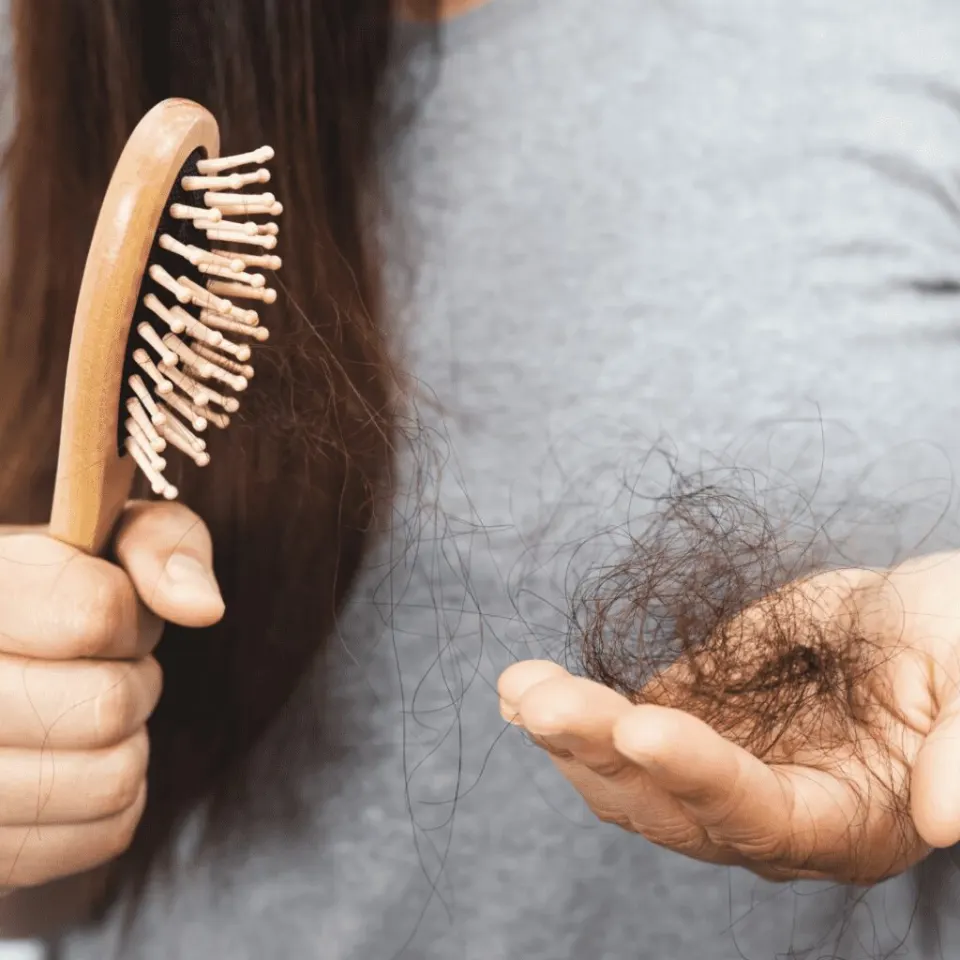
In this article 10 sections
While hair loss is often associated with men, it affects millions of women worldwide — and it can take a real toll on confidence and emotional wellbeing. But here's the most important thing to know: not all female hair loss is the same, and some types are temporary.
Understanding why your hair is thinning is the essential first step, because the right treatment depends entirely on the cause. This guide explains the main causes, how they're told apart, and what treatments — from minoxidil to hair transplant — actually suit each one.
| Most common cause | → Female pattern hair loss (androgenetic) |
| Most common temporary cause | → Telogen effluvium (stress, illness, birth) |
| First step | → Get a proper diagnosis, not self-treatment |
| Is transplant always the answer? | → No — only for specific, stable cases |
Causes & types of hair loss in women
Female hair loss usually shows as diffuse thinning spread across the scalp — different from the receding hairline of male pattern baldness — which is exactly why diagnosis matters. These are the main types:
1. Female pattern hair loss (androgenetic alopecia)
The most common cause. Hair follicles gradually shrink under the influence of androgens, causing thinning concentrated along the part line and crown, while the frontal hairline is usually preserved. It's progressive and hereditary. This is classified using the Ludwig scale (developed in 1977), which has three stages — see our dedicated guide to female pattern baldness.
2. Telogen effluvium (often temporary)
A sudden, diffuse shedding triggered when many follicles prematurely enter the resting phase — typically a few months after a stressful event: childbirth, illness, surgery, rapid weight loss, or emotional stress. The key point: it's usually temporary and stops once the trigger resolves. See telogen effluvium and postpartum hair loss.
3. Other causes
- Hormonal: pregnancy, menopause, or PCOS can cause thinning or shedding.
- Medical conditions: thyroid disorders, anemia (low iron), or autoimmune diseases like lupus.
- Alopecia areata: an autoimmune condition causing patchy hair loss.
- Traction alopecia: from repeated tension — tight ponytails, braids or extensions.
- Medications: some for cancer, blood pressure, or depression list hair loss as a side effect.
Is my hair loss temporary or permanent?
This is the question that changes everything. Telogen effluvium and hair loss from a treatable cause (iron deficiency, thyroid imbalance, medication, postpartum hormones) are often temporary — hair typically recovers once the trigger is resolved, and no surgery is needed.
Female pattern hair loss is progressive and won't reverse on its own, though treatment can slow it and restore some density. An episode of telogen effluvium can also "unmask" underlying pattern loss that was already developing. Only a proper evaluation can tell these apart — which is why self-diagnosis is risky.
How female hair loss is diagnosed
A proper evaluation goes beyond just looking at the scalp. It typically includes a detailed medical history, a scalp examination, trichoscopy (magnified imaging of follicles), and often blood tests for androgens, thyroid function and iron. For pattern loss, the Ludwig scale is used as a starting point — but a good clinician also considers hormonal context (PCOS, menopause) and rules out other conditions like telogen effluvium, alopecia areata and scarring alopecia, which look similar but need entirely different treatment.
Treatment options by stage
Treatment depends on the cause and stage — and always starts with addressing any underlying medical issue.
| Stage / situation | Typical approach |
|---|---|
| Temporary (telogen effluvium) | Treat the trigger; hair usually regrows on its own |
| Early pattern loss (Ludwig I–II) | Topical minoxidil (FDA-approved for women), anti-androgen medication, PRP, lifestyle |
| Advanced, stable pattern loss (Ludwig III) | Hair transplant or scalp micropigmentation — for suitable candidates |
Minoxidil is the only FDA-approved topical for female pattern hair loss; it works best in earlier stages and takes 3–6 months to show results. PRP (platelet-rich plasma) is often used alongside. Anti-androgen medication may be prescribed for hormonally driven loss.
Related Post: How to prevent hair loss, evidence-based guide
When is a hair transplant right for a woman?
A hair transplant can give natural, long-lasting results — but it isn't for everyone. Candidacy depends on donor area density and stability, not the Ludwig grade alone. Because many women have diffuse thinning across the whole scalp (including the donor area), a large proportion of women with pattern loss are not ideal transplant candidates; a subset with a stable, dense donor area may qualify after individual assessment.
Note too that transplanted hair is permanent, but surrounding non-transplanted hair remains subject to the underlying condition — so ongoing medical therapy is usually still needed. Read our full guide to hair transplant for women for costs, techniques (no-shave DHI) and results.
Hair Loss in Women — Frequently Asked Questions
Why is my hair falling out (female)?
The most common cause is female pattern hair loss (androgenetic alopecia), but sudden diffuse shedding is often telogen effluvium — triggered by stress, illness, childbirth or rapid weight loss — which is usually temporary. Thyroid problems, low iron, PCOS and certain medications are also common causes. A proper diagnosis is essential.
Will my hair grow back?
It depends on the cause. Telogen effluvium and loss from treatable causes (iron, thyroid, postpartum hormones) often recover once resolved. Female pattern hair loss is progressive and won't reverse on its own, but treatment can slow it and restore some density.
What is the Ludwig scale?
It's the standard classification for female pattern hair loss, with three stages from mild thinning along the part line to more pronounced loss. Clinicians use it as a starting point alongside blood work and trichoscopy — not as a substitute for full assessment.
Can women get a hair transplant?
Yes, but only suitable candidates. It depends on having a stable, dense donor area — and because many women have diffuse thinning that includes the donor zone, not everyone qualifies. A specialist assessment determines suitability.
What's the best treatment for female hair loss?
There's no single answer — it depends on the cause and stage. Early pattern loss responds to minoxidil, anti-androgens and PRP; advanced stable cases may suit a transplant; temporary shedding needs the trigger treated. Diagnosis first, always.
The emotional impact — and the way forward
Hair loss can carry a heavy emotional weight, and that's completely valid. But the encouraging reality is that many causes are treatable or even temporary, and the ones that aren't can usually be managed well. The single most useful step is a proper diagnosis, so you're treating the right condition from the start.
At The More Clinics, we understand the emotional toll hair loss can take and provide compassionate, personalised care — starting with an honest assessment of your specific cause. A free WhatsApp consultation is the simplest first step, in complete confidence.
Get a Free Consultation → WhatsApp Us →
Related: Hair transplant for women · Female pattern baldness · Telogen effluvium · Postpartum hair loss · Hair transplant before & after
 Medically Reviewed by Dr. Seda Erdoğan, specialist in Hair Transplants and Dermatology. See Editorial Process. Last Updated: [20 August 2026]
Medical disclaimer: This guide is for informational purposes only and does not replace a personal medical consultation. Hair loss has many causes that look similar but need different treatment; only a qualified professional can diagnose your specific condition. Consult a dermatologist or hair specialist before starting any treatment.
This article provides general information and does not replace an individual medical assessment, diagnosis or treatment advice. Discuss decisions about your health and treatment with your treating clinician.