Hair Transplant for Women in Turkey 2026: Cost, No-Shave DHI & Results
Talk to our team
In this article 11 sections
Whether caused by genetics, hormones, stress, or age, female hair loss can be deeply distressing. The good news: a hair transplant designed specifically for women can restore density and confidence — often without shaving your existing hair. But a female hair transplant is not a copy of a male procedure. This complete guide covers how it differs, which types of hair loss are (and aren't) suitable, the no-shave technique, honest cost by grafts and country, before and after results, recovery, and how to choose safely.
| Female hair transplant cost in Turkey | → $2,500 – $5,500 all-inclusive |
| Same procedure UK / USA | → £5,000–£15,000 / $10,000–$25,000 |
| Do I have to shave my head? | → No — no-shave DHI keeps your long hair |
| Grafts needed | → 800–4,500 depending on pattern |
| Full result | → 12–18 months |
Understanding hair loss in women
Hair loss can be distressing for anyone, but for women it can be particularly challenging — and understanding the type is the first step to the right treatment. The most common is androgenetic alopecia (female pattern baldness), which is inherited and causes diffuse thinning across the top and crown.
Telogen effluvium follows a major emotional or physical stressor and causes diffuse shedding all over the scalp. Alopecia areata, an autoimmune disorder, causes patchy loss. There is also postpartum hair loss. Because the cause dictates the treatment, a proper diagnosis is essential — which leads to the single most important question.
Which types of hair loss are suitable for a transplant?
This is the most important — and most overlooked — part of the decision. A hair transplant only works for stable, pattern-based hair loss with a healthy donor area. Getting this wrong wastes money and grafts, so an honest clinic will turn you away if you're not a candidate.
| Type of hair loss | Transplant suitable? |
|---|---|
| Female pattern (androgenetic), stable | ✓ Yes — best candidate |
| Traction alopecia (tight hairstyles) | ✓ Often yes, if stable |
| Thinning at the part line / temples | ✓ Yes |
| Telogen effluvium (stress shedding) | ✗ No — usually temporary, recovers on its own |
| Active alopecia areata (autoimmune) | ✗ No — must be treated medically first |
Ideal candidates are women aged roughly 25–65 with a stable loss pattern (ideally settled for at least 6 months), a healthy donor area at the back of the scalp with good density, and no active autoimmune scalp disorder. A surgeon-led assessment of your donor density and pattern comes before any quote.
No-shave DHI: keep your long hair
For women, the biggest concern is almost always the same: "Do I have to shave my head?" The answer, in most cases, is no. This is the single most important difference between a female and a male hair transplant.
Female hair loss is usually diffuse thinning rather than distinct bald patches, and most women want to preserve their existing hairstyle. The techniques are adapted accordingly:
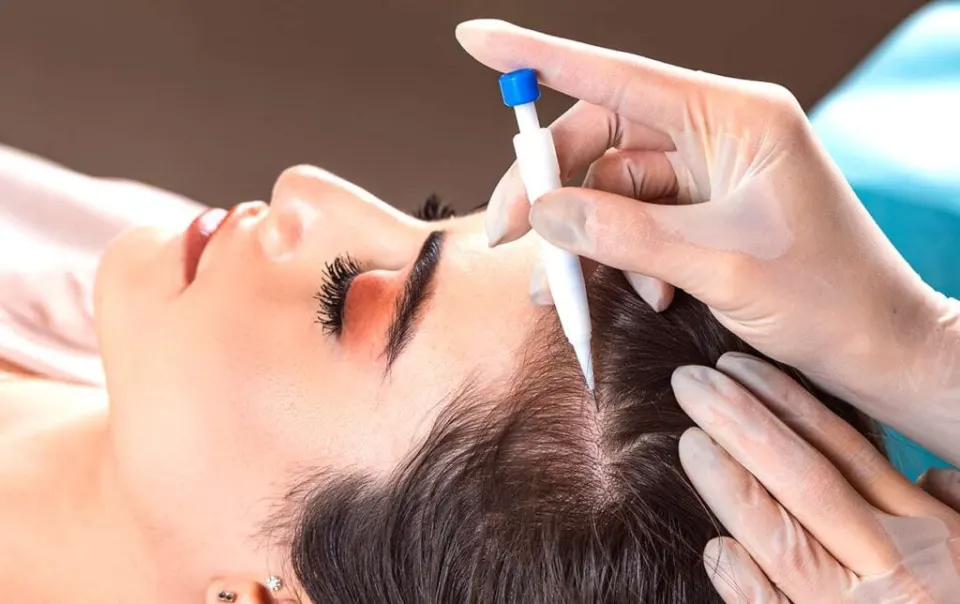
- No-shave DHI (Direct Hair Implantation): grafts are implanted directly using a Choi pen, without cutting the top layer of your hair. Only small, hidden donor strips underneath are trimmed and stay invisible under the surrounding hair. Your hairstyle stays intact throughout.
- Long DHI / Long FUE: a true no-shave approach where existing long hair is preserved, and can even camouflage the grafts during the early dormant phase.
- Partial-shave FUE: a small donor area is shaved but stays completely hidden under your longer hair on top.
How many grafts do you need? (Ludwig scale)
Women's hair loss is measured on the Ludwig scale (I–III), which describes diffuse thinning rather than the male receding pattern. The number of grafts — and your cost — depends on your pattern:
| Area / pattern | Grafts (typical) |
|---|---|
| Temple recession | 800 – 1,400 |
| Diffuse thinning (part line/crown) | 2,500 – 3,500 |
| Fuller restoration | 3,500 – 4,500 |
Ludwig I–II patients typically see full cosmetic improvement; Ludwig III needs a more conservative, staged density plan. Your surgeon confirms the graft estimate at assessment.
Female hair transplant cost: by grafts & country
A female hair transplant in Turkey costs $2,500–$5,500 all-inclusive — 60–75% less than the UK or USA for the same techniques. Female procedures can sit slightly higher than male ones due to the technical complexity of no-shave, selective work, not because of graft count alone. Turkey packages typically include the surgeon's fee, procedure, medications, hotel, transfers and aftercare.
| Country | Female hair transplant cost | Saving in Turkey |
|---|---|---|
| 🇹🇷 Turkey (all-inclusive) | $2,500 – $5,500 | — |
| 🇬🇧 UK | £5,000 – £15,000 | ~65% |
| 🇺🇸 USA | $10,000 – $25,000 | ~75% |
| 🇪🇺 Europe (avg) | €6,000 – €12,000 | ~60% |
Always ask for an itemised quote stating what's included (surgeon fee, medications, hotel, transfers, aftercare) and what's optional. No-shave or Long DHI options may add a little when suitable for your case.
Recovery timeline & when you'll see results
- Days 1–14: initial scalp healing; redness and scabbing usually resolve within 7–10 days. Most women return to desk work within 5–7 days.
- Weeks 3–4 — "shock loss": transplanted hairs shed as follicles enter a dormant phase. This is normal and expected, not a failure — the follicles are safe.
- Months 4–6: first fine new hairs emerge, reaching around 60% of final density by month 6.
- Months 12–18: full thickness and final result. Patience through the early phases is essential — track monthly photos, not the daily mirror.
Post-transplant care and recovery
These follicles have been moved from one location to another, so they need extra care. Avoid touching or picking at the transplanted area for the first few days, and for the first week avoid excessive sweating, sun exposure and swimming. Your doctor gives you specific washing and conditioning instructions. See our full hair transplant aftercare guide.
Hair transplant before and after — women
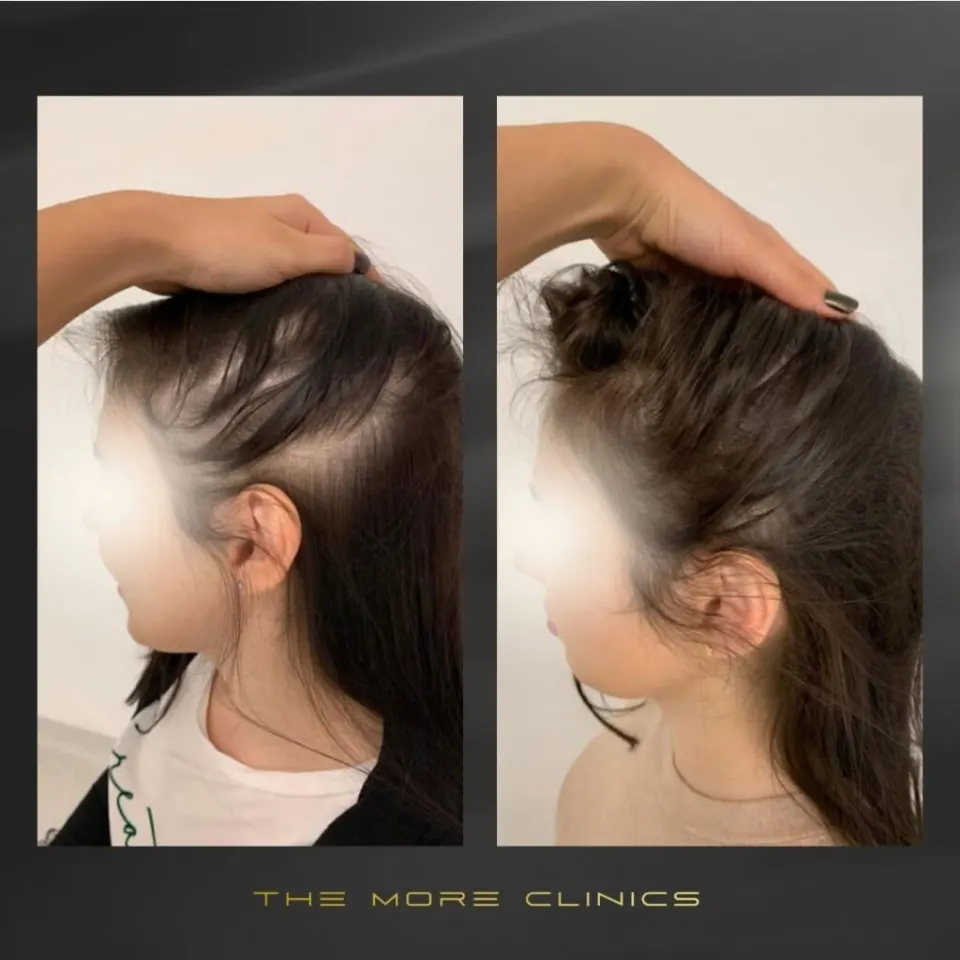
With modern no-shave techniques, results look completely natural — a restored hairline and denser part line that look like they've never been touched, with no obvious signs of a procedure. Beyond the physical change, most women report a real boost in confidence and self-esteem as their density returns.
See our full hair transplant before and after gallery.
Potential risks and considerations
As with any procedure, there is a small risk of infection, bleeding, scarring or uneven growth. The most female-specific risk is donor over-harvesting, which can permanently thin the donor area — avoided by an experienced surgeon using careful follicular mapping. Ensuring you have enough healthy donor hair, and choosing a surgeon who understands female patterns, is essential.
Hair Transplant for Women — Frequently Asked Questions
How much does a female hair transplant cost in Turkey?
$2,500–$5,500 all-inclusive depending on grafts and technique, versus £5,000–£15,000 in the UK and $10,000–$25,000 in the USA. Packages usually include surgeon fee, hotel, transfers and aftercare.
Do women have to shave their head for a hair transplant?
No, in most cases. No-shave DHI and Long DHI/FUE techniques keep your existing long hair intact — only small, hidden donor strips underneath may be trimmed and stay invisible under surrounding hair.
Is a hair transplant suitable for all female hair loss?
No. It works for stable, pattern-based loss (female pattern/androgenetic, traction alopecia, part-line thinning) with a healthy donor area. It is not suitable for telogen effluvium (temporary stress shedding) or active alopecia areata, which need medical treatment first.
How many grafts do women usually need?
Typically 800–1,400 for temple recession, 2,500–3,500 for diffuse thinning, and 3,500–4,500 for fuller restoration — confirmed by a surgeon-led assessment on the Ludwig scale.
How long does the procedure take?
On average four to eight hours, depending on the number of grafts and the technique used.
When will I see results?
After normal "shock loss" shedding at weeks 3–4, new hair emerges by months 4–6 (about 60% density), with the full result at 12–18 months.
What is the success rate of hair transplants in women?
Generally high when the patient is a suitable candidate with a healthy donor area. Studies show women see significant improvement in density and thickness, and experienced clinics report graft survival well above 90% at 12 months.
The Last Word from The More Clinics
A female hair transplant can restore not just density but confidence — and with modern no-shave DHI, you don't have to sacrifice your hair to do it. But success depends on two things above all: being a suitable candidate (stable, pattern-based loss with a healthy donor area), and choosing a surgeon experienced in the technically demanding work of female restoration. Turkey offers this expertise at a fraction of Western prices, all-inclusive.
Our team in Antalya starts with an honest, surgeon-led assessment of your hair loss type and donor density — and will tell you plainly if a transplant isn't right for you. Send us your photos for a free evaluation; a WhatsApp consultation is the simplest first step, in complete confidence.
Get a Free Consultation → WhatsApp Us →
Related: Female pattern baldness · DHI hair transplant · FUE hair transplant · Aftercare guide · Before & after gallery
Medically Reviewed by Dr. Seda Erdoğan, Dermatology Specialist. See Editorial Process. Last Updated: [18 August 2026]
Medical disclaimer: This guide is for informational purposes only and does not replace a personal medical consultation. Suitability, graft numbers, cost and results depend on individual clinical assessment of your hair loss type and donor area. Consult a qualified hair restoration doctor before making any treatment decision.
This article provides general information and does not replace an individual medical assessment, diagnosis or treatment advice. Discuss decisions about your health and treatment with your treating clinician.