
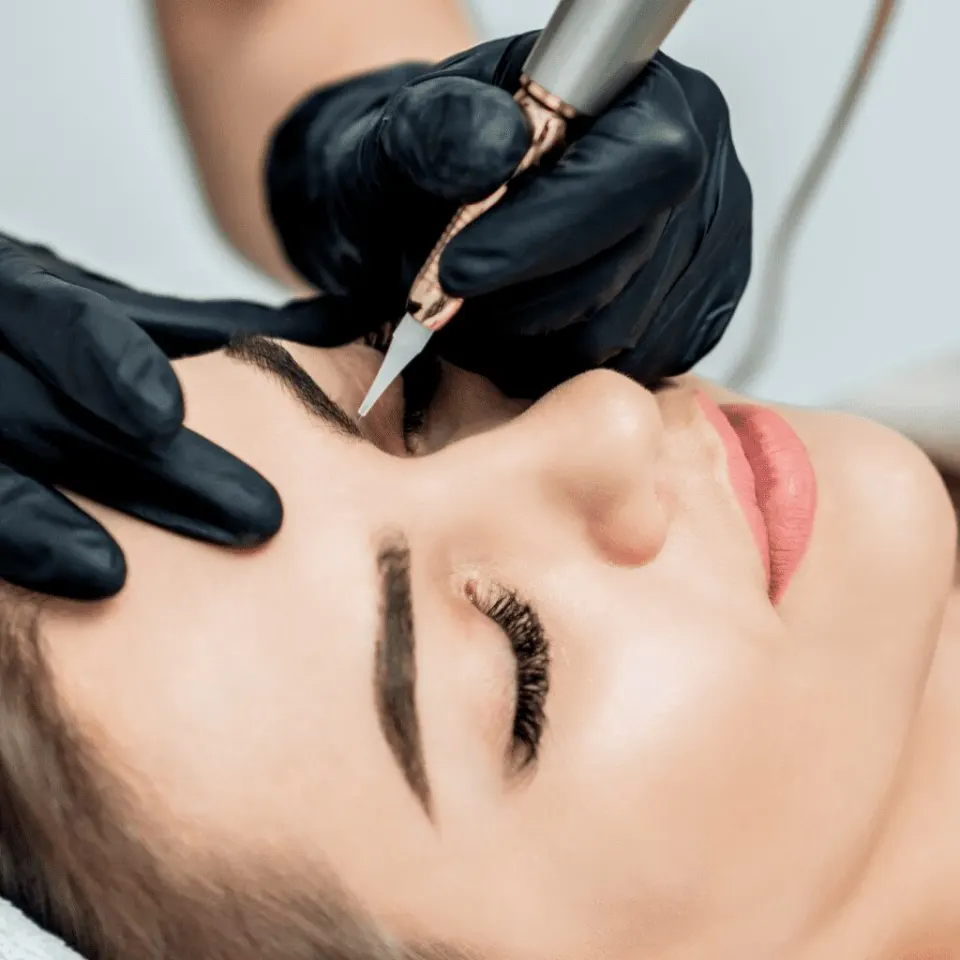
An eyebrow transplant in Turkey costs $1,200–$3,500 all-inclusive — compared to $4,000–$10,000 in the USA and £3,000–£6,000 in the UK — for the same FUE procedure, performed by experienced surgeons with long-lasting, natural-growing results. Turkey is a popular destination for international eyebrow transplant patients, and Antalya is a city often chosen by patients from Europe, the UK, and Ireland. This guide covers everything: procedure, cost, before and after results, success rates, recovery, and how to choose the right clinic.
Quick answers — eyebrow transplant Turkey 2026| Eyebrow transplant cost Turkey (all-inclusive) | $1,200 – $3,500 |
| Eyebrow transplant cost USA | $4,000 – $10,000 |
| Eyebrow transplant cost UK | £3,000 – £6,000 |
| Technique used | FUE (Follicular Unit Extraction) — individual follicles |
| Grafts per eyebrow | 150 – 250 follicular units per brow |
| Procedure duration | 3 – 5 hours |
| Full results visible | 10 – 12 months after procedure |
| Success rate | 85 – 95% graft survival in experienced hands |
What is an eyebrow transplant?
An eyebrow transplant is a minimally invasive surgical procedure that restores eyebrow hair by harvesting healthy hair follicles from the scalp — typically from the back of the head — and implanting them individually into the eyebrow area. The transplanted follicles integrate into their new location and generally continue to produce hair long-term, growing as natural eyebrow hair would.
Unlike tattooing, microblading, or other semi-permanent cosmetic procedures, an eyebrow transplant produces real, growing hair — hair that you trim, groom, and style just like your natural eyebrows. The result can look very natural when performed by an experienced surgeon who matches the natural angle and direction of eyebrow hair growth.
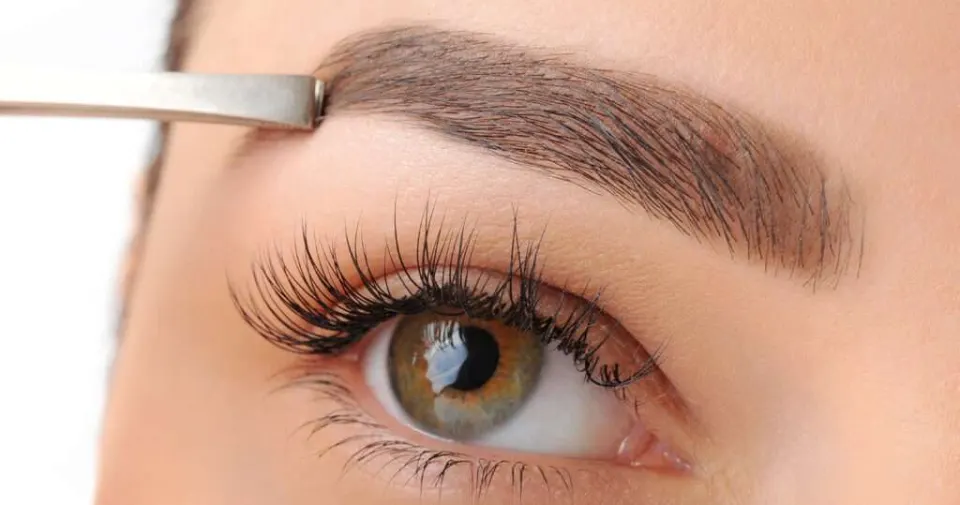
Eyebrow transplantation uses the same FUE (Follicular Unit Extraction) technique as scalp hair transplantation — but with greater precision requirements, because the eyebrow area demands precise angle control (eyebrow hair grows at very specific angles, around 10–20 degrees from the skin surface) and careful density planning to achieve natural-looking fullness without a pluggy appearance.
Who is a good candidate for an eyebrow transplant?
Eyebrow transplants are suitable for anyone with permanent or long-term eyebrow hair loss, regardless of cause. The most common reasons patients seek the procedure:
Common causes in women- Over-plucking — permanent follicle damage from repeated extraction over years
- Hormonal changes — thyroid disorders, PCOS, menopause
- Alopecia areata — patchy autoimmune hair loss
- Chemotherapy-related hair loss
- Trichotillomania — compulsive hair pulling
- Genetic sparse or absent eyebrows
- Trauma or scarring — injuries, burns, surgery
- Alopecia areata
- Genetic sparse eyebrows
- Skin conditions affecting follicles
- Medical treatments causing hair loss
- Age-related thinning
Minimum requirements: sufficient donor hair at the back of the scalp, no active scalp infections or skin conditions in the donor or recipient area, general health suitable for minor surgery under local anaesthesia. Age: typically 20+ years (when facial structure is stable). For hair loss related to medical conditions: Hair Loss in Women Guide → | Alopecia Areata Guide →
Important: active medical causes should be treated first If eyebrow loss is caused by an active thyroid disorder, alopecia areata in its active phase, or ongoing chemotherapy, the transplant should be postponed until the condition is stable. Transplanting into an active inflammatory or autoimmune environment reduces survival of the new grafts. A consultation will identify any underlying causes that need addressing first.Eyebrow transplant procedure — step by step
| Step | What happens | Duration |
|---|---|---|
| 1. Consultation & design | Surgeon assesses existing brow hair, facial proportions, and patient goals. Brow shape designed and marked — patient approves before anything is extracted. Discussion of graft count and donor site. | 30–60 min |
| 2. Anaesthesia | Local anaesthetic injected into both the donor area (scalp) and recipient area (brows). The procedure itself is usually comfortable once the anaesthetic takes effect. | 15–20 min |
| 3. FUE extraction | Individual hair follicles extracted one by one from the donor area (typically back of scalp) using a micro-punch tool of 0.6–0.9mm. 300–500 grafts harvested for both brows. Hair from behind the ears selected where possible for its finer texture — closer to natural eyebrow hair. | 1–2 hours |
| 4. Channel creation | Micro-incisions made in the brow area at precise angles (10–20° from skin surface, mimicking natural eyebrow hair direction). This is the most technically demanding part — angle errors produce unnatural results. | 30–60 min |
| 5. Implantation | Extracted follicles placed individually into channels in the correct direction, density, and distribution. 150–250 grafts per eyebrow creates natural fullness. Post-procedure care instructions given before leaving clinic. | 1–2 hours |
Eyebrow transplant before and after Turkey — gallery
The following results are real patient outcomes from The More Clinics in Antalya. All photos taken at the clinic, no filters or editing applied.
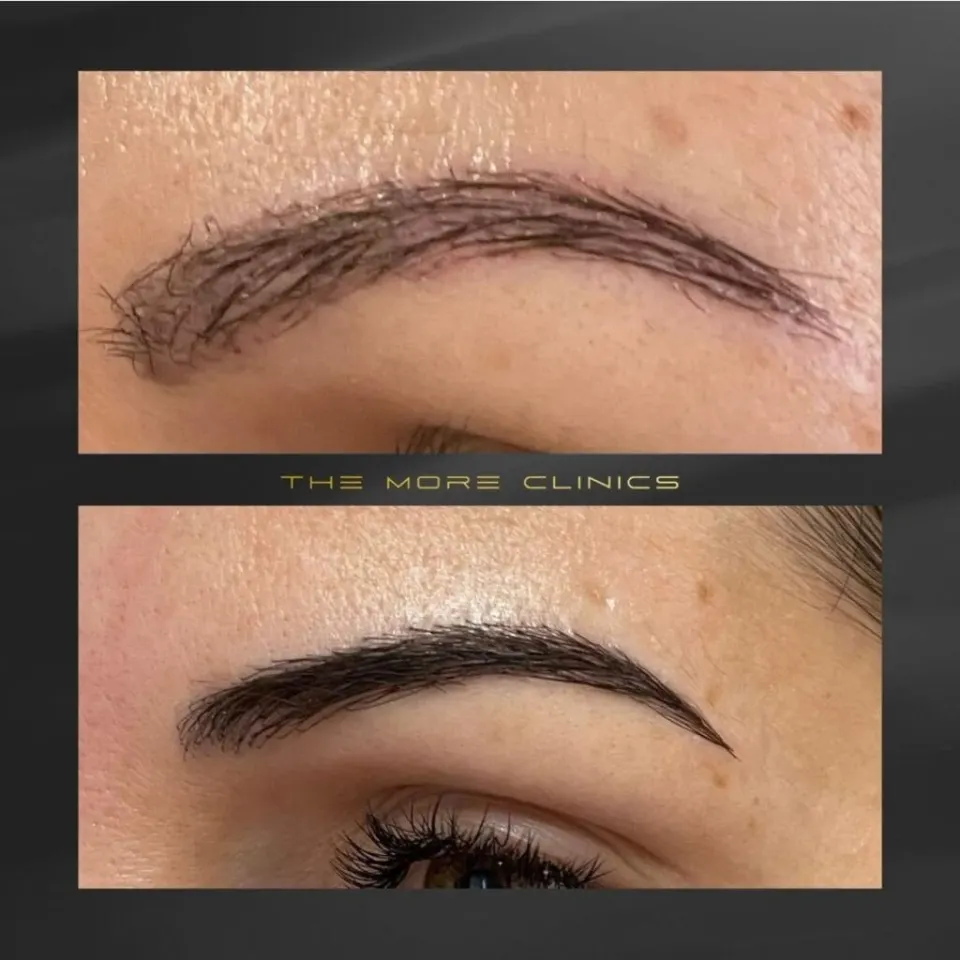
Thinning eyebrows — restored naturally
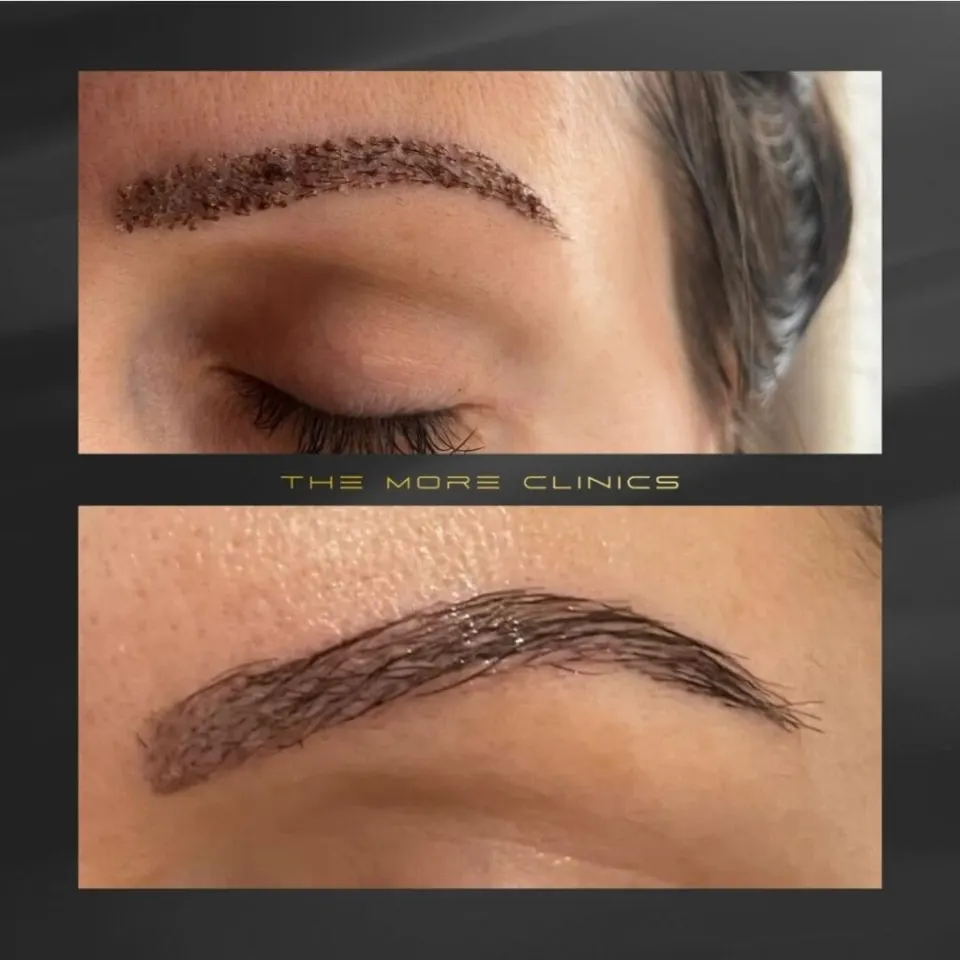
Sparse to full — transplantation result
For more results: Full before and after gallery →
Female eyebrow transplant — specific considerations
The vast majority of eyebrow transplant patients are women — and female eyebrow transplants have specific technical requirements that differ from male cases.
Arch and shape design: Female eyebrow aesthetics are more complex and culturally variable than male aesthetics. The natural female brow has a distinct arch position, a defined head, body, and tail with different densities in each zone, and a specific relationship to the orbital bone that determines the aesthetic. An experienced surgeon spends significant time on the pre-procedure design — the shape drawn before any extraction begins is the foundation of the result.
Hair selection: Scalp hair is coarser and grows faster than natural eyebrow hair. For female patients, hair from the nape or the area behind the ear is preferentially selected — this hair is finer, softer, and grows more slowly, producing a more natural result than coarser crown hair. The transplanted hair will continue to grow at scalp rate — requiring regular trimming (every 2–4 weeks initially). This is the main adjustment new patients notice.
Density planning: Female brows require careful density variation — the head (inner brow) is denser than the tail, and the arch peak receives the highest density. An experienced eyebrow transplant surgeon understands these zones and places grafts accordingly, rather than distributing them evenly across the brow.
For women whose eyebrow loss is related to hormonal causes: Hair Loss in Women: Causes & Treatments →
Eyebrow transplant cost Turkey — full price breakdown 2026
| Country | Eyebrow transplant cost | Notes |
|---|---|---|
| 🇹🇷 Turkey — Antalya (all-inclusive) | $1,200 – $3,500 | Procedure + hotel + transfers + aftercare |
| 🇺🇸 USA | $4,000 – $10,000 | Wide variation by city and clinic type |
| 🇬🇧 UK | £3,000 – £6,000 | Not available on NHS — private only |
| 🇩🇪 Germany | €3,500 – €7,000 | GKV does not cover cosmetic hair transplant |
| 🇮🇪 Ireland | €3,000 – €6,500 | Limited provider availability |
| 🇸🇬 Singapore | SGD 5,000 – 12,000 | High-quality clinics — among Asia's most expensive |
| 🇨🇦 Canada | CAD 4,000 – 8,000 | Limited availability in many provinces |
What's included in the Turkey all-inclusive package
The More Clinics — eyebrow transplant package includes ✓Pre-operative consultation and assessment ✓Brow design and shape planning ✓FUE eyebrow transplant procedure ✓Local anaesthesia and medications ✓Post-procedure care kit ✓Hotel accommodation (3–5 nights) ✓VIP airport pickup and clinic transfers ✓Personal coordinator in your language ✓12-month WhatsApp aftercare ✓No hidden fees — quoted price is finalEyebrow transplant success rate — what the evidence shows
Eyebrow transplant success is measured in two ways: graft survival rate (what percentage of implanted follicles continue to grow) and patient satisfaction rate (whether the aesthetic outcome meets expectations).
Graft survival: In experienced hands using the FUE technique, 85–95% of transplanted eyebrow grafts survive and produce growing hair. The main variables are surgeon experience (specifically with eyebrow cases, which require different skill than scalp transplantation), graft handling time, and adherence to post-procedure care instructions. The eyebrow area has excellent blood supply which supports graft survival — comparable to the scalp.
Why some results fall short of expectations:
- Incorrect angle placement — the most common technical error. Eyebrow hair grows at extremely shallow angles (10–20°). Follicles implanted at a steeper angle produce hair that stands away from the skin rather than lying flat — looking unnatural regardless of density.
- Wrong hair selection — using coarser hair from the crown rather than finer hair from the nape or behind the ear produces a result that looks thicker and less refined than natural brows.
- Overcrowding — placing too many grafts in a small area leads to trauma to adjacent grafts and a pluggy appearance. Eyebrows have lower density than scalp — typically 40–60 hairs per cm² versus 80–100 for scalp.
- Patient not trimming transplanted hair — transplanted scalp hair continues to grow at scalp rate (1cm per month). If not trimmed regularly, it grows far beyond the brow shape. This is the single most important post-procedure maintenance task.
Recovery timeline — week by week
| Timeline | What happens | What to do |
|---|---|---|
| Days 1–3 | Mild redness and swelling around brow area. Small scabs forming at implantation sites. Brows look full — this is temporary. | Keep brows dry for 48 hours. Sleep on back. No touching or rubbing. |
| Days 4–10 | Redness fades. Scabs begin to detach naturally. Do not pick or scratch — premature removal damages grafts. | Gentle saline rinse from Day 3. Light makeup permitted from Day 7 (not directly on brows). |
| Weeks 2–4 | Transplanted hairs shed — this is expected and normal. The follicle remains alive beneath the surface. Brows may look sparse or patchy during this phase. | Do not panic at shedding — it is a normal part of the growth cycle. Eyebrow pencil may be used. |
| Months 3–5 | New hair growth emerges. Initially fine and slightly different in texture — will thicken over months. Brows begin to take shape. | Begin trimming transplanted hair once it exceeds the brow shape (typically first trim at Month 3–4). |
| Months 6–9 | Density increases significantly. Brows look full and natural. Shape becomes clear. Hair texture normalises. | Regular trimming every 2–4 weeks. Brows can be shaped and groomed as normal. |
| Months 10–12 | Final result visible. Full density achieved. Transplanted hair blends with natural growth. | Final assessment. Results are generally long-lasting — ongoing grooming only. |
Eyebrow transplant Turkey — why choose Antalya
Antalya is the most popular Turkish destination for international eyebrow transplant patients — chosen over Istanbul by the majority of UK, Irish, German, and Australian patients for several reasons: direct flights from 50+ European airports (2.5–3.5 hour flight from most UK and German hubs), lower procedure costs compared to Istanbul clinics with comparable quality, and the combination of treatment with recovery in a comfortable Mediterranean setting.
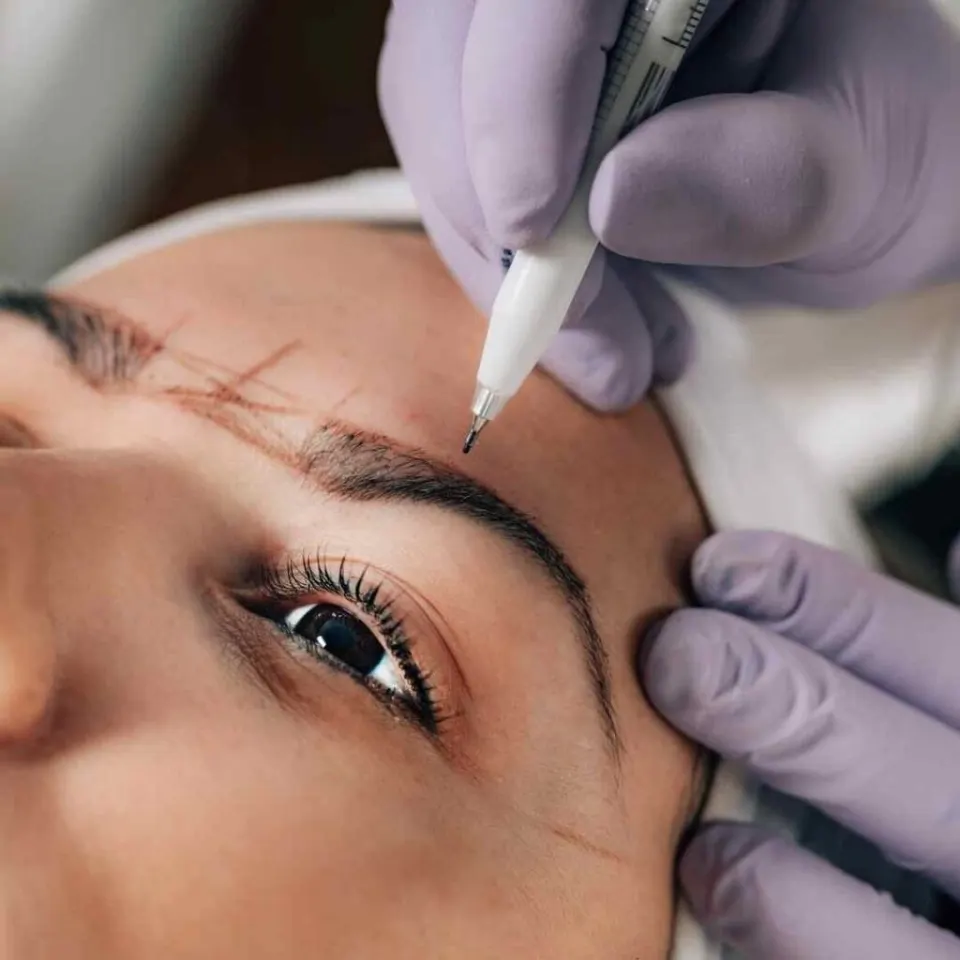
Turkish surgeons performing eyebrow transplants — particularly in high-volume dedicated hair and eyebrow clinics — typically have significantly more annual procedure experience than their counterparts in countries where eyebrow transplants are a smaller proportion of a general plastic surgery or dermatology practice. Volume produces technical refinement in eyebrow-specific surgical skills. For details on the full experience: Hair Transplant Antalya — Full Guide →
Eyebrow transplant alternatives — if surgery is not right for you
Not every patient is ready for or suited to a surgical eyebrow transplant. The main non-surgical and semi-permanent alternatives:
| Option | Longevity | Cost range | Limitation vs transplant |
|---|---|---|---|
| Eyebrow transplant | Long-lasting | $1,200–$3,500 (Turkey) | — |
| Microblading | 1–2 years | $300–$800 | Not real hair. Fades and requires top-ups. |
| Powder/ombre brows (tattoo) | 2–5 years | $400–$1,000 | Pigment only. Can fade to unnatural colours. |
| Permanent makeup (cosmetic tattoo) | 3–7 years | $500–$1,500 | Not real hair. Colour shift over time. |
| Eyebrow pencil / makeup | Daily | $5–$50/month | Not water-resistant. Daily application required. |
For patients in Turkey who want long-lasting results without daily maintenance — microblading and cosmetic tattooing require ongoing top-ups that accumulate significant cost over a decade, often exceeding the one-time cost of a transplant. For those under $5,000 budget: Turkey all-inclusive packages are the only route to a long-lasting surgical solution within this range.
How to choose the best eyebrow transplant clinic in Turkey
✅ Look for- Named surgeon with specific eyebrow transplant experience
- Before and after photos showing eyebrow cases specifically
- Natural-looking results — not over-filled or angular
- Minimum 100+ eyebrow cases performed annually
- Written treatment plan including graft count
- Defined aftercare with remote follow-up
- Before/after showing only hair transplants — not brow-specific
- Unnatural-looking results in photos (standing hair, linear patterns)
- No named surgeon before booking
- Prices below $800 all-inclusive — grafts and surgical time alone cost more
- Pressure to book immediately
- No aftercare plan for international patients
Frequently asked questions
How much does an eyebrow transplant cost in Turkey?
$1,200–$3,500 all-inclusive in 2026. This includes the FUE procedure, local anaesthesia, post-procedure care kit, hotel accommodation (3–5 nights), VIP airport and clinic transfers, and 12-month remote aftercare. The total is significantly less than the procedure alone in the USA ($4,000–$10,000) or UK (£3,000–£6,000).
How much is an eyebrow transplant in Turkey compared to the UK?
Turkey costs $1,200–$3,500 all-inclusive. The UK costs £3,000–£6,000 for the procedure alone, without hotel or transfers. Even after adding flights and accommodation for Turkey, the total cost is typically 50–65% lower. The saving on a mid-range case runs to £2,000–£4,000 compared to having the procedure in London or Manchester.
Are eyebrow transplant results permanent?
Generally, yes — transplanted follicles are long-lasting. Once a follicle survives the transplant process and integrates into the brow area, it usually continues to produce hair long-term. The transplanted hair grows at scalp rate and requires regular trimming — this is the primary ongoing maintenance. The shape and density of the result, once established at Month 10–12, generally remains stable.
What is the success rate of eyebrow transplants in Turkey?
In experienced specialist hands, 85–95% of transplanted grafts survive and produce growing hair. This is comparable to global standards for the FUE technique. The main differentiator is not geography but surgeon experience with specifically eyebrow cases — eyebrow transplantation requires different technical skill (particularly in angle control) than scalp transplantation.
How long does it take to see the results of an eyebrow transplant?
First growth emerges at Month 3. Significant density and shape is visible at Month 6. The full, final result is visible at Month 10–12. Between Weeks 2–4, transplanted hairs shed — this is normal and expected, not a sign of failure. The follicle remains alive and begins producing a new hair shaft in the following weeks.
Is eyebrow transplant painful?
The procedure is performed under local anaesthesia — once administered, the treatment itself is not painful. The anaesthetic injection itself causes brief discomfort (typically described as a stinging sensation for 10–15 seconds). Post-procedure: mild tenderness and occasional itching at the implantation sites for 3–5 days, managed comfortably with standard analgesics.
Can anyone have an eyebrow transplant?
Most adults with sufficient donor hair (even thin scalp hair at the back of the head is usually adequate) and stable general health are good candidates. Contraindications include: active scalp infections, active autoimmune hair loss (alopecia areata in active phase), insufficient donor hair density, and certain medications that affect healing. A consultation with clinical photos determines candidacy reliably. Age minimum: generally 20 years (when facial structure is stable).
Do I need to stay in Turkey after the procedure?
3–5 nights is the typical recommendation. Day 1: procedure. Days 2–4: initial healing, first wash at the clinic, any follow-up check. Day 5: departure. Flying within 48 hours of the procedure is not recommended due to the risk of graft dislodgement from cabin pressure changes. Most patients depart on Day 4 or 5. For full aftercare instructions →
What is the difference between eyebrow transplant and microblading?
Eyebrow transplant produces real, growing hair follicles that are implanted for the long term — natural hair that grows, requires trimming, and looks and feels like natural brows. Microblading is a semi-permanent tattooing technique that creates the appearance of hair strokes using pigment under the skin — it does not produce real hair.
Microblading fades within 1–2 years and requires top-up appointments. It is a lower-cost, lower-commitment option for those not ready for surgery. For those wanting a long-lasting result: transplant. For those testing eyebrow fullness before committing: microblading first.
The Last Word from The More Clinics
An eyebrow transplant in Turkey is a long-lasting surgical solution to missing or sparse eyebrows — producing real, growing, groomed hair that you style exactly like natural brows. The procedure is a full day in the clinic and requires 5 days in Antalya — and the result is generally long-lasting.
At The More Clinics, our eyebrow transplant surgeons bring dedicated expertise in brow-specific technique: angle control, hair selection from the appropriate donor zone, and density mapping across the three brow zones. A free WhatsApp consultation with photos of your current brows gives you an honest assessment of candidacy, a realistic expectation of outcome, and an exact all-inclusive cost.
Get a Free Consultation → WhatsApp Us →
Medical disclaimer: This guide is for informational and educational purposes only. Eyebrow transplant suitability depends on individual clinical assessment. Consult a qualified hair restoration surgeon for evaluation specific to your situation before booking treatment.
Written by The More Editorial Team and Medically Reviewed by Dr. Gökhan Bacak who specialized on Cosmetic and Plastic Surgery
Last Updated at 13 August 2026