Katie Price Turkey Teeth: Full Dental Journey & Expert Analysis 2026
Talk to our team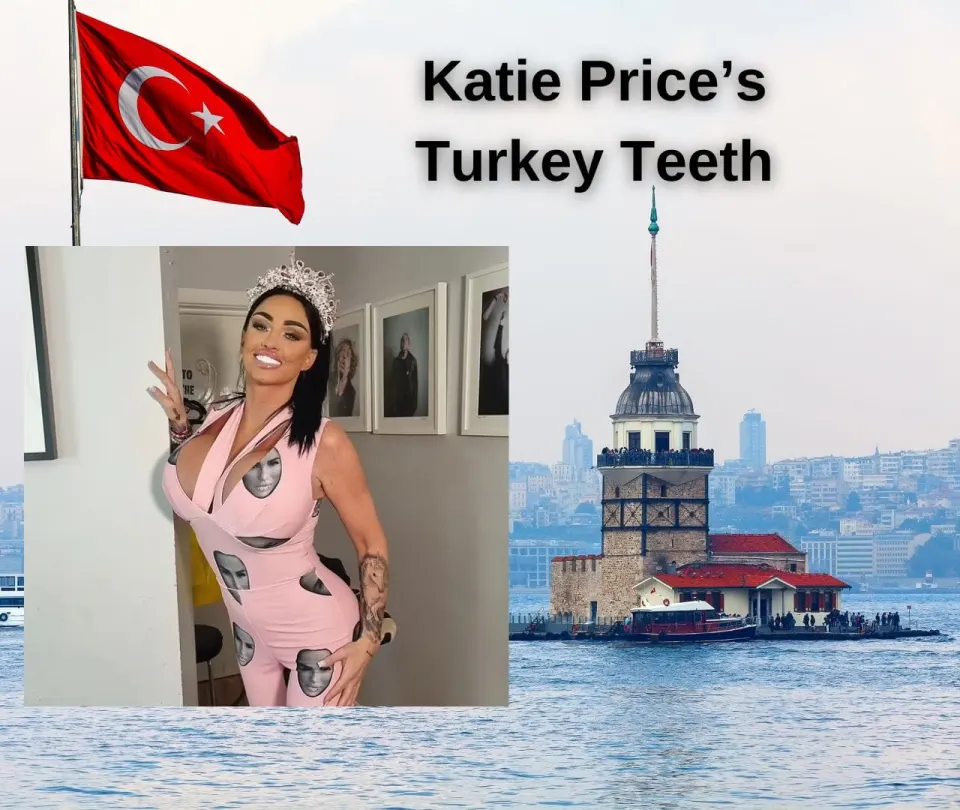
In this article 16 sections
Katie Price's dental journey is one of the most publicly documented in British celebrity history — spanning nearly three decades, multiple countries, and procedures that range from sensible cosmetic upgrades to decisions that drew significant criticism from dental professionals. Her story is genuinely useful for anyone considering dental treatment in Turkey: not as a cautionary tale, but as a detailed, real-world case study in what different dental procedures look like, what they cost, and what happens when choices are made for the wrong reasons.
This guide covers her complete dental timeline from 1997 to 2026, the clinical difference between what she had done and what she should have had done, and what the "Katie Price Turkey teeth" phenomenon tells us about the dental tourism market in 2026.
| 1986 (age 8) | Skateboard accident — early childhood dental damage |
| 1997 (age 19) | First veneers — gap closure, first smile transformation |
| 2007 | Zirconia veneers in Spain — £25,000 |
| 2015 | Major dental overhaul — £95,000 total investment |
| 2017 | Turkey — dramatic aesthetic change, crowns replace veneers |
| 2019 | Turkey — £7,000 with Kris Boyson, matching crowns |
| 2020 | Turkey — full mouth dental reconstruction with crowns |
| 2025 | Turkey — latest transformation, new dental work shared on social media |
The beginning — Katie Price teeth before veneers
Katie Price's dental story begins not with vanity but with a childhood accident. At around age eight or nine, she fell off a skateboard and damaged several of her front teeth — a trauma that would shape her dental decisions for the next three decades. In early modelling photos from the mid-1990s, before any dental work, her teeth reflected this history: a visible gap between the front teeth, some irregularity from the childhood damage, and what she herself described as a "gummy smile."
She was candid about her discomfort: early in her modelling career, she avoided wide smiles in photos, and the dental imperfections were a source of genuine self-consciousness rather than cosmetic preference.
1997 — first transformation (age 19)
When Katie Price's career began accelerating in 1997, she underwent her first significant dental transformation. The work closed the gap between her front teeth and addressed the "gummy smile" — minimal preparation veneers applied to the front surfaces of her upper teeth. By the time she was photographed with Michael Schumacher in May 1998, the gap was gone and her smile had visibly changed.
From a clinical perspective, this 1997 work was sensible. Minimal prep veneers at a young age preserve natural tooth structure, are reversible in principle, and produce natural-looking results. The changes were proportionate and the result looked like her own smile — improved rather than replaced.
2007 — zirconia veneers in Spain (£25,000)
By 2007, Katie's career was at its peak and her dental work reflected that trajectory. She had her veneers renewed in Spain at a cost of £25,000 — this time with zirconia veneers that addressed a residual gap and subtly refined the shape and length of her upper teeth.
Reviewing photos from this period, the work was still largely proportionate. Zirconia veneers are thicker than porcelain veneers and require slightly more enamel removal, but the outcome remained natural-looking and the clinical rationale was sound — microscopic cracks in existing veneers can lead to progressive discolouration and structural failure over time.
2015 — the £95,000 milestone
By 2015, Katie Price had invested an estimated £95,000 in her teeth across multiple procedures and countries. This figure encompasses two decades of veneer replacements, whitening, and restorative work — not a single procedure. At this point, dental experts noted that her natural teeth had been progressively reduced with each replacement cycle, a cumulative consequence of multiple veneer generations that is difficult to avoid when procedures are repeated at intervals.
Each veneer generation requires some enamel preparation. When veneers are replaced multiple times — especially if the replacement uses a thicker material (moving from porcelain veneers to zirconia crowns) — the cumulative reduction of natural tooth structure becomes clinically significant. By 2015, Katie's teeth had undergone enough cycles that the original natural structure was substantially reduced. This limits future options and increases the importance of every subsequent decision.
2017 — the Turkey decision that changed everything
The 2017 Turkey treatment was the most clinically significant and most publicly discussed chapter of Katie Price's dental story. In reviewing photos from before and after 2017, the change was dramatic: not just in whiteness but in the angulation of her front teeth, which were adjusted to a notably more forward-facing position. The colour shifted to a much brighter white than in previous incarnations.
Katie Price shared on Good Morning Britain that during treatment she was "all bruised" and had stitches inside her mouth, and said she compared her teeth under preparation to "the iconic Bond villain Jaws." The procedure involved full crowns — not veneers — meaning her natural teeth were reduced circumferentially to stubs to accept the crown restorations.
Moving from veneers to full crowns is a one-way clinical decision. Crowns require 360-degree preparation — the entire tooth surface is reduced, not just the front face. Once a tooth has been prepared for a crown, it cannot be restored to its original structure. The 2017 treatment effectively closed off future options for less invasive restorations.
At this stage of her dental history — with multiple previous veneer generations — the clinical need for full crowns was debatable. The 2017 work appears to have been driven primarily by aesthetic preference rather than structural necessity. A minimal prep veneer replacement, or a direct composite enhancement, would have achieved similar aesthetic results while preserving more residual natural structure.
2019 — Turkey again with Kris Boyson
In 2019, Katie returned to Turkey with her then-boyfriend Kris Boyson, where both underwent matching dental work at a cost of £7,000. She said that she chose Turkey because it was "more advanced than over here," referring to the UK, and she was pleased with the final results. This trip pushed her total dental investment past the £100,000 mark across her lifetime.
2020 — full mouth reconstruction
In 2020, Katie returned to Turkey for complete dental reconstruction with crowns. By this point, the trajectory of her dental history — from natural teeth to veneers to zirconia veneers to full crowns — had reached its logical endpoint. Full mouth reconstruction with crowns is the most invasive form of cosmetic dental treatment, involving the preparation of every visible tooth for crown restorations.
2025 — latest transformation
In 2025, new images were posted on her social channels of her latest dental transformation in Turkey, which again attracted significant public attention and media coverage. The "Katie Price Turkey teeth" story continued to generate search interest — not because the procedures were unusual, but because her openness about the process, including showing her prepared teeth before restorations, made the mechanics of dental work visible to an audience that would otherwise never see it.
The 2025 work, viewed in the context of her full dental history, represents another replacement cycle in a now-established pattern. Each replacement addresses wear, discolouration, or aesthetic preference — and each one carries the cumulative consequence of the generations before it.
What "Katie Price Turkey teeth" actually tells us about dental tourism
The term "Turkey teeth" — which Katie Price's story helped popularise — is now used both positively and negatively in discussions about dental tourism. Understanding the distinction matters.
What Turkey does well
In 2026, Turkey's dental technology utilises 3D imaging and CAD/CAM milling to create precision-fit restorations. The "Turkey teeth" trend has evolved to include more natural, translucent options that prioritise both beauty and biological compatibility. The price difference versus the UK is structural — lower operating costs, higher volume — not a reflection of lower materials quality or clinical standards at reputable clinics.
| Treatment | Turkey cost | UK cost | Saving |
|---|---|---|---|
| Porcelain veneer (per tooth) | £180 – £350 | £500 – £1,200 | 60 – 70% |
| Zirconia crown (per tooth) | £150 – £280 | £600 – £1,500 | 65 – 75% |
| Composite bonding (per tooth) | £130 – £220 | £200 – £500 | 50 – 60% |
| Full smile makeover (10 teeth) | £2,500 – £4,500 | £7,000 – £18,000 | 60 – 75% |
What Katie Price's story actually warns about
The "Turkey teeth" cautionary narrative — as applied to Katie Price — is not primarily about Turkey. It is about procedure escalation: choosing increasingly invasive treatments when less invasive options would have achieved similar results. Her 2017 move from veneers to full crowns is the key decision in her story, and that could have happened in London, New York, or Istanbul.
The lesson from her dental history is not "don't go to Turkey." It is: understand the difference between veneers and crowns before you book any procedure, anywhere.
Veneers vs crowns — the essential distinction
| Factor | Veneers | Crowns |
|---|---|---|
| Tooth preparation | Front surface only | All surfaces — 360° |
| Reversible? | Partially | No — permanent |
| When appropriate | Cosmetic improvement on healthy teeth | Structurally damaged, heavily restored teeth |
| Natural tooth preserved | Most of it | Minimal |
| Turkey cost | £180 – £350/tooth | £150 – £280/tooth |
The irony in Katie Price's story: crowns are actually slightly cheaper per tooth than porcelain veneers in Turkey — which is partly why aggressive upselling toward crowns is a risk patients should be aware of. A reputable clinic recommends the least invasive treatment that achieves your goals. A clinic that recommends full crowns for teeth that are structurally sound is not acting in your clinical interest.
How to avoid the Katie Price dental experience — what to ask before booking
Katie Price's dental journey contains specific, actionable lessons for anyone considering cosmetic dental work in Turkey:
- Veneers or crowns — and specifically why?
- How much natural tooth is being removed?
- Is this the least invasive option for my goals?
- What brand of material are you using?
- Can I see before/after of similar cases?
- What happens at the next replacement cycle?
- Crowns recommended for structurally sound teeth
- No explanation of what "preparation" means
- Same day booking pressure
- Material brand not named
- No discussion of your existing dental history
- No aftercare plan for when you return home
The "Turkey teeth" term in 2026 — what it actually means now
The phrase "Turkey teeth" entered public consciousness largely because of Katie Price and a handful of other celebrities, and was initially used negatively — associated with overly white, unnaturally large, or poorly executed dental work. In 2026, the term has evolved significantly in how it is used.
The vast majority of patients who travel to Turkey for dental work — tens of thousands of UK patients per year — return with natural-looking, clinically excellent results at 60–75% of UK prices. The cases that generate media attention are the outliers: patients who chose the wrong treatment, the wrong clinic, or who had unrealistic expectations.
Katie Price's case sits somewhere between these poles. Her procedures were performed by qualified dental professionals — the outcomes were clinically functional. The criticisms are about the escalation of invasiveness over time and the aesthetic choices made at specific junctures — not about the standard of care in Turkey per se.
Frequently asked questions - Katie Price Turkey Teeth
What dental work has Katie Price had in Turkey?
Katie Price has made multiple trips to Turkey for dental work — in 2017, 2019, 2020, and 2025. Her Turkish treatments have primarily involved zirconia crowns replacing earlier veneer work. The 2017 treatment was the most significant, involving a full transition from veneers to crowns with notable changes to tooth colour and angulation. In 2025, she again shared images of new dental work in Turkey on her social media channels.
How much has Katie Price spent on her teeth?
By 2019, the publicly reported total had exceeded £100,000 — comprising the £95,000 invested by 2015, the £25,000 Spanish zirconia veneers in 2007, the £7,000 Turkey trip in 2019, and several additional procedures. The actual total including more recent work is likely higher.
What are "Turkey teeth"?
The term "Turkey teeth" originally referred to dental work — typically crowns or veneers — obtained in Turkey that appeared unnaturally white or large. It became associated with Katie Price and other celebrities who had dramatic dental transformations in Turkey. In 2026, the term is used more broadly — and often simply means dental veneers or crowns obtained in Turkey. Most dental work performed at reputable Turkish clinics is natural-looking and clinically appropriate.
Are veneers from Turkey good quality?
Yes — at reputable, Ministry of Health-licensed clinics using internationally recognised materials (E-Max, Ivoclar, Vita, GC). The materials are identical to those used in UK practices. The price difference is structural — lower clinic operating costs in Turkey — not a reflection of inferior materials or clinical standards. The key is clinic and dentist selection.
What is the difference between the veneers and crowns Katie Price had?
Veneers cover only the front surface of the tooth and require minimal preparation — most of the natural tooth is preserved. Crowns cover the entire tooth circumferentially and require substantial reduction of the natural tooth structure. Katie Price progressed from veneers to crowns over her dental history — a clinically irreversible escalation that dental professionals note could have been avoided at certain junctures.
Is it safe to get dental work in Turkey?
Yes — at licensed facilities with registered dentists. Turkey treats hundreds of thousands of international dental patients per year. Safety depends on clinic selection: verify the clinic's Ministry of Health licence, the dentist's Turkish Dental Association registration, and which specific materials they will use before booking. A consultation that reviews your existing dental history and X-rays before recommending treatment is a strong positive signal.
How does Turkey dental work compare to the UK for veneers?
Porcelain veneers cost £180–£350 per tooth in Turkey versus £500–£1,200 in the UK — a saving of 60–70% per tooth. The materials used at reputable Turkish clinics are the same European and American brands used in UK practices. The clinical procedure is identical. A full smile of 10 porcelain veneers costs approximately £2,500–£4,000 in Turkey compared to £7,000–£15,000 in the UK.
The Last Word from The More Clinics
Katie Price's dental story is a genuine case study in the long-term consequences of cosmetic dental decisions. The lesson it offers is not about Turkey — it is about the importance of choosing the least invasive treatment that achieves your goals, understanding what you are agreeing to at each stage, and working with clinicians who explain the clinical consequences of each option rather than simply offering the most dramatic transformation.
At The More Clinics, every cosmetic dental consultation begins with a review of your existing dental history, an honest assessment of what treatments are appropriate for your specific situation, and a clear explanation of the difference between your options. We recommend veneers when veneers are clinically appropriate, and we recommend against full crowns on structurally sound teeth — because the clinical evidence supports conservative treatment, and because it is simply in your long-term interest.
A free consultation gives you a specific recommendation based on your own teeth, an honest explanation of your options, and a transparent cost — before you commit to anything.
Book a Free Consultation → WhatsApp Us →
Medical disclaimer: This article is for informational and educational purposes only. All clinical commentary represents general dental professional opinion and is not specific advice about any individual's dental health. Consult a qualified dentist for assessment specific to your circumstances.
This article provides general information and does not replace an individual medical assessment, diagnosis or treatment advice. Discuss decisions about your health and treatment with your treating clinician.