Dentures Cost UK 2026: NHS, Private & Turkey Price Guide
Talk to our team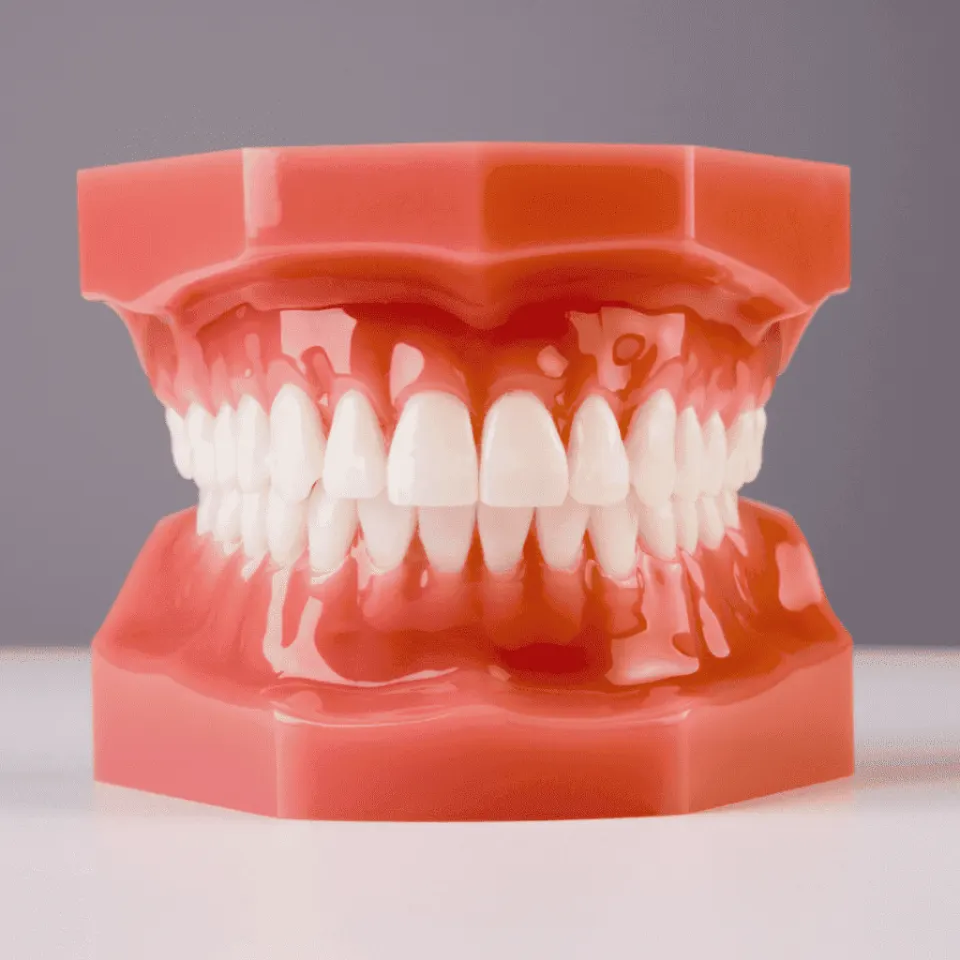
In this article 14 sections
Dentures in the UK cost £332.10 on the NHS (Band 3, from April 2026) or £600–£2,500 per arch privately depending on material and type. In Turkey, the equivalent treatment costs £200–£800 all-inclusive — a saving of 60–75% on private UK rates. This guide breaks down every type of denture, what each costs on the NHS and privately, and what the same treatment costs in Turkey.
| NHS dentures (Band 3 — England & Wales) | £332.10 |
| Private full dentures (per arch) | £600 – £2,500 |
| Private partial dentures | £300 – £800 |
| Flexible dentures (Valplast) UK | £500 – £1,200 |
| Implant-retained dentures UK | £6,000 – £15,000+ |
| Full dentures Turkey (all-inclusive) | £300 – £800 per arch |
| Saving vs UK private | 60 – 75% |
How much do dentures cost in the UK? — NHS vs private
NHS dentures cost 2026
NHS dentures are classed as Band 3 treatment, costing £332.10 from 1 April 2026 in England and Wales. This covers the full course of treatment — impressions, fittings and the denture itself — for both upper and lower dentures within the same treatment course. In Scotland and Northern Ireland, patients pay 80% of costs up to a maximum of £384.
What NHS dentures include: Standard acrylic full or partial dentures. Functional fit — not cosmetic premium. NHS standard is acrylic; private offers cobalt-chrome (lighter, better-fitting) and flexible options.
Who qualifies for free NHS dentures: Patients under 18, those on certain benefits (Universal Credit, Income Support, Pension Credit), pregnant patients or those who gave birth in the last 12 months, and patients with an NHS Low Income Scheme certificate. For everyone else, the Band 3 charge of £332.10 applies.
Private dentures cost UK 2026
Full dentures (upper and lower) typically cost between £500 and £1,500 per arch privately, meaning a complete set could range from £1,000 to £3,000. Partial dentures usually fall between £300 and £800.
| Denture type | NHS cost | UK private cost | Turkey cost |
|---|---|---|---|
| Full acrylic denture (per arch) | £332.10 (both arches) | £600 – £1,500 | £300 – £600 |
| Complete set (upper + lower) | £332.10 | £1,000 – £3,000 | £500 – £1,000 |
| Partial acrylic denture | £332.10 | £300 – £800 | £150 – £400 |
| Chrome cobalt partial denture | Sometimes available | £600 – £1,500 | £250 – £600 |
| Flexible denture (Valplast) | Not on NHS | £500 – £1,200 | £200 – £500 |
| Premium cosmetic dentures | Not on NHS | £1,500 – £3,500 per arch | £600 – £1,200 |
| Implant-retained dentures | Not on NHS | £6,000 – £15,000+ | £2,000 – £5,000 |
Types of dentures — which is right for you?
Full dentures (complete dentures)
Full dentures replace all teeth in the upper or lower arch, or both. They rest on the gum ridge and are held in place by suction (upper) and the natural contours of the lower jaw. Modern full dentures are significantly more natural-looking than older designs — the teeth are individually selected and positioned to suit your face shape and skin tone.
Acrylic full dentures are the NHS standard and the most common private option. Lightweight, cost-effective, functional. Require relines every 3–5 years as the jawbone resorbs. Premium full dentures use individually selected teeth and more precise gum-coloured base material — less recognisably denture-like, more comfortable fit, higher cost.
Partial dentures
Partial dentures fill one or more gaps while natural teeth remain. They attach to the remaining teeth using clasps or precision attachments.
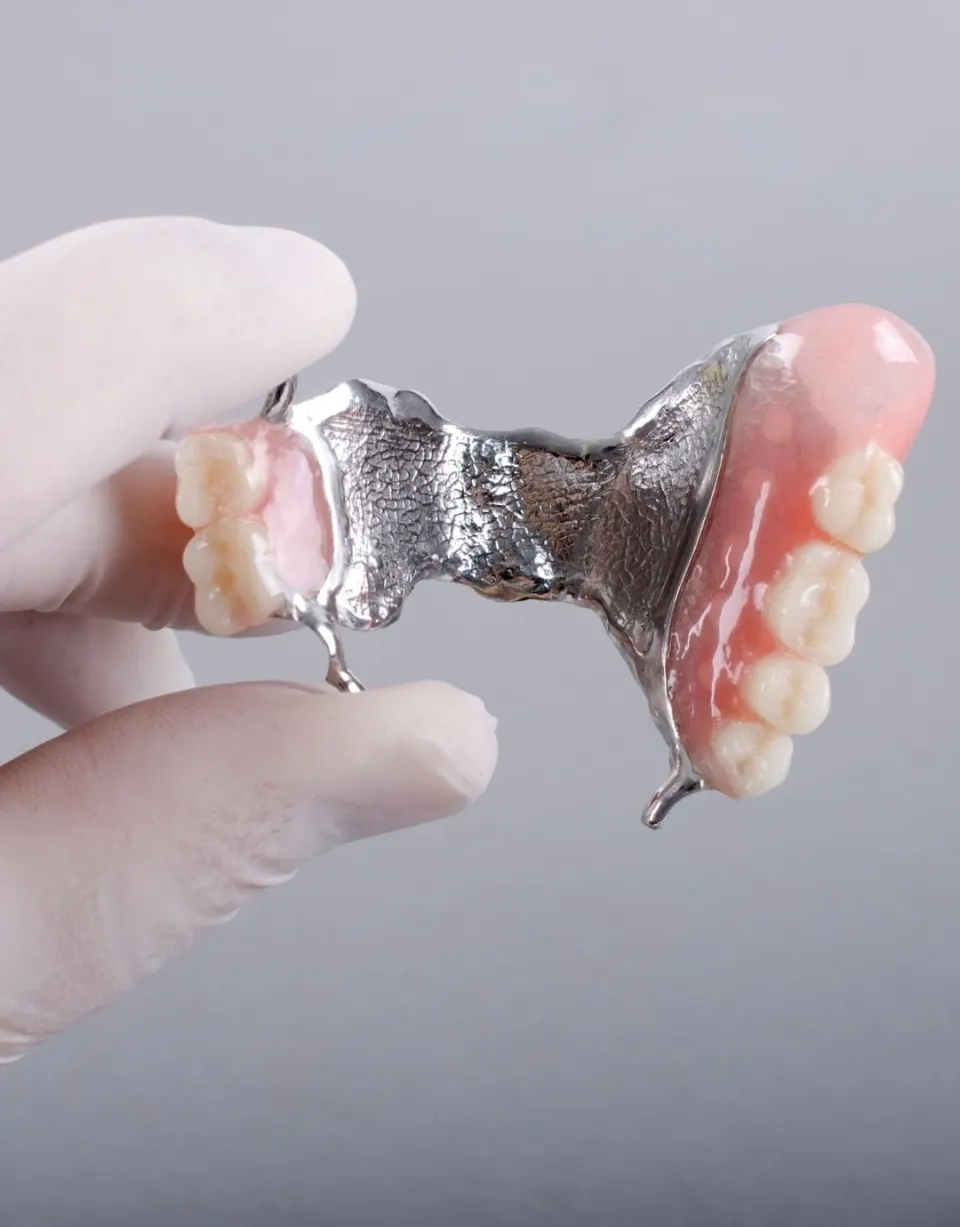
Acrylic partial dentures — the most affordable option. A pink acrylic base with metal clasps that hook around existing teeth. Functional but clasps can be visible when smiling. Chrome cobalt partial dentures — a thin metal framework (much slimmer than acrylic) with acrylic teeth.
More precise fit, more durable, preferred NHS option when clinically appropriate. Flexible partial dentures (Valplast/nylon) — no metal clasps. The gum-coloured material blends with the gum line, making the denture essentially invisible. More comfortable than rigid acrylic. Not available on the NHS.
Flexible dentures — cost and detail
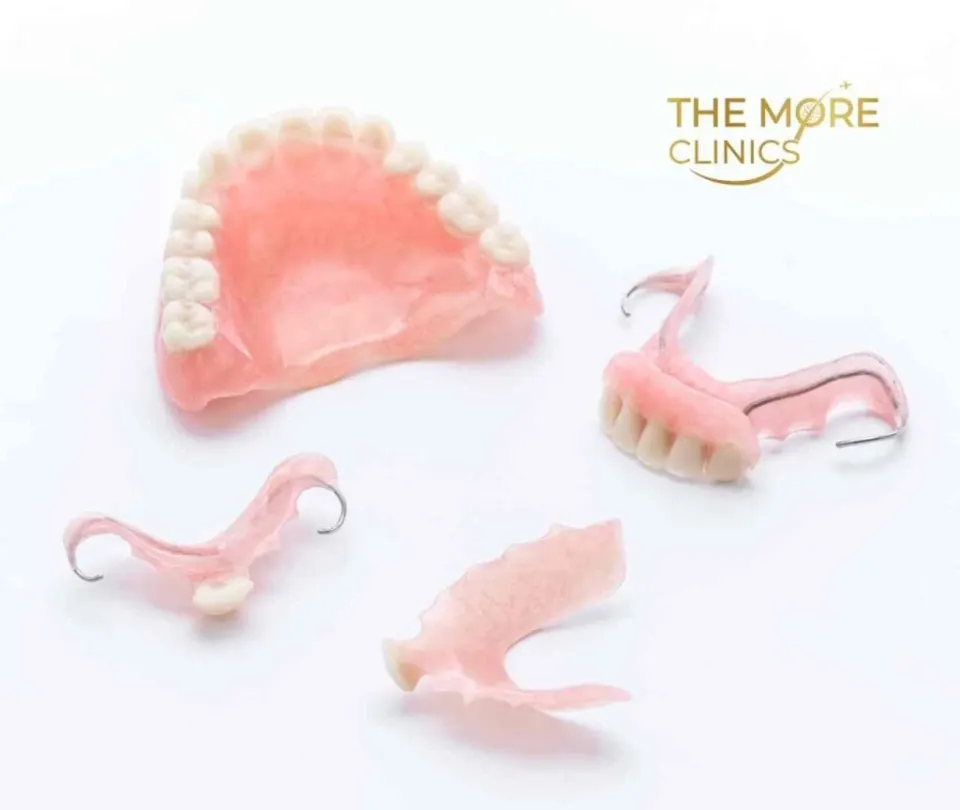
Flexible dentures are made from a thin, gum-coloured nylon resin (most commonly Valplast). They conform to the natural shape of the gums, have no metal components, and are significantly more comfortable than traditional acrylic for many patients. They are not available on the NHS.
UK private flexible denture cost: £500–£1,200. Turkey flexible denture cost: £200–£500 all-inclusive.
Advantages: No visible metal clasps. More adaptable to the gum shape. Lightweight. More natural appearance. Limitations: Cannot be relined if the fit changes over time — must be replaced. Less suitable for full arch replacement. Not as rigid under heavy bite force as chrome cobalt.
Implant-retained dentures (snap-in dentures)
Implant-retained dentures — also called snap-in or overdentures — attach to dental implants placed in the jawbone rather than resting on the gum ridge. This provides dramatically better stability: the denture does not move during eating or speaking, and the implants stimulate the jawbone to prevent the bone loss that occurs with conventional dentures.
Two implants supporting a lower snap-in denture is the most common and cost-effective configuration. Four implants (All-on-4) support a fixed arch that is not removed. Implant-retained dentures (fixed or removable) cost £6,000 to £15,000 or more in the UK depending on the number of implants placed and the type of restoration. In Turkey, the same treatment costs £2,000–£5,000 all-inclusive.
For full detail on implant-supported options see our implant-retained and snap-in denture guide and All-on-4 dental implants guide.
Dentures in Turkey — cost and what it includes
Turkey offers the full range of denture types at 60–75% of UK private costs. The price difference is structural — lower clinic operating costs — not a reflection of different materials or clinical standards. Reputable Turkish clinics use the same laboratory-grade acrylic, Valplast nylon, and chrome cobalt frameworks as UK practices.
| Denture type | Turkey all-incl. | UK private | Saving |
|---|---|---|---|
| Full acrylic (per arch) | £300–£600 | £600–£1,500 | 55–65% |
| Complete set upper + lower | £500–£1,000 | £1,000–£3,000 | 60–70% |
| Flexible (Valplast) | £200–£500 | £500–£1,200 | 55–65% |
| Chrome cobalt partial | £250–£600 | £600–£1,500 | 60–70% |
| Implant-retained dentures | £2,000–£5,000 | £6,000–£15,000 | 65–75% |
What Turkey all-inclusive packages include: Consultation and clinical examination, impressions and measurements, laboratory fabrication, fitting and adjustments, temporary denture if required, hotel accommodation, VIP airport and clinic transfers, and 12-month remote support after returning home.
Trip timeline for dentures in Turkey: Most conventional denture cases require 7–10 days — multiple fitting appointments are needed as the denture is refined. Patients who have had extractions recently may need to wait 6–8 weeks for gum healing before denture fabrication begins.
What affects denture cost?
| Factor | Lower cost | Higher cost |
|---|---|---|
| Number of teeth replaced | Few missing teeth (partial) | Full arch or both arches |
| Material | Standard acrylic | Flexible nylon, chrome cobalt, premium cosmetic |
| Implant support needed | No implants — conventional | Implant-retained or implant-supported |
| Extractions needed first | No extractions required | Multiple extractions before denture |
| Number of fitting appointments | Standard 4–6 visits | Complex case requiring additional adjustments |
Dentures vs dental implants — which should you choose?
| Factor | Conventional dentures | Dental implants |
|---|---|---|
| Cost (Turkey) | £300–£1,000 | £600–£1,200 per implant |
| Surgery required | No | Yes |
| Jawbone preserved | No — bone resorbs over time | Yes — implant stimulates bone |
| Stability | Can move — especially lower | Fixed — does not move |
| Lifespan | 5–8 years before replacement | 20+ years |
| Best for | Cost priority, no surgery preference, lower bone density | Long-term investment, maximum stability, bone health |
Denture aftercare — how to make them last
- Clean dentures daily with a soft denture brush and non-abrasive cleaner — standard toothpaste is too abrasive
- Remove and soak overnight in a denture cleaning solution — gives gums time to rest and keeps dentures bacteria-free
- Do not use bleaching products or very hot water — these weaken and warp the denture base
- Do not use household adhesive for repairs — temporary fixes cause further damage; contact your dentist
- Have dentures relined every 3–5 years as the jawbone naturally resorbs and the fit loosens
- Conventional dentures should be replaced every 5–8 years as the jawbone remodels
- Visit your dentist annually even with full dentures — gum health and denture fit should be assessed regularly
Frequently asked questions — dentures cost UK
How much do dentures cost in the UK in 2026?
NHS dentures cost £332.10 under Band 3 from April 2026 in England and Wales — this covers both arches within the same course of treatment. Private full dentures cost £600–£2,500 per arch. A complete set (upper and lower) ranges from £1,000 to £3,000 privately. Flexible dentures cost £500–£1,200 and are not available on the NHS. Implant-retained dentures cost £6,000–£15,000+.
Can I get free dentures on the NHS?
Yes — if you qualify for free NHS dental treatment. Qualifying groups include patients under 18, those receiving certain means-tested benefits, pregnant patients, and those with an NHS Low Income Scheme certificate. For everyone else, the Band 3 charge of £332.10 applies. Note that NHS denture provision is severely limited in many areas — many practices are not accepting new adult NHS patients in 2026.
How much do false teeth cost privately?
Private full dentures per arch typically cost £500–£1,500, meaning a complete set ranges from £1,000 to £3,000. Partial dentures fall between £300 and £800. Premium cosmetic dentures using individually selected and positioned teeth cost £1,500–£3,500 per arch. Chrome cobalt partial dentures — more precise fit, slimmer profile — cost £600–£1,500.
How much do flexible dentures cost in the UK?
Flexible dentures (Valplast or nylon) cost £500–£1,200 at UK private practices. They are not available on the NHS. In Turkey, the same flexible denture costs £200–£500 all-inclusive. Flexible dentures have no metal clasps, blend with the gum line naturally, and are significantly more comfortable than traditional acrylic for many patients.
How much do dentures cost in Turkey?
Full acrylic dentures cost £300–£600 per arch in Turkey (all-inclusive). A complete upper and lower set costs £500–£1,000. Flexible dentures cost £200–£500. Chrome cobalt partials cost £250–£600. Implant-retained dentures cost £2,000–£5,000. Turkey all-inclusive prices include the denture, hotel, transfers, and follow-up — saving 60–75% on UK private rates.
Are dentures or implants better?
For long-term value and stability, implants are the better clinical outcome — they preserve jawbone, do not move, and last 20+ years. The upfront cost is significantly higher. Conventional dentures are the right choice when budget is the priority, when surgery is not appropriate, or when bone loss makes implants unsuitable. Implant-retained dentures offer a middle ground: snap-in stability at lower cost than full implant-supported arches.
How long do dentures last?
Dentures should be relined every 3–5 years and replaced every 7–10 years as the jawbone naturally remodels after tooth loss, causing the fit to loosen progressively. Flexible dentures cannot be relined — they must be replaced when the fit changes. Chrome cobalt frameworks typically last longer than acrylic bases. Good oral hygiene and regular dental check-ups extend denture lifespan.
What is the difference between acrylic and flexible dentures?
Acrylic dentures have a rigid pink acrylic base and can include metal clasps for attachment — they are the NHS standard and most affordable option. Flexible dentures (Valplast/nylon) have a soft, gum-coloured base with no metal clasps — they are more comfortable, more natural-looking, and more expensive. Acrylic can be relined as the fit changes; flexible dentures cannot and must be replaced. Chrome cobalt partials have a thin metal framework — more durable and better-fitting than acrylic, less comfortable than flexible.
The Last Word from The More Clinics
Whether you choose NHS dentures at £332.10, private UK treatment at £1,000–£3,000, or a Turkey all-inclusive package at £500–£1,000, the most important decision is choosing the right denture type for your clinical situation — not just the lowest price. A well-fitted, appropriate denture lasts years longer and causes far fewer problems than a poorly chosen one at any price point.
At The More Clinics, our dental consultants assess your specific situation — bone density, remaining teeth, gum health, lifestyle — and recommend the denture type most appropriate for you. We offer the full range: conventional acrylic, chrome cobalt, flexible, and implant-retained options. Every case is assessed individually, every quote is specific to your treatment — not a generic package price.
A free consultation gives you a specific recommendation, realistic expectations, and transparent pricing — before you commit to anything.
Book a Free Consultation → WhatsApp Us →
Medical disclaimer: This guide is for informational and educational purposes only. NHS charges shown are official published rates for England and Wales from April 2026 and may differ in Scotland and Northern Ireland. Individual treatment costs vary by clinical complexity. Consult a qualified dentist for assessment specific to your circumstances.
This article provides general information and does not replace an individual medical assessment, diagnosis or treatment advice. Discuss decisions about your health and treatment with your treating clinician.