Dental Holidays in Turkey: 2026 Guide to Costs, Packages & Procedures
Talk to our team
In this article 34 sections
A dental holiday in Turkey combines serious dental work with a short trip to one of Europe's most visited countries. Whether you need implants, veneers or a full smile makeover, the right clinic and package can save you thousands while giving you a few days of sun, history and good food between appointments. This guide covers everything you need to plan a safe, cost-effective dental holidays Turkey in 2026.
Key Takeaways
- Dental holidays Turkey blend high-quality dental work (implants, veneers, crowns, full mouth restorations) with a 5–10 day trip, typically saving patients 50% to 75% compared to UK or US private prices, even after including flights and accommodation. For extensive cases, savings can exceed £10,000.
- Istanbul, Antalya and Izmir are the main Turkish dental hubs, where most all inclusive dental packages cover treatment, hotel stays, airport transfers and English-speaking patient coordinators. The More Clinics operates across these cities, connecting patients with vetted, licensed facilities.
- The biggest significant cost savings come from cosmetic dentistry (veneers, smile makeovers) and implant-based full mouth restorations. However, patients must research clinic credentials, materials and aftercare pathways before committing.
- Dental tourism in Turkey is regulated by the Ministry of Health and monitored by the Turkish Dental Association. Despite this oversight, treatment quality varies considerably between clinics, making written treatment plans, transparent pricing and post-treatment support critical factors in any booking decision.
- Dental implants usually require two trips spaced 3–6 months apart for osseointegration, while dental veneers, dental crowns and most smile makeovers are typically completed in one 5–7 day visit. Understanding the timeline for your specific dental needs is essential before booking flights.
Introduction to Dental Holidays in Turkey
A dental holiday in Turkey is exactly what it sounds like: you fly to Turkey, receive dental treatment at a modern clinic, and use the rest of your trip to recover, explore and enjoy the country. In 2026, this concept has matured from a niche travel hack into a structured industry serving over one million patients who choose Turkey for health treatments annually.
Turkey is a popular dental tourism destination for UK patients, European travellers and Middle Eastern visitors for a straightforward combination of reasons. Dental services can be six to seven times cheaper than in western countries, flight times from most European countries are just three to four hours, and Turkey offers a blend of dental care and cultural experiences that few other destinations match.
Here is what most people travel to Turkey for:
- Dental implants (single, multiple or full arch solutions like All-on-4)
- Porcelain veneers and e max veneers for smile makeovers
- Dental crowns (zirconia and E-max) for damaged or weakened teeth
- All-on-4 and All-on-6 full mouth implants
- Professional teeth whitening and composite bonding
- Bridges, root canal therapy and tooth extraction
This article is written from the perspective of The More Clinics, a network specialising in turkey dental packages that connects international patients with vetted dental clinics across Turkey. The goal here is practical: to give you the planning tools, cost benchmarks and safety checks you need to make a confident decision, not to sell you something before you are ready.
Why Turkey Is a Popular Destination for Dental Tourism in 2026
Dental tourism in Turkey has grown by over 25% annually over the past several years, and Turkey ranked as the top dental tourism destination in 2025.
What was once a handful of clinics attracting patients from neighbouring countries has become a fully regulated sector with over 40,000 dentists catering to dental tourists and more than 1,300 dental hospitals regulated by the Turkish Health Ministry. In 2023 alone, over 400,000 dental-tourism patients visited Turkey, and total health tourism numbers now sit between 600,000 and 1.5 million international patients per year.
Here is why Turkey consistently attracts dental patients from across the globe:
Cost advantages
- Turkey offers the most affordable dental treatment prices in Europe. Lower clinical overheads, competitive wages for highly trained staff and favourable exchange rates against GBP, EUR and USD all contribute to significantly lower prices.
- There is no specific dental treatment tax adding to the bill, which further keeps costs down.
- Dental work turkey pricing means that total costs in Turkey can be lower than home country prices even after adding flights, accommodation and meals.
Clinical quality
- Turkey offers modern dental clinics that are internationally accredited. Many facilities hold JCI or TEMOS accreditation alongside mandatory Ministry of Health registration.
- Reputable Turkish clinics utilize advanced medical technology including CAD/CAM, digital smile design, CBCT scanning and intraoral scanners. Lab turnaround times are often 24–48 hours in major urban clinics.
- Many Turkish dentists are internationally trained or certified, with specialisations in implantology, prosthodontics and cosmetic dentistry and also holistic dentistry.
Convenience for international patients
- English-speaking staff and multi-language patient coordinators are standard at clinics working with international patients, making communication easier throughout the process.
- Direct flights from London, Manchester, Dublin and most EU capitals reach Istanbul or Antalya in three to four hours.
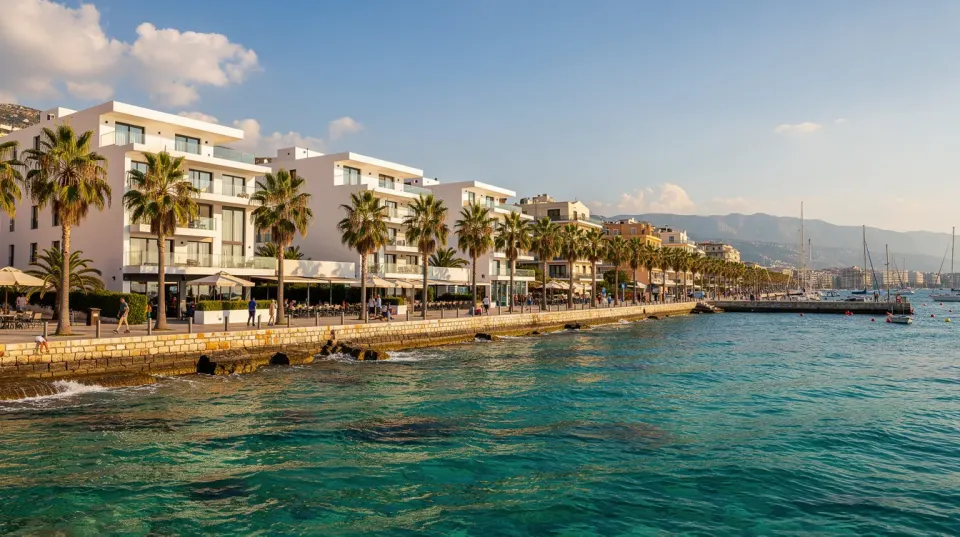
- Istanbul, Antalya, and Izmir are popular locations for dental tourism in Turkey, each offering clusters of dental clinics alongside rich tourism infrastructure.
Tourism appeal
- Antalya dental clinics offers Mediterranean beaches and resort-style stays; Istanbul delivers history, food and culture; Cappadocia provides once-in-a-lifetime experiences.
- Many patients extend their stay for sightseeing after treatment, turning a clinical trip into a genuine holiday.
Popular Dental Procedures Chosen on a Dental Holiday in Turkey
Patients travelling to Turkey for dental care typically combine functional and cosmetic dentistry during one or two trips. Many clinics, including those in The More Clinics network, coordinate multiple popular dental treatments into a single visit to maximise the value of your time abroad.
Cosmetic Dentistry Procedures
Here are the most requested cosmetic dental procedures:
- Cosmetic veneers (porcelain, E-max, composite) for smile transformations
- Zirconia and E-max dental crowns for restoring damaged teeth
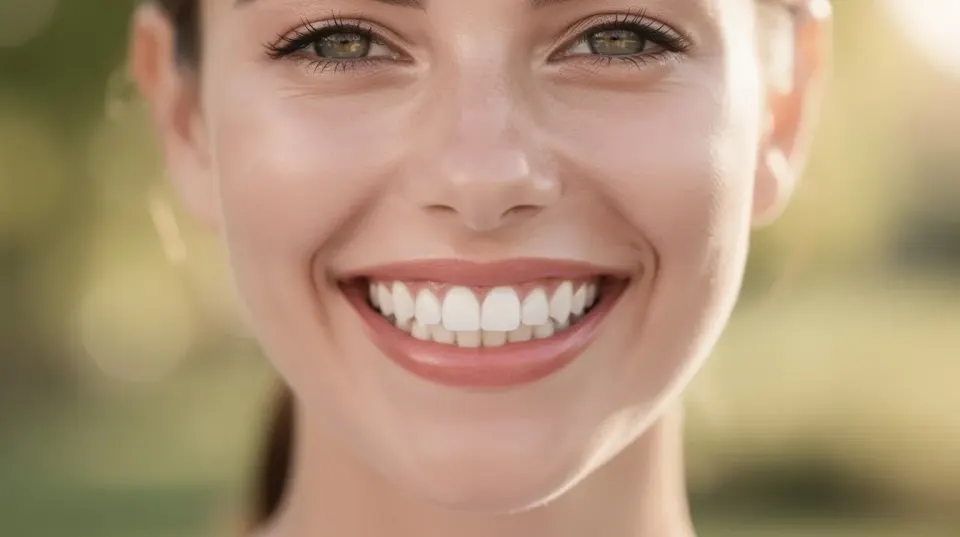
Cosmetic dentistry is the single biggest driver of dental tourism in Turkey. The "turkey teeth" phenomenon, where patients fly out for dramatic smile transformations, has put Turkish dental clinics on the global map. In 2026, the trend has matured, and experienced dentists now offer a wider range of conservative and comprehensive cosmetic options beyond the one-size-fits-all Hollywood Smile.
Porcelain and E-max veneers are thin shells bonded to the front surface of teeth to correct colour, shape and minor alignment issues. E max veneers, made from lithium disilicate ceramic, have a documented survival rate of approximately 98.6% at up to 14 years, making them the gold-standard material for front-teeth cosmetics. Most patients treat 8–10 teeth per arch, and common cosmetic treatments include veneers and Hollywood Smile packages.
Most cosmetic treatments take 5 to 7 days to complete. A typical veneer or crown timeline looks like this:
- Day 1–2: Initial consultation, digital scans, shade selection, tooth preparation
- Day 3–4: Lab fabrication, temporary restorations worn during waiting period
- Day 5–6: Trial fitting, adjustments, final bonding
- Day 7: Review appointment and discharge
Zirconia and E-max crowns are used when teeth are more heavily damaged, decayed or structurally compromised. Crowns cover the entire tooth rather than just the front surface, offering greater strength while maintaining a natural appearance. Restorative dentistry includes crowns, bridges, and root canal treatments as part of many patients' dental plans.
A word of caution on "Turkey teeth": Aggressive tooth reduction is common in popular "Turkey teeth" transformations. In some clinics, healthy tooth structure is unnecessarily ground down to fit veneers or crowns, which can cause long-term tooth damage, sensitivity and eventual nerve issues. The trend of "Turkey teeth" can cause long-term tooth damage when conservative alternatives exist. Always ask your dental team about minimal-prep or no-prep options, and insist on a proper bite analysis before any work begins.
Patient scenario:
A UK patient in her early 30s books 20 porcelain veneers through The More Clinics in Antalya. Her dental holiday packages include five nights at a four-star hotel, airport transfers, all clinical appointments and the final restorations. She spends mornings at the clinic and afternoons by the pool or exploring Antalya's Old Town. Total chair-time across the week: roughly 8–10 hours spread over four visits.
Implant and Restorative Options
Here are the most requested implant and restorative dental procedures:
- Dental implants for replacing missing teeth (single, multiple or full arch)
- All-on-4 and All-on-6 full-arch dental restorations
- Bridges and implant-supported dentures
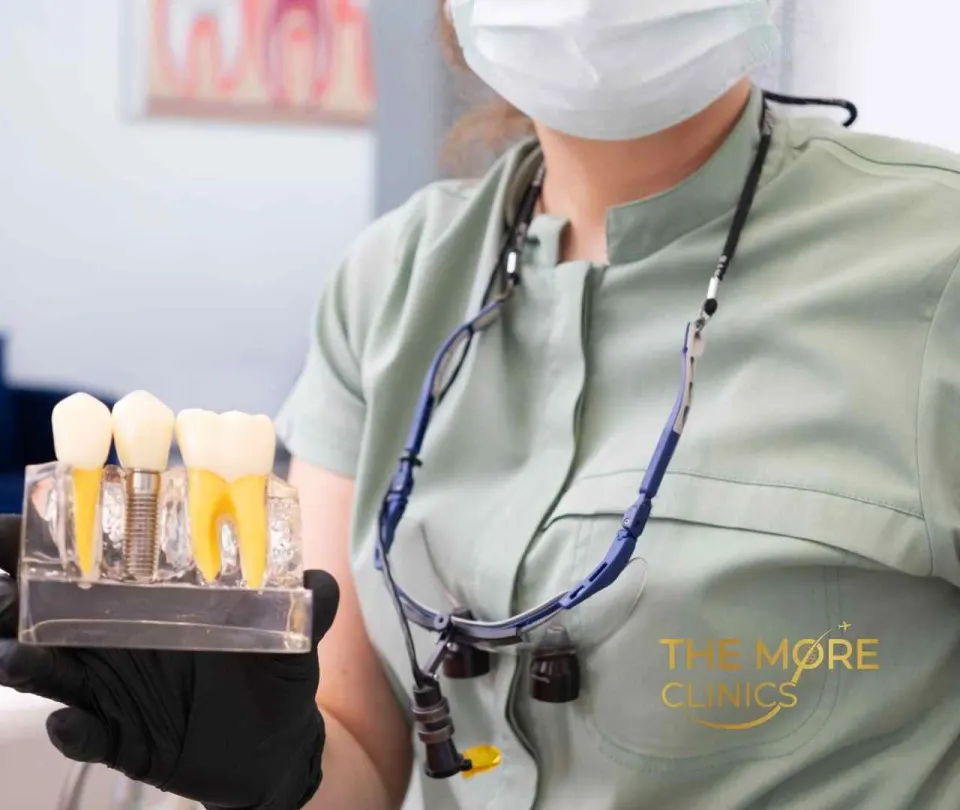
Dental implants are titanium (or, less commonly, zirconia) posts surgically placed into the jawbone to serve as artificial tooth roots. Once healed, they support individual crowns, bridges or full-arch prostheses. Turkey offers dental implants for single, multiple, or full arch cases, with clinics routinely using internationally recognised systems like Straumann, Nobel Biocare and Osstem.
Single-tooth implants replace one missing tooth with a standalone implant and crown. This is the most straightforward implant case.
Multiple implants are used when several teeth in a row are missing, supporting a bridge rather than individual crowns for each gap.
Full-arch All-on-4 and All-on-6 solutions provide a complete set of fixed teeth on just four or six implants per jaw. These are designed for patients with many missing or failing teeth who want a permanent solution rather than removable dentures.
Implant treatments require two visits over 3 to 6 months. The structure typically works like this:
- First visit (2–4 days): Extractions (if needed), bone grafting where bone volume is insufficient, and implant placement. Some All-on-4 patients receive an immediate temporary prosthesis on the same day.
- Healing period (3–6 months at home): The implants integrate with the jawbone through osseointegration. During this time, the clinic may schedule remote check-ins.
- Second visit (1–3 days): Final impressions, fitting and bonding of permanent crowns, bridges or full-arch prosthetics.
Turkey provides advanced surgical treatments like bone grafting and sinus lifts for patients who lack sufficient bone density. These procedures are significantly less expensive in Turkey than in the UK or US and are often bundled into implant packages.
Restorative options for patients who are not candidates for full implant mouths include:
- Implant-supported overdentures (removable but anchored by implants)
- Traditional bridges cemented to adjacent natural teeth
- Inlays and onlays for partially damaged teeth
A thorough clinical assessment is essential before committing to travel for implant work. Implants require good general and oral health, and conditions like uncontrolled diabetes, heavy smoking or untreated periodontal disease can affect outcomes. Reputable clinics will request medical history, recent X-rays and photographs before providing a treatment plan.
Other Common Treatments
Many patients add secondary treatments to their primary dental procedures, bundling everything into one coordinated plan:
- Root canal therapy: Treating infected or inflamed tooth pulp before placing crowns or veneers on the same tooth. This avoids separate appointments and costs back home.
- Periodontal (gum) treatment: Deep cleaning, scaling and gum line recontouring to create a healthy foundation for cosmetic or restorative work.
- Professional hygiene sessions: Removing calculus and staining before cosmetic procedures ensures the best colour match and bonding surface.
- Teeth whitening and composite bonding: Minimally invasive options for younger dental patients or those not ready for full veneers or crowns. Whitening can be done in a single appointment, while composite bonding adds tooth-coloured resin to improve shape, close small gaps or mask chips.
Many clinics combine functional work (fillings, gum therapy, extractions) with cosmetic dental work in one coordinated treatment plan. This approach can reduce total chair-time and costs versus making separate trips, and it ensures that long-term oral health stability supports the aesthetic results.
Treatments in Turkey can be completed in a few days due to fast-tracked services, in-house labs and efficient scheduling that international patients rarely experience at home.
Typical Turkey Dental Packages & What's Included
In 2026, dental packages for foreign patients come in two main formats: all inclusive packages that bundle everything into one price, and treatment-only options where you arrange your own logistics. Understanding the difference is essential for comparing offers between clinics.
Standard inclusions in most all inclusive dental packages:
- Initial consultation with full clinical assessment (examination, digital X-rays, CBCT scan where indicated)
- Written treatment plan with itemised costs per tooth or per procedure
- All dental procedures as outlined in the plan
- Temporary restorations (worn during lab fabrication periods)
- CAD/CAM technology is used for same-visit dental restorations in many clinics
- Hotel accommodation (typically 4–5 star) for the duration of treatment
- VIP airport transfers between airport, hotel and clinic
- English-speaking patient coordinators assigned to your case
Optional extras that some clinics offer:
- Guided city tours during rest days
- Translation services for medical documents
- Medication starter packs (analgesics, antibiotics where prescribed)
- Extended aftercare check-ups and remote follow-up via video call
Dental tourism packages often include accommodation and transfers as standard, but the quality and location of hotels, the number of nights included and the level of coordination vary significantly. The More Clinics provides itemised quotes that specify exactly what is covered so there are no surprises on arrival.
Always request an itemised breakdown. If a clinic quotes a single lump sum without specifying what each treatment, night of accommodation and transfer costs, that should raise questions.
All Inclusive Dental Holiday Packages vs Treatment-Only Trips
All-inclusive dental holiday packages and treatment-only trips serve different types of patients. Here is how they compare:
All inclusive packages
- Everything arranged for you: accommodation, transfers, coordination, dental appointments
- Popular with first-time dental tourists who want minimal logistics stress
- Pricing is typically per tooth, per arch or as a full package fee
- Most convenient for solo travellers and older patients
- The More Clinics' holiday packages, for example, assign a dedicated coordinator who manages the entire schedule from airport pickup to final review
Treatment-only trips
- You book your own flights, hotel and transport
- Greater flexibility to choose your own accommodation style and location
- Typically preferred by repeat visitors who know the city and clinic
- Can be slightly cheaper if you find budget accommodation, but requires more planning
- Better suited for patients with companions who want to explore independently
How to read quotes carefully:
- Check whether bone grafting, sinus lifts, extractions and sedation are included or listed as additional costs
- Confirm whether temporary prosthetics (needed during healing for implant cases) are covered
- Ask what happens if additional procedures are discovered once you arrive and the dentist performs a full clinical assessment
- Clarify how many dental appointments are included and what the policy is for extra visits if adjustments are needed
Sample Treatment Itinerary: 7 Days in Antalya or Istanbul
Here is what a realistic 7-day dental holiday looks like for a cosmetic case (veneers or crowns) booked through The More Clinics:
- Day 1 – Arrival and consultation:
Arrive at Antalya or Istanbul airport. The More Clinics' driver meets you at arrivals and transfers you to your hotel. After settling in, you visit the clinic for your initial consultation: panoramic X-ray or CBCT, intraoral photos, digital smile design discussion and shade selection. Your dental team confirms the final treatment plan, and you sign the consent form. - Day 2 – Preparation:
Tooth preparation begins. For veneers, this involves carefully shaping the front surfaces under local anesthesia. For crowns, slightly more tooth structure is removed. Impressions are taken and sent to the in-house lab. Temporary restorations are fitted so you can eat and smile comfortably. - Day 3 – Rest and sightseeing:
Lab day. No clinic visit. Explore Antalya's Kaleiçi Old Town or take a Bosphorus cruise in Istanbul. Light activity is best; avoid anything strenuous. - Day 4 – Trial fitting:
Return to the clinic for a try-in of the lab-fabricated restorations. Colour, shape, fit and bite are assessed. Adjustments are communicated to the lab. - Day 5 – Final adjustments and bonding:
Final restorations are bonded in place. Bite is checked again. Minor polishing and adjustments are made. This is usually the longest appointment of the trip. - Day 6 – Review and free day:
Short review appointment to confirm everything is comfortable. The rest of the day is yours to enjoy the natural beauty of the Turkish coastline or explore local markets. - Day 7 – Discharge and departure:
Final check-up. You receive written aftercare instructions, digital records, X-rays and contact details for remote follow-up. Transfer to airport for your flight home.

For implant cases, the first visit is typically shorter (2–4 days) and focused on surgery. You return home to heal, then come back 3–6 months later for a 1–3 day visit to have the final prosthetics fitted.
Sightseeing and rest days are deliberately built into treatment schedules. Lab turnaround times naturally create gaps, and these free half-days or full days help manage swelling, fatigue and overall recovery.
Cost Comparison: Dental Holiday Turkey vs UK, Europe & US
Patients in 2026 can still expect savings of 50% to 75% on major dental work in Turkey compared with UK and US private dentist fees, even after flights and hotel. Dental tourism in Turkey is highly popular due to cost savings of up to 70-80% on certain procedures. Here is where the numbers land for the most common treatments.
- Veneers (porcelain / E-max, per tooth): Turkey: £150–£300. UK: £800–£1,500+. A full set of 20 veneers that might cost £16,000–£24,000+ in the UK typically costs £3,000–£6,000 in Turkey.
- Single dental implant (fixture + abutment + crown): Turkey: £350–£900. UK: £2,000–£4,000+. Cost compared to the UK, patients save between 70% and 80%.
- All-on-4 (per arch): Turkey: £3,500–£5,500. UK: £12,000–£18,000. This is where savings can exceed £10,000 for a single arch alone.
- Zirconia or E-max crown (per tooth): Turkey: £100–£400. UK: £400–£1,200+.
- Full mouth restorations (both jaws, All-on-6 or similar): Turkey: £7,000–£11,000. UK: £25,000–£40,000. For many patients, the entire trip including flights and a week of hotel accommodation costs less than the treatment alone back home.
Why are prices so much lower?
- Clinic overheads (rent, staff wages, lab costs) are substantially lower in Turkey
- High treatment volumes and intense competition between clinics keep prices competitive
- Favourable exchange rates amplify the cost advantage for patients paying in GBP, EUR or USD
- The dental sector operates at significantly lower prices without compromising on materials or technology in well-established clinics
The cost effective solution caveat: cheapest is not always best. Value should factor in the quality of high quality materials (CE and FDA-approved), lab standards, the dentist's experience and structured aftercare support. An implant from an unknown manufacturer at rock-bottom price is not the same as one using a Straumann or Nobel Biocare system with a documented track record. The More Clinics only works with facilities that provide full material transparency and written warranties.
When running your own cost comparison, add return flights (typically £80–£250 from UK to Turkey), 5–7 nights of accommodation (often included in packages), meals and travel insurance. Even with these additions, turkey compared to UK, US or other western countries remains dramatically more affordable for the same standard of dental care. Off-season travel (October–April, excluding Christmas/New Year) can trim costs further.
How to Choose a Safe, High-Quality Turkish Dental Clinic
The outcome of your dental holiday depends more on choosing the right clinic than on the country itself. Turkey has over 600 clinics actively attracting patients from abroad, and quality care is not uniform across them. Here is a practical checklist for finding the best dental clinics for your case.
Core Checks Before Booking
- Ministry of Health registration: Clinics must be registered with the Turkish Ministry of Health. Dental clinics in Turkey are subject to regular inspections to maintain their licence.
- Turkish Dental Association membership: Membership indicates adherence to professional ethical standards and continued education requirements.
- Health tourism authorisation: Patients should verify clinics have health tourism authorisation. Patients need to verify that clinics hold a valid International Health Tourism Authorization Certificate, which is mandatory for clinics serving international patients.
- ISO certification: Clinics must comply with ISO certification standards in Turkey. ISO certification ensures clinics meet international health standards for sterilisation, equipment and patient safety.
- Specialist qualifications: Look for dentists with specialist training in implantology, prosthodontics or cosmetic dentistry, ideally with years of experience and documented international case volumes.
Materials Verification
- Clinics must use CE and FDA-approved materials for treatments. Ask which implant brand and ceramic type (E-max, zirconia grade) will be used.
- Request an "implant passport" or serial number documentation for every implant placed.
- Verify that the lab producing your restorations is using the same material specified in your quote.
Patient Evidence
- Review independent patient reviews from 2023–2026 on third-party platforms, not just the clinic's own website.
- Ask for before-and-after galleries showing cases similar to yours.
- Look for documented case studies with detailed treatment descriptions, not just glamour photos.
Communication Standards
- English-speaking staff, written treatment plans, consent forms and transparent explanations of risks and alternatives are non-negotiable.
- The More Clinics assigns dedicated patient coordinators who handle pre-travel communication, on-site scheduling and post-treatment follow-up, ensuring nothing gets lost in translation.
Red Flags to Avoid
Not every offer you see online is legitimate. Here are the warning signs that should make you pause:
- Prices far below typical Turkish market rates: If a single implant with crown is quoted at £150 when the market norm is £350–£900, question what is being cut. It might be an off-brand implant, an unlicensed clinic or a bait-and-switch tactic.
- No written treatment plan: Any clinic that refuses to provide a tooth-by-tooth breakdown of proposed work, materials and costs before you pay a deposit is not operating transparently.
- Vague material specifications: Refusal to name the implant brand, ceramic manufacturer or lab is a major red flag. You need to know exactly what is going into your mouth.
- Pressured sales tactics: "Today-only discounts," countdown timers and aggressive urgency are marketing techniques, not clinical decisions. A strong clinic lets the quality of its work speak for itself.
- Unregulated brokers: Some agencies do not clearly disclose which clinic or dentist will perform the dental procedures. If you cannot confirm who your treating dentist is before booking, walk away.
- No discussion of complications: If a clinic is reluctant to explain how they handle complications, what their warranty covers or how aftercare works once you return home, consider it a disqualifying signal.
Related Post: What to Expect During a Dental Check-Up, Red Flags
What a Good Turkey Dental Package Should Include
Think of this as a document checklist. Before paying any deposit, you should have the following in writing:
- All diagnostics included (X-rays, CBCT, intraoral scans) with confirmation of no additional imaging fees
- Proposed treatments listed tooth-by-tooth with material specifications
- Number of clinic visits, estimated duration of each appointment and total treatment timeline
- Total package cost, broken down by dental procedures, accommodation, transfers and any extras
- Clear statement of what happens if additional procedures (extractions, bone grafts, root canals) are needed once the clinical assessment is completed in person
- Written aftercare instructions and remote follow-up protocol (video calls, WhatsApp support, email)
- Warranty terms for dental implants (often lifetime on the fixture, 5+ years on crowns) and dental crowns or veneers
- Contact details for your dental team and patient coordinators for post-return queries
- Cancellation and refund policy
Strong clinics are comfortable putting all of this in writing. The More Clinics provides comprehensive service documentation as standard, including itemised quotes that patients can review with their local dentist before making a final decision.
Planning Your Dental Holidays in Turkey: Step-by-Step Guide
This section is a chronological roadmap from initial research to post-return aftercare, tailored for 2026 travellers.
Step 1: Initial Online Research
- Shortlist 3–5 turkish dental clinics.
- Read reviews from the last 12–24 months.
- Gather basic package information and pricing.
- Check credentials against the checklist above.
- The More Clinics' platform allows you to compare multiple vetted clinics side-by-side.
Step 2: Remote Assessment
- Send dental photos, recent X-rays and your treatment goals to your shortlisted clinics.
- Many experienced dentists can provide a provisional treatment outline and cost estimate based on these materials alone.
- This is your first test of communication quality and responsiveness.
Step 3: Finalise Dates and Flights
- Once you have a provisional treatment plan, coordinate your dental schedule with flight and hotel bookings.
- Leave extra days for adjustments, especially on complex cases.
- Book refundable or flexible flights where possible.
Step 4: On-Arrival Consultation
- On your first day, the clinic confirms the diagnosis with a hands-on clinical exam and fresh imaging.
- This full clinical assessment may reveal additional needs (e.g., a tooth requiring extraction before a veneer can be placed).
- Review and sign the final written treatment plan.
Step 5: Treatment and Adjustments
- Dental appointments are grouped efficiently.
- Try-ins happen mid-week, and refinements are handled before final bonding or fitting.
- Communicate openly with your dental team about comfort, aesthetics and bite feel.
Step 6: Discharge and Return Home
- Final checks, written aftercare instructions, digital records (X-rays, implant passports, shade guides) and follow-up contacts are provided before you fly back.
- Patients should follow post-treatment care instructions for best results over the long term.
Travel Tips: Flights, Accommodation & Insurance
- Fly into Istanbul or Antalya with at least a few hours buffer before your first clinic visit. Avoid red-eye flights that arrive at 5am with a 9am appointment.
- Choose accommodation within a short taxi or transfer distance of the clinic. Most all inclusive packages place you within 10–20 minutes of the dental facility.
- Travel with a companion where possible, especially for implant surgery or sedation cases. Having someone to help with meals, transport and moral support makes a meaningful difference.
- Purchase medical travel insurance that covers dental complications abroad, emergency treatment and changes to flights due to extended treatment. Standard holiday insurance rarely covers dental work.
- Check passport validity (at least six months remaining for most nationalities), any visa requirements and local customs regulations for medications you might bring (some pain medications require documentation).
Health, Safety & Aftercare Considerations
- Disclosing your full medical history is not optional. Medications, smoking status, diabetes, heart conditions and allergies must be communicated before any surgical or restorative work begins. These factors directly affect treatment planning, anaesthesia protocols and healing outcomes.
- Typical post-treatment restrictions include:
- Avoiding hard, crunchy or sticky foods for the first 1–2 weeks
- No alcohol or smoking immediately after procedures (smoking significantly impairs implant healing)
- Managing swelling with cold packs and prescribed medication
- Gentle oral hygiene using soft brushes and prescribed mouthwash
- Patients often experience limited local aftercare following treatments in Turkey. This makes it important to schedule a follow-up with your local dentist in your home country for long-term maintenance, especially after implants and complex restorative work. Share all records, X-rays and implant passports with your dentist at home.
- Patients receive remote aftercare via WhatsApp, video calls and email from reputable clinics. The More Clinics maintains ongoing communication channels so patients can send photos, ask questions and receive guidance without needing to return to Turkey for minor concerns.
- A successful dental holiday does not end when the flight leaves Turkey. Ongoing oral health maintenance, regular check-ups and following aftercare protocols are what protect your investment over the years ahead.
Combining Dental Tourism in Turkey with Sightseeing
Many patients use recovery days between dental appointments to explore Turkey's main attractions. Treatment schedules typically leave half-days or full days free for light sightseeing, shopping or relaxation at resort hotels.
- Istanbul is a city of 15 million people with rich history. Patients can explore Istanbul between dental appointments, visiting the Hagia Sophia, the Grand Bazaar or taking a Bosphorus cruise. The city's food scene alone is worth the trip.
- Antalya offers Konyaaltı beach, the charming Kaleiçi Old Town and easy access to ancient ruins like Perge and Aspendos. The Mediterranean climate makes it particularly appealing for dental holidays between April and November.
- Cappadocia is a popular add-on for patients who extend their trip. Hot air balloon rides over fairy chimneys are a once-in-a-lifetime experience, and the region is a short domestic flight from both Istanbul and Antalya.
Gentle activities are recommended post-surgery: walking, sightseeing on foot, cafe hopping. Save the more active excursions (boat trips, hiking) for days without major dental work or for after your final appointment. The natural beauty of Turkey's landscapes provides a restorative backdrop that genuinely helps with recovery.

Your dental holiday should balance treatment with rest. Overloading your schedule with back-to-back tours after a long day in the dental chair is a recipe for fatigue and discomfort.
FAQ: Dental Holidays Turkey
This FAQ addresses practical questions not fully covered above, focusing on timing, safety and logistics based on typical 2024–2026 patient scenarios for dental holidays in Turkey.
How soon can I fly home after dental treatment in Turkey?
For veneers and crowns, flying 24 hours after the final fitting is generally safe and standard. After simple extractions, most dentists recommend waiting 24–48 hours. For implant surgery or bone grafting, plan to stay at least 2–3 days post-procedure for initial healing before flying.
The exact timing depends on the procedure complexity and your dentist's advice. Cabin pressure is generally not an issue for healed dental work, but pain, swelling and the risk of bleeding are reasons to build buffer days into your trip. Never book a same-day return flight after major dental work.
Are dental holidays in Turkey safe for anxious or first-time patients?
Many turkish dental clinics are highly experienced with nervous international patients. Options like conscious sedation (where you remain awake but deeply relaxed), extended consultation times and step-by-step explanations of each procedure are widely available. The More Clinics specifically matches anxious patients with clinics that offer enhanced comfort protocols.
If you are a first-time dental tourist, choose a clinic that provides detailed pre-travel communication, virtual consultation calls and clear written explanations of every step. Schedule lighter sightseeing and build extra rest days into your itinerary for a calmer, more manageable experience.
Can I bring family or friends with me on a dental holidays Turkey?
Most all inclusive dental packages can be adapted for companions sharing the hotel room without receiving treatment. Having a friend or family member along is especially helpful after surgery, long dental appointments or sedation cases. They can manage logistics, provide emotional support and enjoy the trip alongside you.
Confirm in advance how many people the package covers, whether additional hotel or transfer costs apply for companions, and whether there are any restrictions on visitors at the clinic during your appointments.
What happens if I have a problem with my dental work after I return home?
Reputable clinics provide written warranties for dental implants, crowns and veneers, plus remote support via video calls and WhatsApp to assess any issues that arise post-treatment. The More Clinics only collaborates with clinics that provide implant passports, transparent warranties and clearly defined follow-up options.
In some cases, a short return visit to Turkey may be recommended for corrective work. Minor issues such as sensitivity or a minor bite adjustment might be managed by your local dentist using the records and material information supplied by the Turkish clinic. Before booking, clarify warranty conditions and aftercare pathways, including who covers the cost of any corrective treatment or travel.
How long should I plan to stay in Turkey for common dental procedures?
Realistic stay durations for 2026:
- Veneers and crown smile makeovers: 5–7 days
- Single implant placement (first visit): 2–4 days
- Full-arch All-on-4 treatment (first visit): 5–7 days
- Implant final prosthetics (second visit): 4–6 days
- Teeth whitening or composite bonding only: 1–3 days
Add at least one buffer day at the end of your trip for unexpected adjustments, especially on complex cosmetic or implant cases. Your clinic should provide a personalised timeline based on diagnostic findings before any flights are booked. The More Clinics' patient assistants build these timelines collaboratively with each patient to ensure adequate time without unnecessary days.
Contact us today to schedule a free consultation and discuss the best options for you. Our dental and health professionals are ready to answer all your questions and provide you with the most suitable solution for your dental holidays Turkey.
This article provides general information and does not replace an individual medical assessment, diagnosis or treatment advice. Discuss decisions about your health and treatment with your treating clinician.