Dental Check-Up Abroad 2026: What to Expect, Costs & Patient Safety Guide
Talk to our team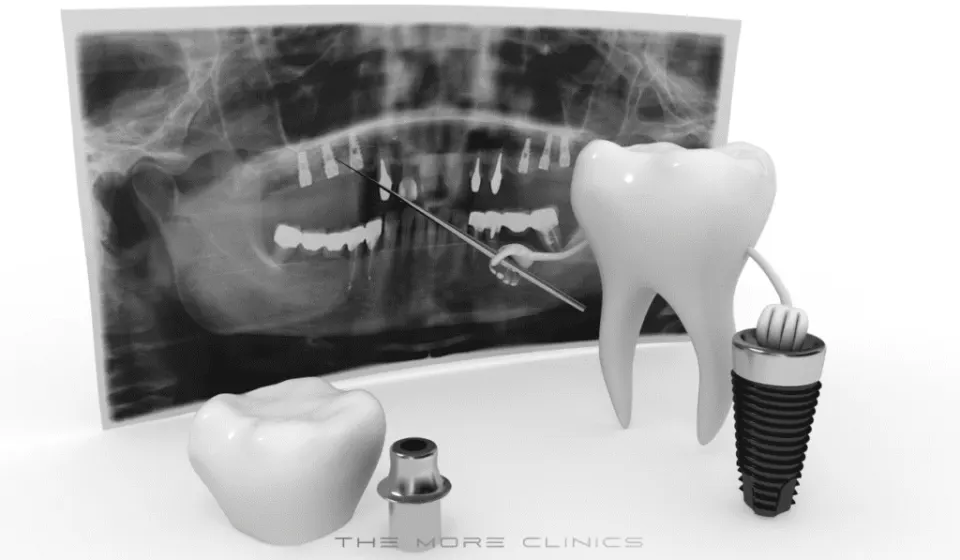
In this article 14 sections
A dental check-up is the foundation of good oral health — and, if you're considering dental treatment abroad, it's also the moment that determines whether your whole treatment plan is safe and honest. This complete patient guide explains exactly what happens at a check-up, the treatments that may follow (each explained), what a check-up and treatment cost around the world, and — crucially — how to spot the red flags that separate a trustworthy clinic from a risky one.
| → What happens at a dental check-up |
| → Treatments that may follow (explained) |
| → Check-up & treatment costs by country |
| → Red flags: what to watch out for |
| → How to prepare & questions to ask |
What happens at a dental check-up?
How often you need a check-up varies — the interval can range from 3 months to 2 years depending on the health of your teeth and gums and your risk of future problems. A check-up lets your dentist catch problems early, before they become painful or costly. During your check-up, your dentist will:
- Ask about your general health, changes since your last visit, and any new or changed medications
- Examine your teeth, gums, and the soft tissue of your mouth
- Carry out any necessary tests or X-rays
- Screen for early signs of decay, gum disease, and oral cancer
- Advise on diet, smoking, alcohol, and cleaning technique
- Provide a written treatment plan if any work is needed — which you sign before treatment begins
X-rays: Your dentist may take X-rays to spot problems not visible in a routine exam — decay between teeth, impacted teeth, jawbone damage, cysts, or abscesses. Modern clinics also use CBCT (3D) scans for implant and complex planning. If you are pregnant, X-rays are only taken in an emergency.
Treatments that may follow your check-up
If your dentist finds problems, they'll recommend next steps in a written plan. Here are the treatments most commonly recommended after a check-up, each explained — with links to full guides:
Scale and polish (cleaning)
If you have a build-up of calcified plaque (tartar), you'll need a scale and polish to remove it above and below the gum line. This is the most routine follow-up and helps prevent gum disease.
Fillings
For tooth decay or minor damage, a filling restores the tooth. Modern clinics use tooth-coloured composite rather than old metal amalgam. Learn more about modern filling alternatives.
Crowns
A crown caps a genuinely damaged or weakened tooth. Importantly, a crown should only be recommended for a tooth that actually needs it — not applied wholesale across healthy teeth for cosmetic reasons.
Veneers
Veneers are thin shells bonded to the front of healthy teeth to improve appearance. They are a cosmetic choice, not a treatment for damage — which is why a good clinic recommends a veneer for a healthy tooth and a crown only for a damaged one. See our dental veneers guide and what "Turkey teeth" really means.
Dental implants
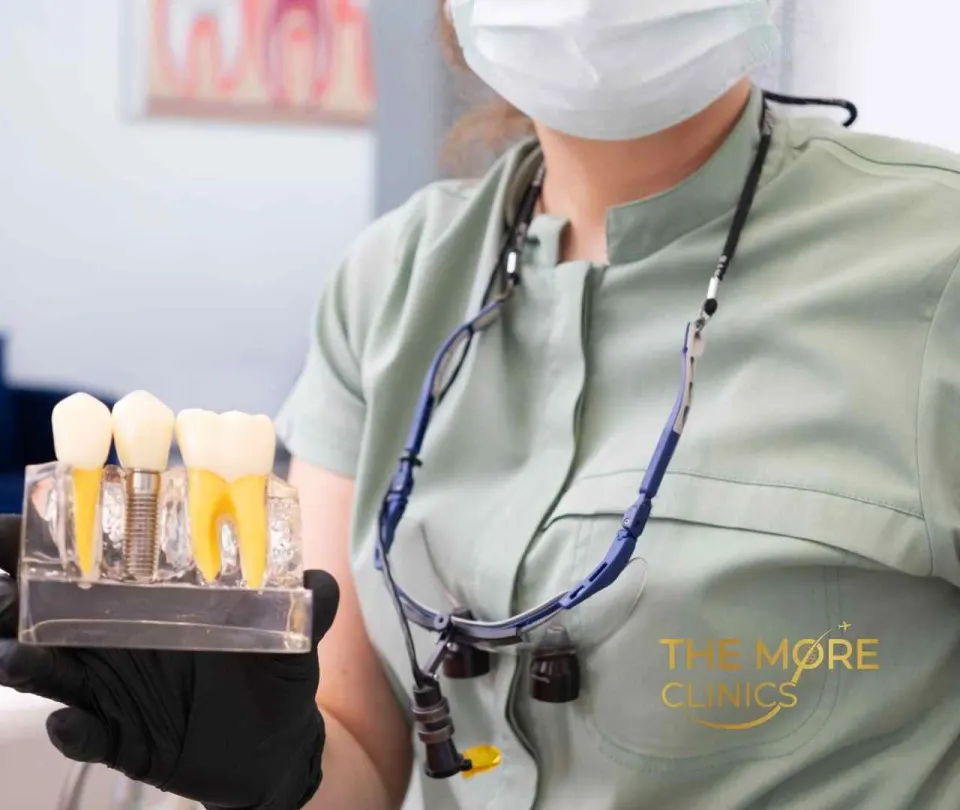
For a missing tooth, an implant replaces the root with a titanium post topped by a crown. Implant planning requires a CBCT scan and careful staging. See our dental implants guide and full-mouth implant options.
Gum (periodontal) treatment
If your check-up reveals gum disease, you may need deep cleaning or periodontal treatment. Active severe gum disease must be treated and stabilised before any cosmetic or implant work — a step that rushed clinics skip.
Root canal
If decay reaches the tooth's nerve, a root canal removes the infected pulp and saves the tooth, usually followed by a crown.
Dental check-up & treatment costs by country
A routine check-up is inexpensive or free in many places — at The More Clinics, the dental examination is free of charge. The real cost difference between countries shows up in treatment. Here's how common dental treatment costs compare:
| Treatment | 🇹🇷 Turkey | 🇬🇧 UK | 🇺🇸 USA |
|---|---|---|---|
| Check-up & exam | Free – $30 | £25–£120 | $75–$200 |
| Scale & polish | $30–$60 | £50–£100 | $100–$300 |
| Composite filling | $40–$90 | £90–£250 | $150–$450 |
| Zirconium crown | $180–$280 | £500–£900 | $800–$1,500 |
| Veneer (per tooth) | $180–$300 | £500–£1,000 | $900–$2,500 |
| Dental implant (single) | $400–$800 | £1,500–£2,500 | $3,000–$5,000 |
Figures are indicative ranges for comparison. Turkey prices are typically part of all-inclusive packages. For a fuller comparison, see our guide on the cheapest countries for dental treatment.
Red flags: what to watch out for before treatment abroad
Dental tourism is safe and effective at the right clinic — but the sector's growth has attracted opportunistic operators. Knowing the warning signs protects you. Treat any of the following as a serious red flag:
- A quote before diagnosis: being quoted for "crowns" or "a full set" before anyone has examined which teeth actually need work.
- Over-treatment pressure: an answer of "all of them" when you ask how many teeth genuinely need treatment, or pressure toward an oversized, uniform bright white instead of a natural result.
- Rushed complex cases: a complex case sold as a "4-day full-mouth." A good clinic stages complex work over 2–4 trips across several months — exactly as a serious clinic at home would.
- No CBCT / 3D scan: no mention of proper imaging in an implant or full-arch plan. Safe diagnosis requires it.
- Vague or non-itemised pricing: no written, itemised cost estimate before you book flights or pay a deposit.
- Booking pressure: extreme urgency, "limited-time" deposits, and high-pressure sales tactics.
- WhatsApp-only, no dentist: communication exclusively through DMs, with no video consultation with the actual treating dentist and no way to identify who they are.
- Impossibly low prices: a price under what real materials and lab work cost is a signal of substandard materials or hidden costs to come.
- Vague safety answers: "don't worry, we're very clean" instead of specifics on sterilisation, brands (in writing), and a documented plan for complications after you return home.
A single red flag isn't always fatal — but three or more together almost always signals a case likely to go wrong. Clarity is a safety signal; vagueness is not.
How to prepare for a check-up abroad & questions to ask
If you're travelling for dental treatment, preparation makes the process smooth and safe. Before you go:
- Share your history: tell the clinic about chronic conditions (diabetes, high blood pressure, autoimmune disease), allergies, and any regular medication.
- Send photos or an X-ray for an honest, tooth-by-tooth preliminary plan.
- Get it in writing: insist on a written treatment plan and itemised quote before booking flights or paying a deposit.
- Have a video consultation with the actual dentist who will treat you.
- Confirm the brands (implant systems, materials) in writing.
- Ask about aftercare: get a clear aftercare plan and emergency contact before you leave.
Key questions to ask any clinic: How many of my teeth genuinely need treatment, and why? Can I have an itemised written plan? Who exactly will treat me, and can I speak with them first? What implant/material brands do you use? What happens if I have a complication after I return home?
Frequently asked questions
How often should I have a dental check-up?
Anywhere from every 3 months to every 2 years, depending on the health of your teeth and gums and your risk of problems. Your dentist sets the interval based on your individual needs.
Is a dental check-up free?
It varies by country and clinic. At The More Clinics, the dental examination is free of charge. In the UK and USA, a private check-up typically costs £25–£120 or $75–$200.
How do I know if a dental clinic abroad is safe?
Look for a tooth-by-tooth diagnosis, a written itemised plan, proper imaging (CBCT for implants), a video consultation with the treating dentist, brands confirmed in writing, and a clear aftercare plan. Vague answers, booking pressure, and quotes before diagnosis are red flags.
Should I get treatment abroad in a single quick trip?
Simple treatment can be done quickly, but complex cases (implants, full-mouth, active gum disease) should be staged over several visits and months — the same as at home. Any clinic promising a rushed "full-mouth in 4 days" for a complex case is showing a red flag.
Do I need insurance for dental treatment abroad?
Standard travel insurance doesn't cover the clinical treatment itself, but travel medical insurance for complications, flight or hotel disruption, and post-op issues is strongly recommended. Ask whether the clinic carries its own indemnity insurance for the clinical work.
The Last Word from The More Clinics
A dental check-up is more than a routine — it's where a safe, honest treatment plan begins. Whether you're seen at home or travelling to us in Antalya, the principles are the same: a tooth-by-tooth diagnosis, a written plan, proper imaging, and no pressure to over-treat. We diagnose conservatively, recommend a veneer for a healthy tooth and a crown only for a damaged one, and document everything — with a free examination and a transparent, itemised quote.
Share photos or an X-ray and our specialists will give you an honest assessment and an all-inclusive quote, with no pressure. A free WhatsApp consultation is the simplest first step.
Get a Free Consultation → WhatsApp Us →
Related: Our dental treatments · Cheapest country for dental work · What is "Turkey teeth"? · Dental emergencies while travelling
Medical disclaimer: This guide is for informational and educational purposes only. All dental treatments require individual clinical assessment. Consult a qualified dentist or orthodontist for evaluation specific to your situation.
Written by The More Editorial Team and Medically Reviewed by Dr. Onur Ademhan, specialist in Oral and Maxillofacial Surgery and Implantology. See Editorial Process. Last Updated: [10 August 2026]
This article provides general information and does not replace an individual medical assessment, diagnosis or treatment advice. Discuss decisions about your health and treatment with your treating clinician.