Facial Fat Transfer (Fat Grafting): The Complete Guide
Talk to our team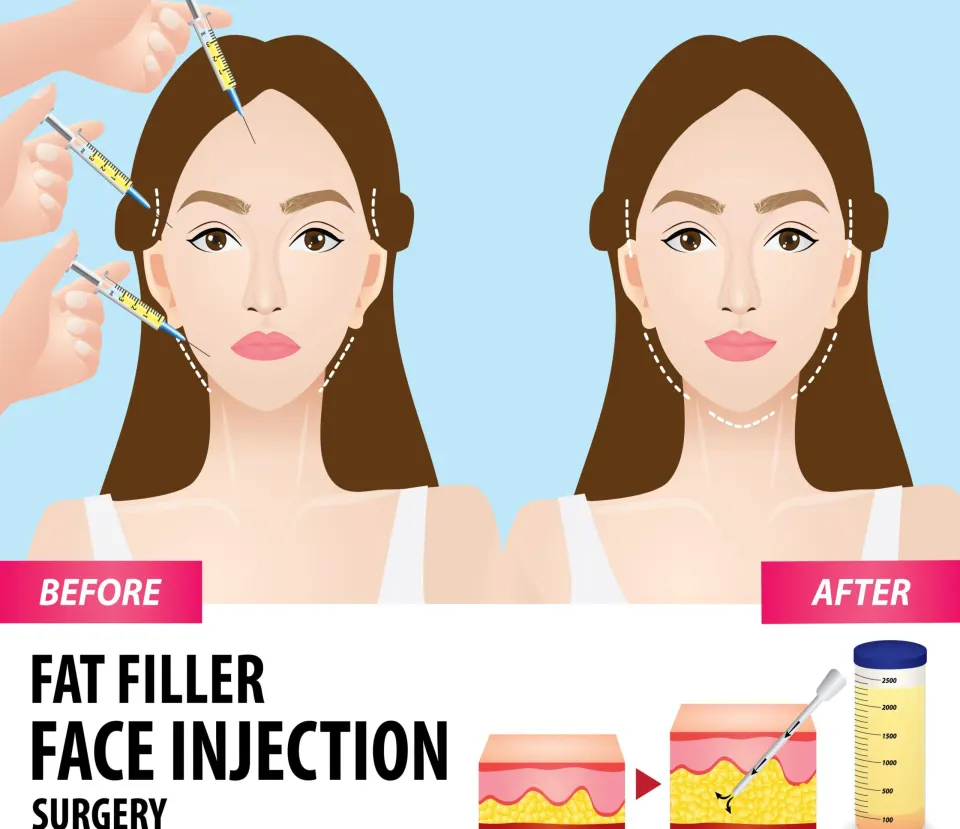
In this article 12 sections
Facial fat transfer — also called facial fat grafting or lipofilling — is one of the most natural ways to restore youthful volume to the face. Instead of synthetic fillers, it uses your own fat, gently removed from an area like the abdomen or thighs, purified, and re-injected into the face to smooth hollows, lift contours and refresh your appearance.
Because it's your own living tissue, the results feel completely natural and can last for years. This complete guide explains how the procedure works, which areas it treats, what recovery involves, how long results last, and how it compares to dermal fillers.
Fat is taken from your own body (usually abdomen, thighs or hips), purified, and injected into the face to restore volume in areas like the cheeks, under-eyes, temples and jawline. Around 50–80% of the transferred fat survives long-term, giving natural, lasting results. Most people return to work in 7–10 days, with final results developing over 4–6 months. Unlike fillers, results can last for years.
What is facial fat transfer?
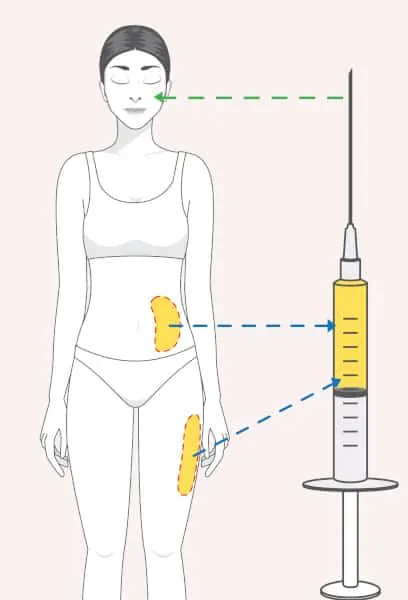
Facial fat transfer (fat grafting or lipofilling) is a cosmetic procedure that moves fat from one part of your body to your face. It has three stages: fat is harvested with gentle liposuction from a donor area (commonly the abdomen, thighs or hips), purified to isolate healthy fat cells, then carefully injected into the face to restore volume and contour.
As we age, the face loses fat and volume — cheeks flatten, under-eyes hollow, temples sink, and the jawline softens. Fat transfer reverses this by putting your own natural fat back where it's been lost. Because the transferred fat is living tissue from your own body, once it establishes a blood supply it behaves like native fat: soft, natural to the touch, and moving naturally with your expressions. There's also no risk of allergic reaction, since nothing synthetic is used.
Which facial areas can be treated?
Fat transfer is versatile and can rejuvenate many areas of the face, often in a single session:
| Area | What it addresses |
|---|---|
| Cheeks & midface | Flattened, sunken cheeks — restores youthful lift and contour |
| Under-eyes (tear troughs) | Hollows and dark circles — smooths the eye-to-cheek transition |
| Temples | Sunken temples that make the face look gaunt |
| Nasolabial folds | Deep lines from nose to mouth |
| Jawline | Definition and contour; correcting asymmetry |
| Lips | Natural volume and shape |
The midface (cheeks and cheekbones), temples and under-eyes tend to respond especially well, partly because they have good blood flow, which helps the transferred fat survive.
How the procedure works, step by step
- Harvesting: using gentle liposuction under local anaesthetic, a small amount of fat is removed from a donor area such as the abdomen, thighs or hips.
- Purification: the fat is refined — often using micro-fat or nano-fat filtration — to isolate the healthiest fat cells and improve survival and smoothness.
- Injection: the purified fat is injected through a fine cannula in thin, controlled layers across the target areas, sculpting volume precisely rather than adding bulk.
Fat survival: how much lasts, and how long?
Not every transferred fat cell survives — and this is completely normal and planned for. In the first few months after surgery, your body naturally absorbs a portion of the transferred fat. On average, around 50–80% of the fat survives long-term once it establishes its own blood supply. Because of this, surgeons deliberately transfer a little more fat than the final volume needed, to allow for this settling.
The fat that survives is essentially permanent — it becomes living tissue in your face. This is why results are described as long-lasting, often for years and sometimes effectively permanent. It typically takes about 4–6 months to see how much fat has survived and to judge the final result. Bear in mind that fat transfer doesn't stop natural ageing — your face continues to age gracefully around the restored volume, and subtle touch-ups years later can maintain the look if desired.
Recovery timeline
- Days 1–3: swelling and mild bruising at both the donor and injection sites — this is normal and expected.
- Week 1: healing improves; most people return to work and light activity within 7–10 days as swelling and bruising fade.
- Weeks 2–4: most visible swelling resolves; results begin to refine.
- Months 4–6: final results develop as the transferred fat fully integrates and its survival becomes clear.
Recovery is generally mild compared to more invasive facial surgery. Following aftercare — avoiding pressure on the treated areas, not smoking (smoking impairs fat survival and healing), and attending follow-ups — gives the best result.
Facial fat transfer vs dermal fillers
| Fat transfer | Dermal fillers | |
|---|---|---|
| Material | Your own fat (natural) | Synthetic (e.g. hyaluronic acid) |
| How long it lasts | Years / often permanent | 6–18 months |
| Allergy risk | Minimal (your own tissue) | Small but possible |
| Procedure | Minor surgery (lipo + injection) | Quick injections, no surgery |
| Bonus | Slims the donor area too; stimulates collagen | No downtime |
Fillers are quick and have no downtime, making them great for a temporary refresh. Fat transfer requires a minor procedure and recovery, but offers longer-lasting, natural results using your own tissue — and has the bonus of slimming the donor area. The right choice depends on your goals, the volume needed, and how long you want results to last.
Are you a good candidate?
You may be a good candidate for facial fat transfer if:
- You have facial volume loss — sunken cheeks, hollow under-eyes, temples or nasolabial folds.
- You want natural, long-lasting rejuvenation rather than repeated filler top-ups.
- You have enough body fat in a donor area to harvest.
- You're in good general health and a non-smoker (smoking impairs fat survival and healing).
- You have realistic expectations about the settling process and final results.
People who are very thin (with little donor fat), pregnant, or who smoke may be better suited to dermal fillers or another approach — a consultation determines the best option for you.
Interested in facial fat transfer?
Get a free assessment and personalised plan from our experienced plastic surgery team.Free Consultation → WhatsApp Us →
Risks and considerations
Facial fat transfer is generally safe in experienced hands, but like any procedure it carries some risks: swelling and bruising (expected), asymmetry or uneven results, lumps, partial fat reabsorption (which may require a touch-up), infection, and — very rarely — more serious complications. Choosing an experienced, qualified surgeon greatly reduces these risks and improves both fat survival and the natural quality of the result. This is one of those procedures where the surgeon's skill and artistry make a real difference.
How Much Does a Fat Transfer to Face Cost?
The cost of facial fat grafting can vary significantly depending on the country, the expertise of the surgeon, and the specific requirements of the procedure. Here's a general idea of the pricing:
- Fat Grafting Cost in the United States: The average full facial fat transfer in the USA cost ranges between $8,000 and $15,000. Prices can include the cost of liposuction, anesthesia, and operating room fees.
- Fat Grafting cost in the United Kingdom: In the UK, facial fat transfer can cost between £7,000 and £10,000. Prices may vary depending on the location and clinic.
- Fat Grafting Cost in Germany: The cost in Germany usually ranges from €5,500 to €12,500, varying with the clinic's location and reputation.
Fat Grafting Turkey Cost: Turkey offers more affordable options, with prices typically ranging from $2,800 to $5,500, making it a popular destination for medical tourism. Prices in Turkey can include all-inclusive packages with accommodations, transfers, and other amenities.
Combining fat transfer with other procedures
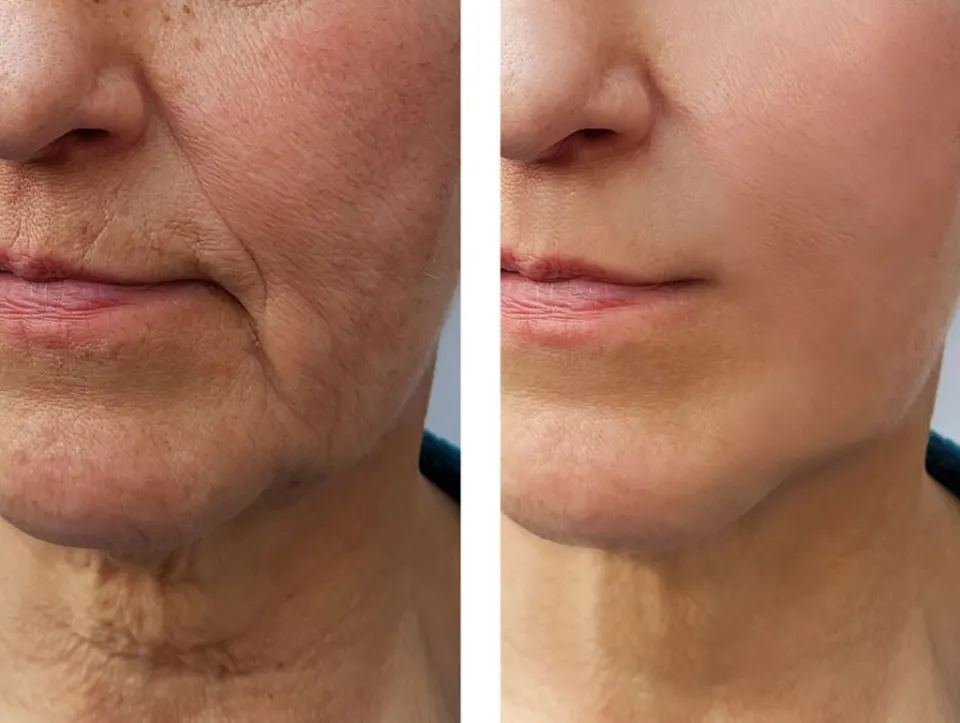
Facial fat transfer pairs well with other facial rejuvenation procedures for a more comprehensive result. It's often combined with a facelift to restore volume as well as lift, with eyelid surgery (blepharoplasty) around the eyes, or with skin treatments. Combining volume restoration with lifting or resurfacing can produce a more harmonious, natural rejuvenation than any single procedure alone — your surgeon can advise on the ideal combination for your goals.
Facial Fat Transfer — Frequently Asked Questions
How long does facial fat transfer last?
The fat that survives (around 50–80%) is essentially permanent and can last for years, often effectively permanently. It takes about 4–6 months to see the final result once settling is complete. Natural ageing continues around the restored volume.
How much of the transferred fat survives?
On average around 50–80% survives long-term, once it establishes a blood supply. Your body absorbs some in the first few months, which is why surgeons transfer a little extra to allow for it.
Is fat transfer better than fillers?
It depends on your goals. Fat transfer lasts far longer (years vs 6–18 months for fillers), uses your own tissue with minimal allergy risk, and slims the donor area — but requires minor surgery and recovery. Fillers are quicker with no downtime. Both have their place.
What's the recovery like?
Mild compared to major facial surgery. Swelling and bruising are normal for the first few days; most people return to work in 7–10 days, with final results over 4–6 months.
Which areas of the face can be treated?
Cheeks and midface, under-eyes (tear troughs), temples, nasolabial folds, jawline and lips — often several in one session. The midface and under-eyes respond particularly well.
Is facial fat transfer safe?
It's generally safe with an experienced surgeon. Because it uses your own fat, there's minimal allergy risk. As with any procedure, risks exist (asymmetry, lumps, partial reabsorption), and surgeon skill is key to minimising them.
Will I need a touch-up?
Sometimes. Because some fat is naturally reabsorbed, a minority of patients choose a second, smaller transfer to reach their ideal volume. Your surgeon discusses this at follow-up.
Does facial fat transfer look natural?
Yes — that's one of its main advantages. Because it uses your own living tissue placed in thin layers, results feel soft and natural to the touch and move naturally with your expressions, avoiding an overfilled look when done skilfully.
The Last Word from The More Clinics
Facial fat transfer is a beautifully natural way to restore youthful volume — using nothing but your own fat, with results that can last for years. The keys to a great outcome are realistic expectations about the settling process and, above all, an experienced surgeon with the artistry to place fat subtly and precisely. If you'd like to know whether facial fat transfer is right for you, our plastic surgery team offers a free, no-pressure assessment and personalised plan.
Get a Free Consultation → WhatsApp Us →
Related: Facelift · Liposuction · BBL (fat transfer to body)
Medical disclaimer: This article is for general informational purposes only and does not replace a personal surgical consultation. Suitability, technique and results are determined only after individual assessment by a qualified plastic surgeon. All procedures carry risks; outcomes vary by individual.
SOURCES:
Mayo Clinic
Cleveland Clinic
NCBI/PMC: autologous fat grafting
HOW THE MORE CLINICS KEEP THE CONTENT UP TO DATE:
Our dedicated medical and editorial teams work tirelessly to stay informed about the ever-evolving world of health news. By rigorously tracking the latest research, clinical guidelines, and significant developments across various medical fields, they ensure that our content remains accurate, relevant, and up-to-date.
This includes reviewing peer-reviewed studies, consulting with healthcare professionals, and monitoring advancements in medical technology. Their meticulous efforts and attention to detail allow us to provide you with trustworthy, reliable information that you can depend on to make informed decisions about your health and well-being.
However, we still insist on getting a healthcare professional's opinion before you make any decision about your health. Consulting with a qualified expert ensures that the choices you make are informed, safe, and tailored to your individual needs.
Last Updated: [27 August 2026]
Published: [03/06/2024]
Written by The More Editorial Team and Medically Reviewed by Op. Dr. İsmail Gökhan Bacak, specialist in Plastic, Reconstructive and Aesthetic Surgery. See our Editorial Process.
This article provides general information and does not replace an individual medical assessment, diagnosis or treatment advice. Discuss decisions about your health and treatment with your treating clinician.